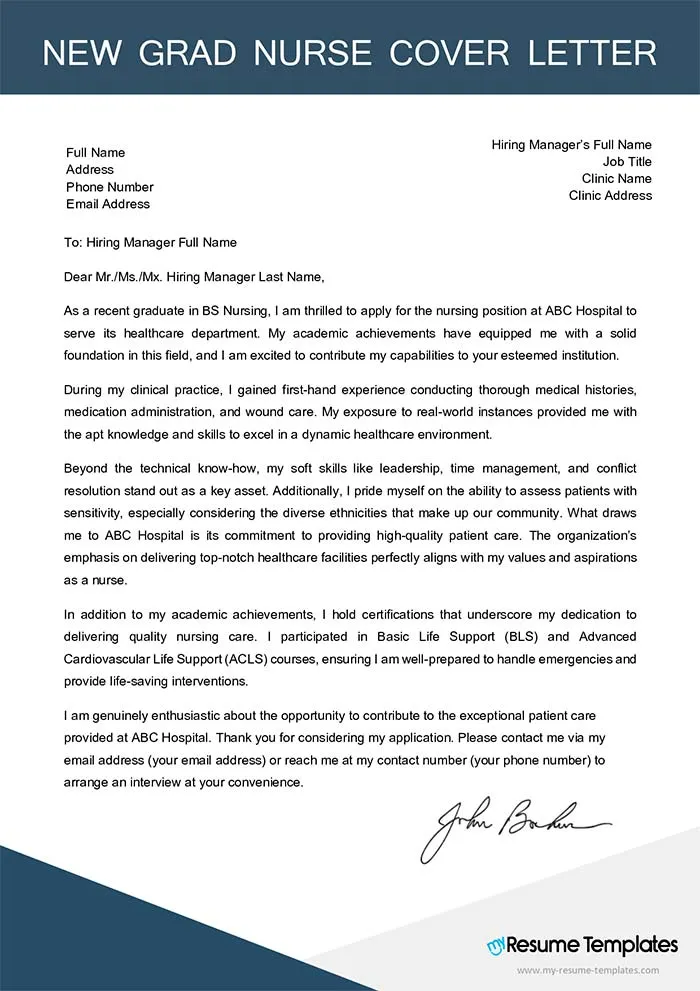
Crafting Your New Nurse Cover Letter
A compelling new nurse cover letter is your first opportunity to make a strong impression on potential employers. In a competitive job market, standing out from the crowd requires more than just a well-written resume. Your cover letter is where you can showcase your personality, express your enthusiasm, and demonstrate why you’re the perfect fit for the nursing position. This guide provides comprehensive advice on how to craft a new nurse cover letter that grabs attention and gets you noticed.
Understanding the Purpose of a Cover Letter
The primary purpose of a cover letter is to introduce yourself to a potential employer and highlight the skills and experiences that make you a suitable candidate for the job. It’s your chance to tell your story, elaborate on your resume, and show how your qualifications align with the specific requirements of the nursing role. Think of it as a personal sales pitch that allows you to showcase your passion for nursing and your commitment to patient care. A well-written cover letter can significantly increase your chances of landing an interview and ultimately securing the job.
Why Cover Letters Are Essential for Nurses

For nurses, cover letters are especially important because they provide an opportunity to demonstrate your compassion, empathy, and dedication to patient well-being. Unlike some other professions, nursing is as much about people skills as it is about technical expertise. A cover letter allows you to convey your interpersonal skills, your ability to work under pressure, and your genuine desire to make a difference in patients’ lives. Moreover, it provides a space to address specific needs or requirements mentioned in the job description, making your application highly relevant.
Key Components of a Winning New Nurse Cover Letter
Header and Contact Information
Applicant’s Contact Details

Begin with your full name, address, phone number, and email address at the top of the letter. Ensure that your email address is professional and easy to read. Double-check that all contact information is current and accurate. This section is crucial, as it enables the hiring manager to easily contact you for an interview or to request additional information. A clear and well-formatted header presents you as organized and attentive to detail.
Hiring Manager’s Contact Details
If possible, address the cover letter to a specific person, such as the hiring manager or the nurse manager. Research the name and title of the person responsible for reviewing applications at the healthcare facility. Include their full name, title, and the department. Addressing your letter to a specific person shows that you’ve taken the time to learn about the organization and are truly interested in the position. If you cannot find a specific name, use a professional salutation like “Dear Hiring Manager.”
Greeting and Salutation
Start your cover letter with a professional greeting. The most common greetings are “Dear Mr./Ms./Mx. [Last Name]” or “Dear Hiring Manager.” Avoid generic greetings such as “To Whom It May Concern,” as these can make your letter feel impersonal. Maintain a formal tone throughout the letter. After completing the letter, use a professional closing such as “Sincerely,” “Best regards,” or “Respectfully.” Remember to include a comma after your closing.
Body Paragraph 1 Introduction

Expressing Your Enthusiasm
In the first paragraph, express your enthusiasm for the nursing position and the healthcare facility. Show genuine interest in the organization’s mission, values, and the role. Highlight what excites you about the opportunity and explain why you are interested in working there. This sets a positive tone and makes the hiring manager eager to read more. For example, mention any specific programs or initiatives that you admire or that align with your personal nursing philosophy.
Mentioning the Position
Clearly state the specific nursing position for which you are applying. Mention the job title, and where you saw the job posting (e.g., on a job board or the company website). This helps the hiring manager quickly understand which role you are interested in and ensures they are reviewing your application for the correct position. Keep the introduction concise and focused, setting the stage for the rest of your letter.
Body Paragraph 2 Highlighting Skills and Experience
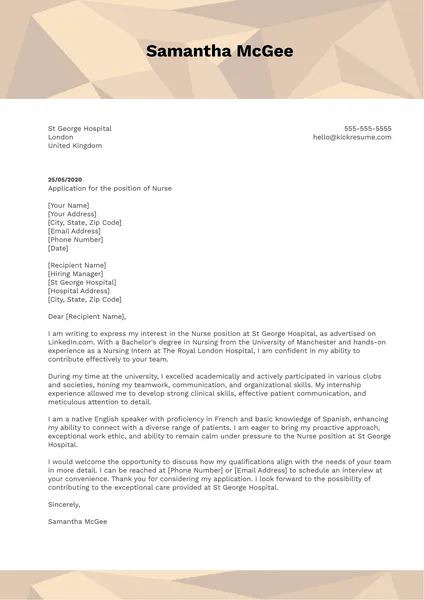
Showcasing Relevant Clinical Experience
In the second paragraph, describe your clinical experience in detail. If you are a new graduate nurse, emphasize any clinical rotations, volunteer work, or internships you have completed. Focus on experiences that directly relate to the nursing role you’re applying for. For each experience, briefly explain your responsibilities and the skills you developed. Use action verbs to describe your accomplishments, such as “assisted,” “managed,” “implemented,” and “evaluated.” Quantify your achievements whenever possible, such as the number of patients you cared for or the improvements you helped achieve.
Emphasizing Key Nursing Skills
Highlight the key skills that the employer is seeking, such as patient assessment, medication administration, wound care, and electronic health record (EHR) proficiency. Mention any specialized skills or certifications you possess, such as BLS, ACLS, or specific nursing specialties. Use a combination of hard and soft skills to create a well-rounded profile. Mention soft skills like communication, teamwork, problem-solving, and critical thinking, which are crucial for effective nursing. Be sure to align your skills with the job description to increase your chances of success.
Body Paragraph 3 Demonstrating Passion and Commitment

Expressing Your Dedication to Patient Care
In the third paragraph, demonstrate your passion for nursing and your commitment to providing excellent patient care. Explain why you chose nursing as a career and what motivates you to excel in the field. Share a brief story or example that showcases your empathy, compassion, and dedication. Highlight any specific experiences that have shaped your approach to patient care. Show the hiring manager that you are not only skilled but also deeply committed to making a positive impact on patients’ lives.
Mentioning Your Professional Goals
Briefly mention your professional goals and how the nursing position aligns with your career aspirations. This shows that you have a long-term vision for your career and that you are committed to growing and developing as a nurse. Share your interests in specific areas of nursing or patient populations. This helps the hiring manager understand your career goals and assess whether the role aligns with your aspirations and helps you learn and grow in your career as a nurse.
Call to Action and Closing

Expressing Gratitude
In the closing paragraph, express your gratitude for the hiring manager’s time and consideration. Thank them for reviewing your application and for the opportunity to be considered for the position. Use polite and professional language. Expressing gratitude shows your appreciation for the hiring manager and the organization, leaving a positive impression.
Closing with Professionalism
Reiterate your interest in the position and express your eagerness for an interview. Include a call to action, such as “I am eager to discuss my qualifications in person.” End your letter with a professional closing such as “Sincerely,” “Best regards,” or “Respectfully,” followed by your typed name. Make sure to sign your name above your typed name if you are submitting a physical copy. A strong closing leaves a lasting positive impression and increases your chances of getting an interview.
Formatting and Design Tips for Nurse Cover Letters
Choosing the Right Font and Font Size
Choose a professional and readable font, such as Times New Roman, Arial, or Calibri. Stick to a standard font size, typically between 10 and 12 points. Avoid using overly decorative or unusual fonts, as they can make your letter difficult to read. The goal is to create a visually appealing and easy-to-read document. Use consistent formatting throughout the letter, including the same font, size, and spacing.
Maintaining a Clean and Organized Layout
Use clear and concise language, and keep paragraphs short and to the point. Use bullet points or numbered lists to highlight key skills or experiences. Ensure there is enough white space between paragraphs and sections to improve readability. Use a simple and professional layout, with adequate margins. A well-organized layout makes the letter easy to scan and ensures that the hiring manager can quickly find the information they need.
Proofreading and Editing Your Cover Letter
Proofread your cover letter carefully for any typos, grammatical errors, or inconsistencies. Run a spell-check and grammar-check to catch any mistakes. Have a friend, family member, or career advisor review your letter to provide a fresh perspective. A polished and error-free cover letter demonstrates your attention to detail and professionalism. Always check for correct formatting, spacing, and alignment to give the best impression.
Common Mistakes to Avoid in Your Cover Letter
Typos and Grammatical Errors
Typos and grammatical errors can undermine your credibility and make you appear unprofessional. Always proofread your letter meticulously before submitting. Ensure your language is clear, concise, and grammatically correct. Use a grammar checker as an extra measure, but don’t rely on it completely. Accurate grammar and spelling demonstrate that you pay attention to detail, a crucial skill for a nurse.
Generic and Uninspired Language
Avoid using generic phrases that could apply to any job or candidate. Tailor your letter to the specific position and healthcare facility. Use specific examples to illustrate your skills and experiences. Show personality and enthusiasm through your writing. Stand out by demonstrating your genuine interest in the specific job and the company. Personalize your letter to create a connection with the hiring manager, making it memorable.
Failing to Tailor the Letter to the Job
Customize your cover letter for each nursing position you apply for. Carefully review the job description and highlight the skills and experiences that match the employer’s requirements. Make sure your letter addresses specific needs or expectations of the role. Tailoring the letter shows that you’ve invested time and effort, demonstrating your genuine interest in the position, and increases your chances of being selected for an interview.
Including Irrelevant Information
Keep your cover letter focused on your nursing skills and experience. Avoid including unnecessary personal details or information that doesn’t relate to the job requirements. Ensure that all information is directly relevant to the position and highlights your qualifications as a nurse. Eliminate anything that could detract from your qualifications. Stay focused on your professional accomplishments and how you can contribute to the employer’s goals.
New Nurse Cover Letter Sample and Examples
Example Cover Letter Template
Here is a sample cover letter template to help you get started. Remember to customize this template to fit your unique qualifications and experiences.
[Your Name] [Your Address] [Your Phone Number] [Your Email]
[Date]
[Hiring Manager Name] [Hiring Manager Title] [Healthcare Facility Name] [Healthcare Facility Address]
Dear [Mr./Ms./Mx. Last Name],
I am writing to express my strong interest in the Registered Nurse position at [Healthcare Facility Name], as advertised on [Job Board or Website]. As a recent graduate of [Nursing Program] and a passionate advocate for patient care, I am eager to contribute my skills and dedication to your esteemed team.
During my clinical rotations, I gained valuable experience in [mention specialties]. I am proficient in [list key skills]. I am particularly drawn to [Healthcare Facility Name]’s commitment to [mention a value or mission of the facility].
I am confident in my ability to provide compassionate and effective care. I am eager to learn and grow as a nurse, and I believe that [Healthcare Facility Name] provides the perfect environment for professional development.
Thank you for considering my application. I am excited about the opportunity to discuss my qualifications further in an interview. I look forward to the possibility of joining your team.
Sincerely, [Your Typed Name]
Remember to replace the bracketed information with your specific details and customize it to fit the job you’re applying for. Proofread carefully before submitting your letter.
Adapting the Template to Your Needs
Use the example template as a starting point, but be sure to tailor it to your individual qualifications and the specific requirements of the nursing position. Highlight the skills and experiences that are most relevant to the job. Adjust the language to reflect your personality and enthusiasm. Make sure the letter is well-organized and free of errors. Customize the letter to reflect your personal experience and make sure you can present yourself in the best light possible. Your cover letter should be a unique reflection of you.