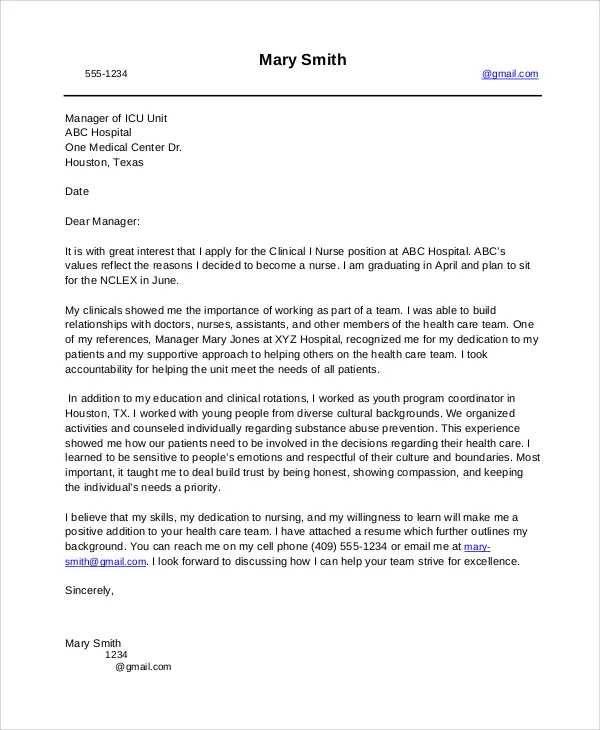
Crafting a Winning Nursing Cover Letter
A well-crafted nursing cover letter is your key to unlocking new career opportunities. It’s the first impression you make on a potential employer, giving you the chance to showcase your skills, experience, and passion for the nursing profession. Unlike a resume, which provides a snapshot of your qualifications, a cover letter allows you to tell your story and explain why you’re the perfect fit for the role. A strong cover letter demonstrates professionalism and attention to detail, setting you apart from other applicants and increasing your chances of landing an interview. It is also a great place to express your enthusiasm for the specific opportunity and demonstrate your understanding of the healthcare facility’s mission and values.
Understanding the Purpose of a Cover Letter
The primary purpose of a cover letter is to introduce yourself to the hiring manager and provide a brief overview of your qualifications. It should highlight the key skills and experiences that align with the job requirements, persuading the reader to review your resume more closely. A cover letter should not just reiterate what’s already in your resume, but rather elaborate on your achievements and explain why you are interested in the specific position and organization. This is your chance to express your personality and demonstrate your communication skills, qualities highly valued in nursing.
Highlighting Your Skills and Experience

Your cover letter is your chance to shine, showcasing your key skills and experiences. Focus on the skills and qualifications most relevant to the job description. Mention specific clinical experiences, certifications, and any specialized training you possess. Consider incorporating keywords from the job posting to demonstrate that you have read the requirements and are a good match. For example, if the job description emphasizes experience in a particular area like critical care, be sure to highlight your relevant experience and accomplishments in that field. Use action verbs to describe your achievements, such as ‘managed,’ ‘coordinated,’ ‘implemented,’ and ‘improved’.
Cover Letter Examples for Nursing
Here are some examples tailored for different nursing roles, demonstrating the specific information to include to make a compelling case for your candidacy. Each example focuses on distinct experiences and skill sets needed to emphasize the importance of customization when creating your own cover letter. Be sure to adapt the examples to reflect your individual experiences and the requirements of each job application. This provides a valuable starting point, showcasing effective formatting and content strategies for various nursing professionals.
Example 1 Entry-Level Nurse
For an entry-level nurse, focus on your education, clinical rotations, and any volunteer or extracurricular activities that demonstrate your commitment to patient care. Highlight any leadership roles you held during your studies. For instance, you could mention clinical experiences, demonstrating your ability to work effectively with patients and other healthcare professionals. You might state that you have experience with electronic health records (EHRs), medication administration, and patient assessments. If you have certifications like Basic Life Support (BLS) or Advanced Cardiac Life Support (ACLS), be sure to include them. Mention your enthusiasm for learning and your eagerness to contribute to a supportive healthcare environment.
Example 2 Experienced Registered Nurse

Experienced RNs should emphasize their years of experience and specific specializations. For instance, if you have worked in intensive care, emergency room, or a particular medical unit, mention it. Provide specific examples of your accomplishments, such as reducing patient readmission rates, improving patient satisfaction scores, or implementing new protocols. Quantify your achievements whenever possible. Include details about any leadership roles you’ve held, like charge nurse or team lead, and highlight your ability to mentor others and work collaboratively with physicians, therapists, and other members of the healthcare team. Consider any awards or recognition you have received.
Example 3 Nurse Practitioner
Nurse Practitioners should emphasize their advanced practice skills and any special certifications or training. Highlight your ability to diagnose and treat patients, order and interpret diagnostic tests, and prescribe medications. Mention your experience working with a specific patient population, such as geriatric patients or patients with chronic diseases. For example, you can discuss your experience with managing chronic conditions like diabetes or hypertension and showcase your proficiency in performing patient assessments and formulating treatment plans. If you possess a national certification, such as Family Nurse Practitioner (FNP) or Adult-Gerontology Acute Care Nurse Practitioner (AGACNP), make sure to include it prominently.
Example 4 Nursing Manager
For a nursing manager role, focus on your leadership experience and ability to manage and motivate a team. Highlight your experience in developing and implementing nursing policies and procedures. Showcase your ability to manage budgets, improve staff performance, and ensure quality patient care. Include examples of successful projects you’ve led, such as improving patient safety or increasing staff retention. Demonstrate your ability to create a positive and supportive work environment, fostering a culture of teamwork and professionalism. Mention your experience in resolving conflicts and providing mentorship to your team. Focus on the positive impacts you have made to previous facilities.
Example 5 Travel Nurse

Travel nurses should highlight their adaptability, flexibility, and ability to quickly integrate into new environments. Emphasize your experience in various healthcare settings and your ability to provide high-quality care in diverse situations. Showcase your experience with various EMR systems, specific patient populations, and ability to adapt quickly to new protocols and procedures. Mention any certifications or specialized training that are relevant to travel nursing, such as experience with electronic health records or specific medical devices. Also, include your experience and skills that would allow you to contribute to a team setting and hit the ground running.
Key Elements to Include in Your Nursing Cover Letter
Structuring your cover letter effectively is crucial to making a positive impression. The following sections are essential for a compelling narrative that gets you noticed. Each component plays a vital role in communicating your unique value proposition to the hiring manager. Consider these elements as the building blocks of your professional introduction. Using them will help demonstrate your professionalism.
Your Contact Information and Date
Start with your full name, address, phone number, and email address at the top of the letter. Include the date you are sending the letter. Make sure your contact information is accurate and professional. Ensure that your email address is appropriate and easy to read. This allows the hiring manager to easily reach you if they wish to schedule an interview. Proper formatting and presentation will ensure that the reader will easily find and utilize the data to connect with you and set the stage for the remaining sections of the letter.
The Hiring Manager’s Information

If possible, address the cover letter to a specific person, such as the hiring manager or the nurse manager. Research the company’s website or use LinkedIn to find the name of the hiring manager. If you can’t find a name, use a professional salutation such as ‘Dear Hiring Manager’ or ‘Dear Nurse Manager.’ Addressing the letter to a specific individual demonstrates that you have put in effort and shows your attention to detail, which is highly valued in the medical field. Personalizing the letter in this way will set a positive tone and show a greater degree of engagement.
A Compelling Opening Paragraph
The opening paragraph should immediately grab the reader’s attention and state the purpose of your letter. Mention the specific position you are applying for and where you saw the job posting. Briefly state why you are interested in the role and what makes you a strong candidate. Express your enthusiasm for the opportunity and the organization. Keep the opening concise and engaging. By expressing enthusiasm and highlighting your most relevant skills in the first few sentences, you encourage the hiring manager to read the full document. A compelling opening should be clear, concise, and enthusiastic, immediately setting the tone for the rest of your letter and capturing the reader’s attention.
Showcasing Your Relevant Experience
The body of your cover letter should highlight your relevant experience, skills, and accomplishments. Provide specific examples to demonstrate your abilities and quantify your achievements whenever possible. Focus on the skills and experiences that align with the job requirements. For example, you may provide specific examples of your abilities to successfully administer medications, monitor patient vital signs, or collaborate with a team of healthcare professionals. This shows your experience in various settings and your adaptability. Back up your claims with evidence and statistics, when possible. The more specific and relevant the details, the more convincing your case will be.
Quantifying Your Achievements

Quantify your accomplishments to demonstrate your impact. Instead of saying you improved patient satisfaction, state the percentage increase. Instead of saying you managed a team, mention the number of staff members you supervised and the specific results you achieved. Use numbers to demonstrate your achievements and the impact you have had on previous employers. If you improved patient satisfaction scores by 15%, or reduced medication errors by 10%, those figures will make a great impression. Specific metrics provide concrete proof of your effectiveness.
Highlighting Your Skills and Certifications
List your key skills and certifications relevant to the job. Mention any specialized training or licenses you possess. Ensure that the skills you mention match the requirements listed in the job description. Focus on hard skills, such as clinical skills, and soft skills, such as communication and teamwork. Include any specific certifications required for the position, such as BLS, ACLS, or specific nursing certifications. By explicitly stating your qualifications, you show the hiring manager that you are a well-rounded candidate. Aligning these with the requirements makes your qualifications clear and emphasizes your suitability for the role.
Expressing Your Enthusiasm for the Role
Express your enthusiasm for the role and the organization. Explain why you are interested in working at the specific facility or healthcare organization. Mention any research you have done about the organization and its values. Show that you have a genuine interest in the position and that you are excited about the opportunity to contribute. Highlighting your enthusiasm for the position demonstrates your dedication to the healthcare field. Connecting your goals to the organization’s mission is a great way to show the hiring manager that you’re the right candidate.
A Strong Closing Paragraph

In your closing paragraph, reiterate your interest in the position and thank the hiring manager for their time and consideration. State your availability for an interview and provide your contact information again. Include a call to action, such as stating that you look forward to hearing from them soon. Avoid using generic phrases. A strong closing paragraph leaves a lasting positive impression and encourages the hiring manager to take the next step. A well-crafted closing summarizes your key qualifications and conveys your enthusiasm for the opportunity, making a memorable final impression.
Proofreading and Formatting Your Cover Letter
Careful proofreading and formatting are crucial. Typos, grammatical errors, and poor formatting can create a negative impression and undermine your credibility. Proofread your cover letter multiple times, paying attention to grammar, spelling, and punctuation. Ensure that your letter is well-organized, easy to read, and visually appealing. Use a professional font, such as Times New Roman or Arial, and maintain consistent formatting throughout the document. Have a friend or colleague review your cover letter before you submit it to catch any errors you may have missed. Attention to detail reflects professionalism.
Tips for Customizing Your Cover Letter
A generic cover letter will not make a strong impression. Customizing your cover letter for each job application is essential. This will show the hiring manager that you have invested time and effort to understand the specific requirements of the role and the organization. Customization involves tailoring your cover letter to the job description, researching the employer, and using keywords from the job posting to highlight your skills and experiences.
Researching the Employer and Role

Before writing your cover letter, research the employer and the specific role. Visit the organization’s website to learn about their mission, values, and recent developments. Review the job description carefully and identify the key skills, qualifications, and experience required for the position. Understanding the employer’s needs and expectations will help you tailor your cover letter to make a strong case for your candidacy. Demonstrating your knowledge of the organization shows that you are genuinely interested in working there and that you share their values. Make a connection between your qualifications and the company’s goals.
Tailoring Your Letter to the Job Description
Tailor your cover letter to the job description by highlighting the skills, experiences, and qualifications most relevant to the position. Review the job description carefully and identify the key requirements. Use specific examples from your experience to demonstrate that you possess the required skills. Explain how your experiences match the role’s responsibilities. Focus on how you can contribute to the employer’s goals. By emphasizing the key requirements, you increase your chances of getting noticed. Providing specific examples of your achievements will add value to your case.
Using Keywords from the Job Posting
Incorporate keywords from the job posting into your cover letter. This is a great way to demonstrate that you meet the required qualifications and that you have read the job description carefully. Identify the key skills, qualifications, and requirements listed in the job description and use them in your cover letter. Doing so will make your cover letter more appealing and increase your chances of passing applicant tracking systems (ATS). This also highlights that you understand the job and that you are a good fit for the role. By speaking their language, you show that you understand their requirements.
Common Mistakes to Avoid
Avoid these common mistakes to ensure that your cover letter is effective. A poorly written cover letter can be a significant barrier to securing a job interview. It’s important to be aware of these pitfalls and take steps to avoid them. Addressing these errors proactively will improve your chances of standing out to the hiring manager.
Generic Cover Letters
Avoid using a generic cover letter. Tailor each cover letter to the specific job and organization to demonstrate your genuine interest and understanding of the role. Avoid sending the same letter to multiple employers. Customize the letter to the specific role, highlight the aspects that align with your skills and achievements, and research the employer to show your genuine interest in the role. Show the hiring manager that you’ve taken the time to understand their needs and expectations. Generic cover letters often lack the personalization needed to make a strong impression.
Typos and Grammatical Errors
Always proofread your cover letter carefully to catch any typos or grammatical errors. Ensure that your cover letter is free of errors. Errors will make a negative impression and undermine your credibility. Always ask a friend or colleague to review your letter before submitting. Reviewing your cover letter multiple times will increase the quality of the text. Taking the extra step of proofreading will show attention to detail, which is important in the healthcare field. Poor writing can distract from your message.
Focusing Too Much on Yourself
Balance highlighting your skills and achievements with a focus on how you can contribute to the employer. Your cover letter should showcase your abilities and explain why you are a good fit for the role. Do not make your cover letter all about yourself; instead, highlight the value you bring to the employer and focus on the benefits you can offer to the organization. Your goal is to show the hiring manager what you can do for them. By highlighting how you can contribute to the organization, you demonstrate that you are not just looking for a job, but also that you are a valuable potential team member.