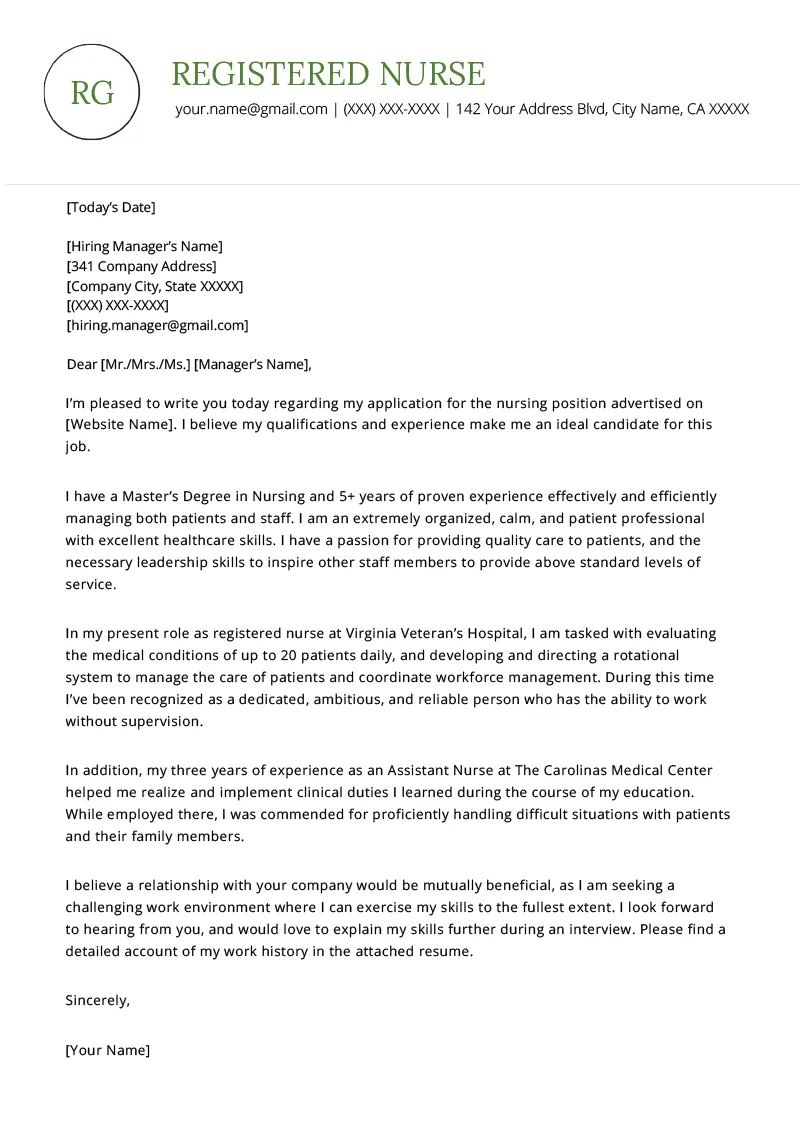
Understanding the Importance of a Nursing Cover Letter
In the competitive field of nursing, a well-crafted cover letter is your first opportunity to make a positive impression on a potential employer. It serves as a crucial tool to introduce yourself, showcase your qualifications, and demonstrate your genuine interest in the specific nursing position. A strong cover letter doesn’t just reiterate your resume; it provides a narrative, allowing you to connect your experiences and skills to the needs of the employer. Ignoring this vital document is akin to missing a critical step in the application process, potentially leading to your resume being overlooked. The cover letter is your chance to shine, explaining why you are the ideal candidate and what unique qualities you bring to the table. This guide offers the essential steps to craft a nursing cover letter that sets you apart.
Why a Cover Letter Matters
A cover letter matters because it offers a personalized introduction that a resume alone cannot provide. It allows you to elaborate on your experiences, skills, and achievements, and explain how they align with the requirements of the nursing job you’re applying for. It shows your personality, communication skills, and genuine interest in the role and the healthcare organization. Furthermore, a cover letter can address any gaps in your resume or explain career transitions, providing context and demonstrating your adaptability. It also gives you an opportunity to express your passion for nursing, making you a more compelling candidate.
Highlighting Your Qualifications

Highlighting your qualifications effectively in a nursing cover letter involves more than just listing your credentials. It’s about showcasing how your skills, experience, and education align with the specific requirements of the job. Begin by carefully reviewing the job description and identifying the key skills and qualities the employer is seeking. Then, in your cover letter, provide specific examples of how you have demonstrated those skills in previous roles. Use action verbs to describe your accomplishments and quantify your achievements whenever possible. For example, instead of saying “Provided patient care,” state “Managed care for an average of 10 patients per shift, consistently achieving positive patient outcomes.” This approach makes your qualifications clear and compelling.
Essential Components of a Nursing Cover Letter
A well-structured nursing cover letter is composed of several essential components that work together to create a persuasive narrative. Each section serves a specific purpose, from introducing yourself to highlighting your qualifications and expressing your interest in the role. Understanding these components and how to effectively incorporate them is key to crafting a cover letter that grabs the hiring manager’s attention and increases your chances of landing an interview. The essential components include your contact information, the date, the hiring manager’s information, a compelling opening, highlighted skills and experience, a clear expression of your passion, and a strong closing with a call to action.
Your Contact Information and the Date
Start your cover letter with your full name, address, phone number, and professional email address. Make sure your email address is professional; avoid using nicknames or unprofessional phrases. Place this information at the top left or right corner of the page. Following your contact information, include the date the cover letter is being written. This is standard practice and ensures the letter is current. If you know the hiring manager’s name, address the letter directly to them; otherwise, use a professional salutation like “Dear Hiring Manager.”
Addressing the Hiring Manager

Always address your cover letter to a specific person if possible. Research the hiring manager’s name on the company website or LinkedIn. Addressing the letter to a specific individual shows that you have taken the time to research the company and are genuinely interested in the position. Using the hiring manager’s name adds a personal touch and makes your letter more engaging. If you can’t find the hiring manager’s name, use a professional salutation like “Dear Hiring Manager” or “Dear [Department Name] Hiring Team.”
Crafting the Opening Paragraph
The opening paragraph of your cover letter is your first opportunity to grab the hiring manager’s attention, and should immediately state the position you are applying for and how you found the job. Mention where you saw the job posting (e.g., company website, LinkedIn, or a specific job board). Briefly state why you are interested in the role and the healthcare organization, and provide a concise overview of your qualifications. A strong opening will pique their interest and encourage them to read the rest of your letter. Avoid generic opening lines; instead, personalize your introduction to show your enthusiasm and interest in the specific opportunity.
Highlighting Your Skills and Experience
The main body of your cover letter should focus on highlighting your relevant skills and experiences. This is where you can elaborate on the information presented in your resume, providing context and specific examples. Carefully review the job description and identify the key skills and qualifications the employer is seeking. Then, choose a few of your most relevant skills and accomplishments, and describe how you have demonstrated them in previous roles. Use the STAR method (Situation, Task, Action, Result) to structure your responses, providing a clear and concise explanation of your contributions and the positive outcomes you achieved. Remember to quantify your achievements whenever possible, using numbers and data to demonstrate your impact.
Showcasing Relevant Nursing Skills

Showcasing relevant nursing skills is crucial to demonstrating your suitability for the role. Identify the key skills required for the position, such as patient assessment, medication administration, wound care, or electronic health record (EHR) proficiency. Then, provide specific examples of how you have successfully utilized those skills in your previous nursing roles. This could involve describing a situation where you accurately assessed a patient’s condition and implemented appropriate interventions, administered medications safely and effectively, or used EHR systems to maintain accurate patient records. Be specific and provide concrete examples to demonstrate your competence and expertise.
Quantifying Your Achievements
Quantifying your achievements is a powerful way to demonstrate your value and impact as a nurse. Instead of making vague statements about your accomplishments, use numbers, data, and statistics to illustrate your successes. For example, instead of saying “Improved patient outcomes,” you could write “Improved patient satisfaction scores by 15% through implementing a new pain management protocol.” Or, instead of saying “Managed a busy unit,” you could write “Managed a 20-bed unit, overseeing a team of 10 nurses and consistently maintaining a low rate of patient readmissions.” Quantifying your achievements provides concrete evidence of your capabilities and helps the hiring manager understand the value you can bring to the organization.
Expressing Your Passion for Nursing
Expressing your passion for nursing in your cover letter can set you apart from other applicants. Use this opportunity to share what motivates you and what you love about nursing. Mention your commitment to patient care, your interest in the specific area of nursing (e.g., oncology, pediatrics, critical care), and your desire to make a positive impact on patients’ lives. Share any personal experiences or values that align with the healthcare organization’s mission and values. This demonstrates your genuine enthusiasm and commitment to the profession, making you a more compelling candidate.
Closing the Cover Letter and Call to Action

In your closing paragraph, reiterate your interest in the position and thank the hiring manager for their time and consideration. Express your enthusiasm for the opportunity to learn more about the role and the organization. Include a clear call to action, such as stating that you are available for an interview and providing your contact information again. Keep the tone professional and enthusiastic. A strong closing leaves the hiring manager with a positive impression and encourages them to contact you.
Formatting and Proofreading Your Cover Letter
Proper formatting and meticulous proofreading are critical to ensuring your cover letter presents a professional image and conveys your attention to detail. A well-formatted and error-free cover letter shows that you care about making a positive impression and that you are capable of producing high-quality work. Poorly formatted and error-filled letters can quickly lead to rejection, no matter how strong your qualifications might be. Formatting and proofreading should be viewed as essential steps in the cover letter writing process.
Choosing the Right Font and Font Size
Select a professional and easy-to-read font, such as Times New Roman, Arial, or Calibri. The font size should be between 10 and 12 points, which ensures readability without making your cover letter appear too crowded or sparse. Ensure consistent formatting throughout your cover letter, using the same font, font size, and margins. Maintain a clean and uncluttered layout. Make sure that the content is well-organized with clear headings, bullet points, and adequate spacing between paragraphs. A well-formatted cover letter is easy to read and demonstrates your attention to detail.
Proofreading for Errors

Proofreading your cover letter is an essential step to ensure it is free of grammatical errors, spelling mistakes, and punctuation errors. Carefully review your cover letter for any typos or inconsistencies. Read it aloud to catch any awkward phrasing or sentences that don’t flow smoothly. It is highly recommended that you have someone else proofread your cover letter as well, as a fresh pair of eyes can often spot errors that you might miss. A polished and error-free cover letter will make a positive impression, while a cover letter filled with errors will make you look unprofessional.
Tailoring Your Cover Letter for Different Nursing Roles
Customizing your cover letter for different nursing roles is essential to demonstrate that you understand the specific requirements of each position and that you have the qualifications and experience to meet those needs. A generic, one-size-fits-all cover letter is less likely to impress the hiring manager. By tailoring your cover letter, you can showcase your relevant skills, experiences, and achievements, making you a more compelling candidate. This requires you to carefully review the job description for each position, identify the key requirements, and tailor your cover letter to align with those requirements. Highlighting specific skills and experiences that match the job description is essential. Focus on the skills and experiences that are most relevant to each role, and provide concrete examples of your accomplishments.
Cover Letters for Registered Nurses (RNs)
When applying for Registered Nurse (RN) positions, emphasize your clinical skills, experience with patient care, and any specialized certifications or licenses you hold. Highlight your ability to assess patients, administer medications, and develop care plans. Mention any experience you have in specific areas of nursing, such as medical-surgical, critical care, or emergency room. Showcase your ability to work collaboratively with other healthcare professionals and your commitment to providing high-quality patient care. For example, if you have experience in a specific area of nursing, ensure you showcase it and highlight any achievements. Highlight any leadership roles or projects you have been involved in.
Cover Letters for Nurse Practitioners (NPs)

For Nurse Practitioner (NP) positions, your cover letter should showcase your advanced clinical skills, your experience in diagnosing and treating patients, and your ability to work independently. Emphasize your experience with patient assessment, ordering and interpreting diagnostic tests, and developing treatment plans. Highlight any specialized training or certifications you possess, such as in family practice, cardiology, or women’s health. Demonstrate your leadership skills and your ability to collaborate with physicians and other healthcare professionals. Include details about any experience you have in patient education and promoting preventive care.
Cover Letters for Licensed Practical Nurses (LPNs)
When applying for Licensed Practical Nurse (LPN) positions, highlight your clinical skills, experience in providing direct patient care, and your ability to work effectively under the supervision of RNs or physicians. Emphasize your skills in taking vital signs, administering medications, and assisting with patient care activities. Showcase any experience you have in specific healthcare settings, such as hospitals, nursing homes, or clinics. Highlight your ability to communicate effectively with patients and their families, and your commitment to providing compassionate care. Include details about any experience you have in patient education or wound care.
Final Thoughts and Submission
Writing a compelling nursing cover letter is a crucial step in the job application process. By following the guidelines outlined in this ultimate guide, you can craft a cover letter that effectively showcases your qualifications, demonstrates your passion for nursing, and increases your chances of landing an interview. Remember to tailor your cover letter to each specific job you apply for, highlighting the skills and experiences that are most relevant to the role. Proofread your cover letter carefully to ensure it is free of errors, and always submit it in a professional format. Your cover letter is your opportunity to make a strong first impression and to demonstrate why you are the ideal candidate for the nursing position. Good luck with your job search!