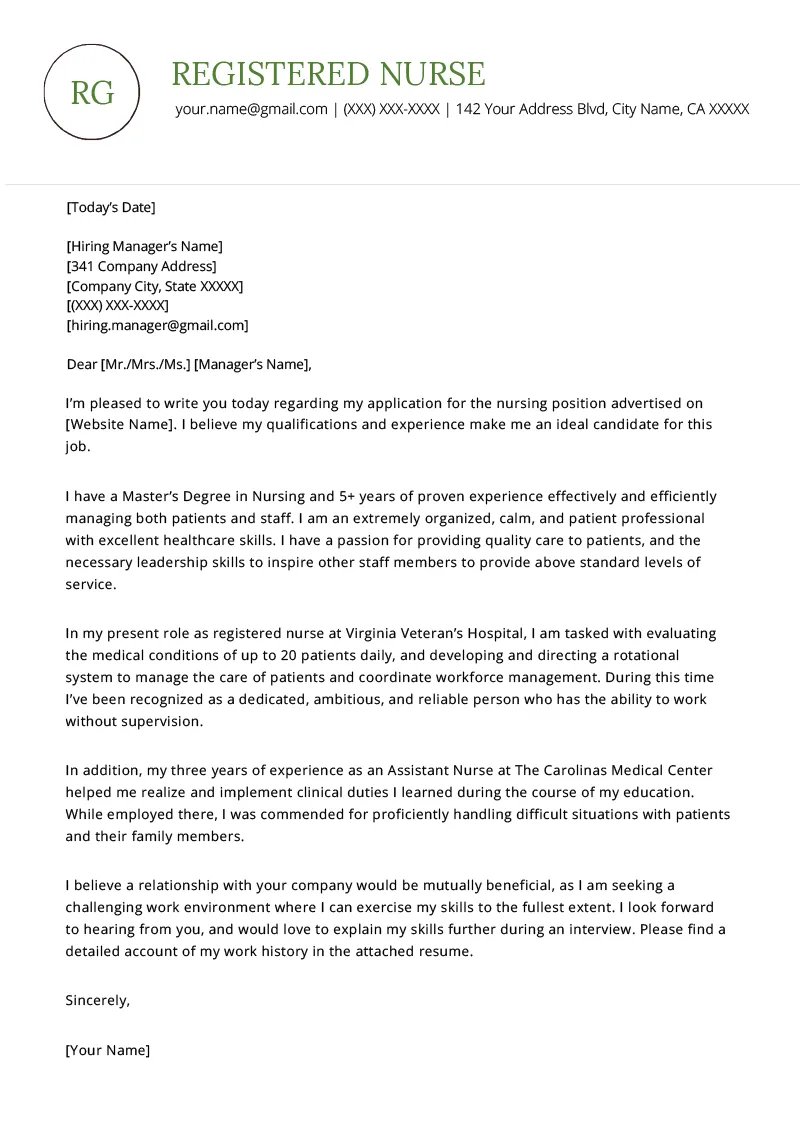
Highlighting Your Nursing Skills
Your nursing cover letter is your first introduction to a potential employer. It’s your chance to make a strong first impression and demonstrate that you are the perfect candidate for the nursing position. A compelling cover letter should immediately grab the reader’s attention and highlight your most relevant skills and experience. Focus on the skills that directly relate to the job requirements. Start by identifying the key skills mentioned in the job description. These might include patient assessment, medication administration, critical thinking, wound care, or electronic health record (EHR) proficiency. Then, weave these skills into your cover letter, providing specific examples of how you’ve successfully applied them in previous roles. Avoid generic statements and instead, provide concrete instances that showcase your abilities. Remember to tailor the skills you highlight to match the specific requirements of the job you’re applying for. This shows that you understand the needs of the employer and are confident in your ability to meet them. Use action verbs to describe your accomplishments, such as ‘managed,’ ‘coordinated,’ ‘assessed,’ or ‘implemented.’ This approach makes your cover letter more dynamic and compelling.
Showcasing Clinical Experience
Beyond your core nursing skills, your clinical experience is a critical element of your cover letter. Provide details about the types of clinical settings you have experience in. This helps the employer understand your breadth of experience and how it aligns with their needs. Include information about the patient populations you’ve worked with, whether it’s geriatric, pediatric, or critical care. Describe the specific responsibilities you held in each role. What tasks did you regularly perform? Were you involved in patient education, care planning, or administering treatments? If you have experience with specialized procedures or equipment, be sure to mention them. This could include experience with ventilators, IV pumps, or specific types of monitoring equipment. If you’ve held any leadership roles, such as charge nurse or team leader, make sure to highlight those responsibilities. Provide evidence of your ability to manage a team and make critical decisions. Be specific in your descriptions and avoid generalities. The more details you provide, the clearer the picture the employer will have of your capabilities.
Quantifying Achievements

To truly impress a potential employer, quantify your achievements whenever possible. Use numbers and data to demonstrate the impact you’ve made in previous roles. For example, instead of saying ‘Improved patient satisfaction,’ you could say ‘Improved patient satisfaction scores by 15% through the implementation of a new communication protocol.’ Similarly, if you’ve reduced medication errors, specify the percentage reduction achieved. If you’ve contributed to any cost savings, provide the specific dollar amount. Quantifying your achievements adds credibility to your claims and makes your cover letter more persuasive. This also helps to distinguish you from other applicants. Use metrics to illustrate your accomplishments. Did you reduce patient falls? Did you improve the efficiency of a process? Providing these details will help the hiring manager quickly understand the value you can bring to their organization. By focusing on quantifiable results, you present yourself as a results-oriented professional, which is highly desirable in any nursing role.
Demonstrating Patient Care Philosophy
Your cover letter should also provide insights into your patient care philosophy. This helps the employer understand your approach to patient care and how it aligns with their values. Briefly describe your core beliefs about patient care. Do you prioritize patient-centered care? Do you focus on holistic care? Do you believe in empowering patients through education and support? Provide examples of how you put your philosophy into practice. This shows the employer that you don’t just talk the talk, but you also walk the walk. Describe specific situations where you have demonstrated your philosophy in action. This could include advocating for a patient’s needs, providing emotional support, or collaborating with a patient’s family. Tailor your philosophy to the specific role and organization. Research the organization’s mission and values to ensure alignment. Show the employer that you understand their priorities and are committed to providing high-quality, compassionate care.
Expressing Enthusiasm for the Role
Your cover letter is an opportunity to express your enthusiasm for the specific role and organization. A generic cover letter that could be sent to any employer will not stand out. Show the employer that you are genuinely interested in this opportunity and have taken the time to learn about their organization. Start by stating your interest in the position clearly and concisely. Then, explain why you are excited about this particular role. What aspects of the job description appeal to you? What are your specific interests in the type of nursing the role involves? Research the organization’s mission, values, and recent initiatives. Mention these in your cover letter to show that you have done your homework and understand the organization’s priorities. Mention something specific that makes you excited about this particular job, like the hospital’s specialization in a certain field or the work environment. This level of personalization shows that you are truly invested in the opportunity and aren’t just sending out a mass application.
Formatting Your Cover Letter

The formatting of your cover letter is as important as the content. It reflects your attention to detail and professionalism. Use a professional font, such as Times New Roman, Arial, or Calibri, and ensure the font size is easy to read, typically between 11 and 12 points. Use clear and concise language, avoiding jargon and complex sentence structures. The goal is to make your cover letter easy to read and understand. Organize your cover letter in a clear and logical format, with distinct sections for each important point. Use headings and bullet points to break up large blocks of text and make your cover letter more visually appealing. Use appropriate spacing and margins to make your cover letter easy to read. The standard margins are one inch on all sides. Choose a layout that is clean and uncluttered, making it easy for the reader to quickly find the most important information. Proofread your cover letter carefully for any grammatical errors or typos. Spelling mistakes and grammatical errors can make you appear unprofessional and can undermine your credibility.
Using a Professional Tone
Maintain a professional tone throughout your cover letter. This means using formal language, avoiding slang, and refraining from using overly casual or informal language. Always address the hiring manager or the appropriate contact person by name. Use their correct title and be respectful in your interactions. Use positive and enthusiastic language to express your interest in the role and your enthusiasm for the organization. Even if you have previous negative experiences, avoid any negativity in your cover letter. Focus on the positive aspects of your experience and what you can bring to the role. Stay focused on your qualifications and the benefits you offer to the employer. Emphasize your achievements and your ability to make a positive contribution to the organization. Make sure your cover letter reflects your professionalism and dedication to your career.
Keeping It Concise and Focused
Keep your cover letter concise and focused, typically aiming for one page in length. Hiring managers often have limited time to review applications, so it’s important to get to the point quickly. Focus on the most relevant information and avoid unnecessary details. Select the most important details to highlight and skip any irrelevant information. Each sentence should contribute to your overall message, demonstrating why you are the best candidate for the role. Eliminate unnecessary words and phrases to keep your cover letter as brief as possible. Your resume provides a more detailed overview of your experience, so the cover letter is meant to highlight the most relevant information and entice the reader to learn more. Keep the cover letter focused on the key requirements of the job and how your skills and experience align with those requirements. Stay on topic and ensure that every sentence contributes to your overall message. This targeted approach will make your cover letter more effective and increase your chances of getting an interview.
Proofreading for Errors

Proofreading your cover letter is essential to ensure that it is free of errors. Errors in your cover letter can make you appear unprofessional and can undermine your credibility. Take the time to carefully review your cover letter for any grammatical errors, spelling mistakes, or typos. Read your cover letter aloud to catch any awkward phrasing or sentences that don’t flow smoothly. Check for consistency in formatting, such as font size, spacing, and margins. Ask a friend, family member, or career counselor to review your cover letter. A fresh pair of eyes can often catch errors that you might have missed. Use spell check and grammar check tools, but don’t rely on them entirely. These tools can miss certain types of errors, such as incorrect word usage. Before sending your cover letter, double-check the contact information for the hiring manager and the organization. Make sure that all the details are accurate. Proofreading is a crucial step in the job application process, and taking the time to do it well can make a significant difference.
Customizing for Each Application
Customize your cover letter for each specific job application. Generic cover letters are easily recognizable and will not impress hiring managers. Tailor your cover letter to match the specific requirements and responsibilities outlined in the job description. Research the organization and the specific role to show the employer that you’ve taken the time to learn about them. Mention the organization’s mission, values, and recent initiatives to show your genuine interest. Show how your skills and experience align with the needs of the organization. Use the job description to identify the key skills and qualifications the employer is looking for and highlight how your experience and skills match those requirements. Address the specific needs of the employer and explain how you can help them achieve their goals. Refer to specific projects or experiences that are relevant to the job description. By tailoring your cover letter to each job application, you will show the employer that you are genuinely interested in the opportunity.
Researching the Facility
Before you start writing your cover letter, research the facility you are applying to. This information will help you tailor your cover letter and show the employer that you have a genuine interest in their organization. Visit the facility’s website and read about their mission, values, and recent initiatives. Learn about their history, their services, and their reputation in the community. Look for news articles, press releases, and any other information about the facility’s achievements and goals. Identify any specific programs or initiatives that are relevant to your experience or interests. If possible, try to talk to current or former employees to learn more about the culture and work environment. Tailor your cover letter to reflect your understanding of the facility’s needs and priorities. Highlight how your skills and experience align with their mission and values. Mention any specific programs or initiatives that you are interested in being a part of. By researching the facility, you will show the employer that you are serious about the opportunity and that you are a good fit for their organization.
Addressing the Hiring Manager

Always address the hiring manager by name in your cover letter, if possible. This shows that you have taken the time to research the organization and that you are making a personal connection. If you can find the name of the hiring manager, use it. If you can’t find their name, try to address the cover letter to the department, such as ‘Hiring Manager’ or ‘Nurse Recruitment Team.’ Avoid using generic greetings, such as ‘To Whom It May Concern,’ which can make your cover letter seem impersonal. Make sure that you use the correct title for the hiring manager and that you spell their name correctly. Misspelling the hiring manager’s name can make you appear unprofessional. Refer to the job description for the hiring manager’s contact information. You can often find the name of the hiring manager there, or you can find the name by searching on the company’s website or on LinkedIn. If you are unable to find a specific contact, contact the human resources department, and politely ask for the name of the hiring manager for the specific position. This personal touch can make your cover letter more effective and increase your chances of getting an interview.
Including a Strong Call to Action
End your cover letter with a strong call to action. This tells the hiring manager what you want them to do next. The call to action should be specific and direct, and it should encourage the hiring manager to take the next step in the hiring process. State that you are looking forward to hearing from them soon. Express your interest in an interview and provide your contact information. Make it easy for the hiring manager to contact you. Offer to provide additional information or to answer any questions they might have. Thank the hiring manager for their time and consideration. Make sure the call to action is consistent with your overall message and that it aligns with the job description. Use phrases that are active and engaging. A strong call to action encourages the hiring manager to take the next step and increases your chances of getting an interview.
Following Up After Submission
Follow up after submitting your cover letter and resume. Following up shows that you are genuinely interested in the position and that you are proactive in your job search. Send a thank-you note within a few days of submitting your application. Reiterate your interest in the position and thank the hiring manager for their time. After a week or two, if you haven’t heard back, you can send a follow-up email. This is a polite way to check on the status of your application. If you haven’t heard back after several weeks, you can send a final follow-up email. Restate your interest in the role and offer to provide any additional information. Be polite and professional in all of your communications. Following up demonstrates your enthusiasm for the opportunity and reinforces your interest in the position. Be patient during the hiring process, and don’t be discouraged if you don’t hear back immediately. The hiring process can sometimes take several weeks.