Understanding the Power of a Procurement Cover Letter
A procurement cover letter is more than just a formality; it’s your first opportunity to make a compelling impression and showcase your skills and experience to a potential employer. It provides a space to elaborate on your resume, highlighting specific achievements and demonstrating your enthusiasm for the role and the company. Unlike your resume, which offers a snapshot of your career, your cover letter allows you to weave a narrative, connecting your past experiences to the specific requirements of the job and illustrating your understanding of the procurement field. A well-crafted cover letter can significantly increase your chances of landing an interview.
Highlighting Your Procurement Experience
When writing a procurement cover letter, the focus should be on demonstrating your relevant experience. This is where you provide concrete examples of your achievements and how they align with the job description. Instead of simply listing your responsibilities, describe the impact of your actions and the value you brought to your previous roles. Focus on the key areas of procurement, such as sourcing, negotiation, contract management, and supplier relationship management. Show the hiring manager that you possess the skills and knowledge to excel in the position by referencing specific projects, challenges, and outcomes.
Quantifying Your Achievements

Quantifying your achievements is a crucial aspect of writing an impressive procurement cover letter. Numbers and metrics provide concrete evidence of your successes and demonstrate the value you can bring to a new role. Instead of stating that you ‘improved efficiency’, specify by how much – for example, ‘Reduced procurement cycle times by 15%’. Similarly, instead of saying you ‘saved money’, quantify the savings – ‘Negotiated contracts resulting in $100,000 in annual cost savings’. Use percentages, dollar amounts, and other measurable data to illustrate the positive impact you have made in previous positions. This will make your accomplishments more impactful and memorable.
Tailoring Your Letter to the Job
Generic cover letters are easily identified and often lead to rejection. The most successful procurement cover letters are those that are tailored specifically to the job and the company. This shows that you have taken the time to understand the role and its requirements and that you are genuinely interested in the opportunity. Customize your letter by addressing the specific skills and experience mentioned in the job description and referencing the company’s mission or values. Use keywords from the job posting to demonstrate that your qualifications align with their needs.
Researching the Company and Role
Before you start writing, research the company and the specific role you are applying for. Understand the company’s industry, its recent projects, and its values. This information will allow you to tailor your letter to their needs and demonstrate your genuine interest. Examine the job description carefully and identify the key skills and experiences the employer is seeking. Use this information to align your qualifications and demonstrate how you can contribute to their success. This level of preparation will set you apart from other applicants.
Matching Skills to Requirements

The most effective procurement cover letters clearly match your skills and experience to the requirements outlined in the job description. Review the job posting and identify the key skills, such as negotiation, supplier management, contract administration, and cost reduction, that the employer is looking for. Then, within your cover letter, provide concrete examples of how you have demonstrated these skills in previous roles. This could involve detailing specific projects, challenges you overcame, and the results you achieved. When you clearly demonstrate your relevant skills, the hiring manager will immediately recognize you as a strong candidate.
Showcasing Key Procurement Skills
Procurement requires a diverse skill set. Highlight key skills relevant to the role. Be sure to demonstrate your abilities with examples. For instance, if the role requires strong negotiation skills, describe a time you successfully negotiated a favorable contract. If the role requires supplier management experience, describe your process for managing supplier relationships. Provide concrete examples that demonstrate your proficiency in the specific areas the job description emphasizes. Focus on the skills that align with the company’s needs.
Negotiation and Supplier Management
Negotiation and supplier management are core competencies in procurement. When writing your cover letter, provide examples of your negotiation successes. Did you reduce costs, improve terms, or secure better delivery schedules? Quantify your accomplishments by specifying the percentage of savings or the impact on project timelines. For supplier management, describe how you build and maintain strong supplier relationships, how you assess supplier performance, and how you address any issues that arise. Highlight your ability to build collaborative relationships to secure the best value.
Cost Reduction and Savings

Procurement professionals are often measured by their ability to reduce costs and generate savings. When discussing your experience in this area, be sure to include specific examples of your cost-saving achievements. For instance, describe the steps you took to identify cost-saving opportunities, such as benchmarking prices, negotiating with suppliers, or implementing new sourcing strategies. Quantify the savings you achieved. Did you reduce costs by a specific percentage, or did you achieve a certain dollar amount in savings? Providing these concrete numbers will demonstrate your ability to deliver tangible results.
Contract Management and Compliance
Contract management and compliance are essential aspects of procurement. Your cover letter should highlight your experience with contract negotiation, administration, and ensuring compliance with legal and regulatory requirements. Describe the steps you take to manage contracts, such as drafting and reviewing contracts, monitoring performance, and addressing any breaches. Mention any experience you have with relevant regulations or industry standards. Highlight any certifications related to contract management. Provide specific examples that showcase your ability to effectively manage contracts and ensure compliance.
Structuring Your Procurement Cover Letter
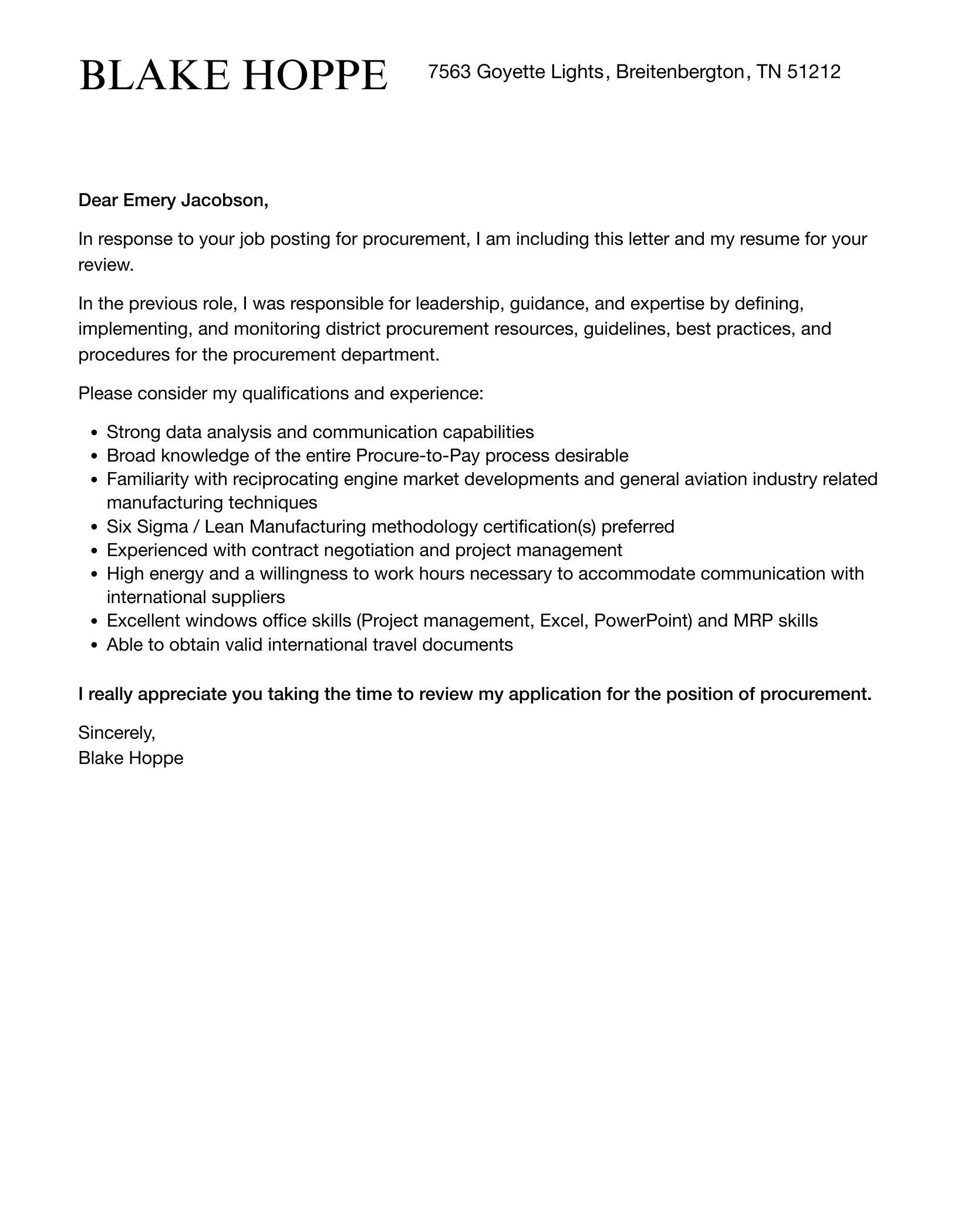
A well-structured cover letter is easy to read and makes a positive impression. Structure your letter into clear sections, including a header with your contact information, a compelling opening paragraph, body paragraphs that showcase your experience, and a strong closing with a call to action. Keep the letter concise and focused on the key aspects of your qualifications and how they align with the job requirements. A clear structure helps the hiring manager quickly grasp your key skills and qualifications.
The Header and Contact Information

Your header should include your name, contact information, and the date. Ensure that your contact information is accurate and professional. Include your phone number, email address, and professional networking profile link. Use a professional-looking email address. If you are applying for a specific role, include the name of the hiring manager and the company’s address. This will show that you are meticulous and pay attention to details.
The Opening Paragraph — Grab Attention
The opening paragraph is your chance to grab the reader’s attention and make a strong first impression. Start with a concise and engaging statement that highlights your interest in the role and the company. Mention where you found the job posting and briefly state why you are interested in the position. You can also include a brief statement about your key qualifications or accomplishments. Avoid generic openings. Instead, show enthusiasm and tailor your opening to the specific job.
Body Paragraphs — Showcase Experience
Use the body paragraphs to showcase your relevant experience and skills. Each paragraph should focus on a specific aspect of your qualifications or accomplishments. Use the STAR method (Situation, Task, Action, Result) to provide concrete examples of your successes. Detail the situation, the task you were assigned, the action you took, and the positive results you achieved. Quantify your achievements whenever possible. You can also highlight your understanding of the procurement field and how you have contributed to previous employers’ success.
The Closing — Call to Action

The closing paragraph should restate your interest in the position and include a call to action. Thank the hiring manager for their time and consideration. Express your eagerness to discuss your qualifications further in an interview. End with a clear statement, such as ‘I am confident that my skills and experience align perfectly with the requirements of this role, and I am eager to contribute to your team’s success.’ Provide your contact information again to make it easier for them to reach you.
Proofreading and Formatting for Impact
Proofreading and formatting are essential steps to ensure your cover letter is polished and professional. Errors in grammar or formatting can create a negative impression and undermine your chances of landing an interview. Make sure your cover letter is free of errors. Proofread multiple times, and ask someone else to review it for you. Well-formatted cover letters are easy to read and make a positive impression.
Checking for Grammar and Spelling
Carefully check your cover letter for any grammatical errors and spelling mistakes. These errors can damage your credibility and indicate a lack of attention to detail. Use a grammar checker and spell checker, but do not rely on them entirely. Proofread the letter yourself, and have a colleague or friend proofread it. Reading the letter out loud can help you identify any awkward phrasing or mistakes.
Formatting for Readability

The formatting of your cover letter should be neat, easy to read, and professional. Use a standard font such as Times New Roman or Arial and keep the font size between 11 and 12 points. Use appropriate spacing between paragraphs and sections. Keep the margins at one inch. Use bullet points or numbered lists to highlight key accomplishments or skills. Avoid using overly ornate fonts or excessive formatting that may distract from the content. Ensure your document is clean and well-organized.
Common Mistakes to Avoid in Procurement Cover Letters
Many mistakes can undermine your procurement cover letter. Avoid generic language and tailor the letter to each job. Do not simply list your responsibilities; instead, showcase your achievements. Do not use the same letter for every application. It is crucial to research the company and role. Avoid lengthy paragraphs, irrelevant information, and typos. Proofread carefully before submitting your application.
By understanding the power of a procurement cover letter and following these guidelines, you can make a strong impression and significantly improve your chances of securing an interview. Focus on tailoring your letter to the specific role and company, highlighting your relevant experience, quantifying your achievements, and showcasing your key procurement skills. With a well-crafted and impactful cover letter, you will set yourself apart from the competition and move closer to landing your dream job.