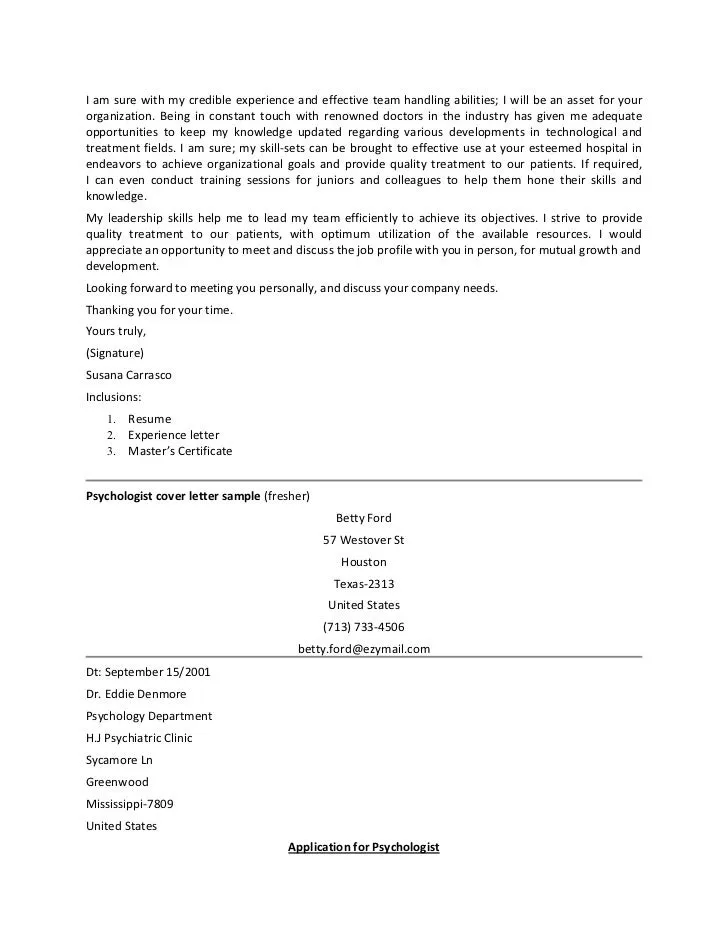
Understanding the Importance of a Psychology Cover Letter
In the competitive field of psychology, a well-crafted cover letter is not just a formality; it’s your first opportunity to make a lasting impression. It serves as a crucial tool to introduce yourself, showcase your skills, and demonstrate your genuine interest in the specific position. Unlike a resume, which provides a factual overview of your experience, a cover letter allows you to tell your story, explaining why you are the perfect fit for the role and the organization. A compelling cover letter can significantly increase your chances of getting noticed by hiring managers and securing an interview. It’s your chance to stand out from the crowd and highlight what makes you unique.
Why a Cover Letter Matters in Psychology
Psychology is a field that values both technical expertise and interpersonal skills. A cover letter is where you can demonstrate both. It allows you to explain how your experiences align with the specific requirements of the job, showing your understanding of the role and the organization’s values. By addressing the hiring manager directly and personalizing your letter, you showcase your communication skills and attention to detail, qualities highly valued in psychology. A well-written cover letter proves you’ve done your research, understand the organization’s mission, and are genuinely enthusiastic about contributing to their work. Remember, your passion for psychology is a critical factor, and the cover letter is your platform to express it.
Highlighting Relevant Skills and Experience

Your cover letter should focus on the skills and experiences that make you an ideal candidate for the specific psychology job. Tailor your letter to match the job description’s requirements, emphasizing skills such as active listening, empathy, analytical thinking, and the ability to communicate complex information clearly. Provide specific examples of how you’ve used these skills in previous roles or academic settings. Quantify your achievements whenever possible. For example, instead of saying “Improved patient outcomes”, state “Improved patient outcomes by 15% through implementation of a new therapeutic approach.” This level of detail shows the hiring manager that you understand the importance of results in psychology and are capable of achieving them.
Key Components of a Psychology Cover Letter
Header and Contact Information
Start your cover letter with a professional header that includes your name, address, phone number, and email address. Make sure your email address is professional-sounding; avoid using nicknames or informal language. Place the date below your contact information, followed by the hiring manager’s name, title, and the organization’s address. This demonstrates attention to detail and professionalism, setting a positive tone for the rest of your letter. Double-check all contact information to ensure accuracy, as a simple error can prevent the hiring manager from reaching you.
The Salutation and Addressing the Hiring Manager

Always address the hiring manager by name if possible. Research the organization to find the name of the person responsible for hiring for the position. Using a specific name personalizes your letter and shows that you’ve taken the time to learn about the organization and the people involved. If you cannot find the name, use a general salutation like “Dear Hiring Committee” or “Dear [Department Name] Hiring Manager”. Avoid generic greetings such as “To Whom It May Concern,” as they can make your letter feel impersonal. In the body of your letter, reference the job title and where you found the job posting to further demonstrate your attention to detail.
Opening Paragraph Grabbing Attention
Your opening paragraph is your opportunity to immediately capture the hiring manager’s attention. Start with a concise and engaging statement that explains why you are applying for the position and why you are interested in the organization. Show enthusiasm and clearly state the specific job you are applying for. Consider mentioning a unique skill or experience that makes you stand out or briefly referencing something that caught your eye in the job description. Make sure your opening paragraph sets the stage for the rest of your letter by highlighting your key qualifications and your understanding of the role.
Body Paragraphs Showcasing Qualifications
The body of your cover letter should focus on your qualifications, experience, and skills. Structure the body paragraphs logically, addressing the key requirements outlined in the job description. Provide specific examples to support your claims, using the STAR method (Situation, Task, Action, Result) to describe your experiences. For instance, describe a situation where you used a particular therapeutic technique, the task you were assigned, the actions you took, and the positive results you achieved. This helps the hiring manager understand how you’ve applied your skills in real-world situations. Avoid simply listing your qualifications; instead, tell a story that demonstrates your abilities and potential.
Quantifying Achievements and Impact

Whenever possible, quantify your achievements to make your claims more impactful. Use numbers, percentages, and specific data to demonstrate your accomplishments. For example, instead of stating you improved patient satisfaction, say, “Improved patient satisfaction scores by 20% through implementation of a new communication strategy.” Quantifying your achievements demonstrates your ability to measure results and your commitment to improving outcomes. This level of detail helps the hiring manager understand the value you can bring to the organization.
Tailoring the Letter to the Job Description
Customize your cover letter for each job application, paying close attention to the specific requirements listed in the job description. Highlight the skills, experiences, and qualifications that align with the role’s needs. Use the same keywords and phrases used in the job description, but avoid simply restating the requirements. Instead, provide compelling examples that show how you meet those requirements. Show that you understand the organization’s mission, values, and culture, and explain why you are a good fit. Tailoring your letter demonstrates your genuine interest in the position and increases your chances of getting noticed.
Demonstrating Passion for Psychology
Show your passion for psychology throughout your cover letter. Express your enthusiasm for the field and explain why you are drawn to this particular role or organization. You can describe experiences that sparked your interest in psychology, mention specific research areas you’re passionate about, or highlight how your values align with the organization’s mission. Your passion will make your letter more memorable and demonstrate your commitment to the field. Let your personality shine through. Your passion can set you apart from other applicants.
The Closing Paragraph Making a Strong Impression

Your closing paragraph should summarize your key qualifications and reiterate your interest in the position. Restate your enthusiasm and express your confidence in your ability to succeed. Thank the hiring manager for their time and consideration. End with a call to action, such as “I am eager to discuss my qualifications further and welcome the opportunity to interview for this position.” The closing paragraph should leave the hiring manager with a positive and lasting impression, encouraging them to invite you for an interview.
Expressing Gratitude and Next Steps
Always express your gratitude for the hiring manager’s time and consideration. Reiterate your enthusiasm for the opportunity and your desire to learn more. Offer to provide any additional information needed and clearly state your availability for an interview. End your cover letter with a professional closing, such as “Sincerely,” or “Best regards,” followed by your typed name. Make sure to include your contact information one last time to make it easy for the hiring manager to get in touch with you.
Proofreading and Formatting for Perfection
Before submitting your cover letter, meticulously proofread it for any errors in grammar, spelling, and punctuation. Errors can undermine your credibility and demonstrate a lack of attention to detail. Read your letter aloud, or have a friend or colleague review it for you. Use a professional font like Times New Roman, Arial, or Calibri, and maintain consistent formatting throughout the document. Ensure proper spacing, margins, and alignment. A clean and well-formatted cover letter reflects your professionalism and commitment to excellence.
Ensuring a Professional Appearance

Pay close attention to the overall appearance of your cover letter. Use a professional font and a clear, easy-to-read font size (11 or 12 points). Maintain consistent margins and spacing. Avoid using excessive formatting, colors, or distracting elements. Ensure that your letter is well-organized, with clear headings and paragraphs. Your cover letter should look clean, professional, and easy to read. Consider using a simple template for consistency.
Checking for Grammatical Errors and Typos
Grammatical errors and typos can significantly detract from your credibility. Thoroughly proofread your cover letter multiple times, checking for spelling mistakes, grammatical errors, and punctuation issues. Use a grammar checker tool, but don’t rely on it completely; always review the letter yourself. Read your cover letter aloud to catch any awkward phrasing or sentences that don’t flow well. Have a trusted friend or colleague proofread your letter to catch any errors you might have missed. A polished cover letter demonstrates your attention to detail and your commitment to excellence.
Additional Tips for a Psychology Cover Letter
Keywords Optimization

Optimize your cover letter by strategically incorporating keywords from the job description. Identify the key skills, qualifications, and requirements mentioned in the posting and use them in your letter. This helps your application pass through applicant tracking systems (ATS) and ensures that your letter is relevant to the hiring manager. However, avoid keyword stuffing; your letter should read naturally. Integrate keywords in a way that demonstrates your understanding of the role and your ability to meet the organization’s needs.
Showcasing Soft Skills
While technical skills are essential in psychology, highlighting your soft skills is equally important. Soft skills, such as communication, empathy, active listening, and problem-solving, are highly valued in this field. Use your cover letter to provide examples of how you’ve demonstrated these skills in your previous experiences. For example, describe a situation where you effectively communicated with a difficult patient, resolved a conflict with a colleague, or demonstrated empathy toward someone in need. Demonstrating your soft skills will show the hiring manager that you are a well-rounded and capable professional.
Dos and Don’ts of Psychology Cover Letters
To maximize your impact, follow these simple guidelines. Do: Tailor your cover letter to each job, highlight relevant skills and experiences, quantify your achievements, demonstrate your passion for psychology, and proofread carefully. Don’t: Use a generic cover letter, focus solely on your resume, include irrelevant information, use jargon without explanation, or make grammatical errors or typos. By following these dos and don’ts, you will significantly increase your chances of landing an interview and securing your desired psychology job.