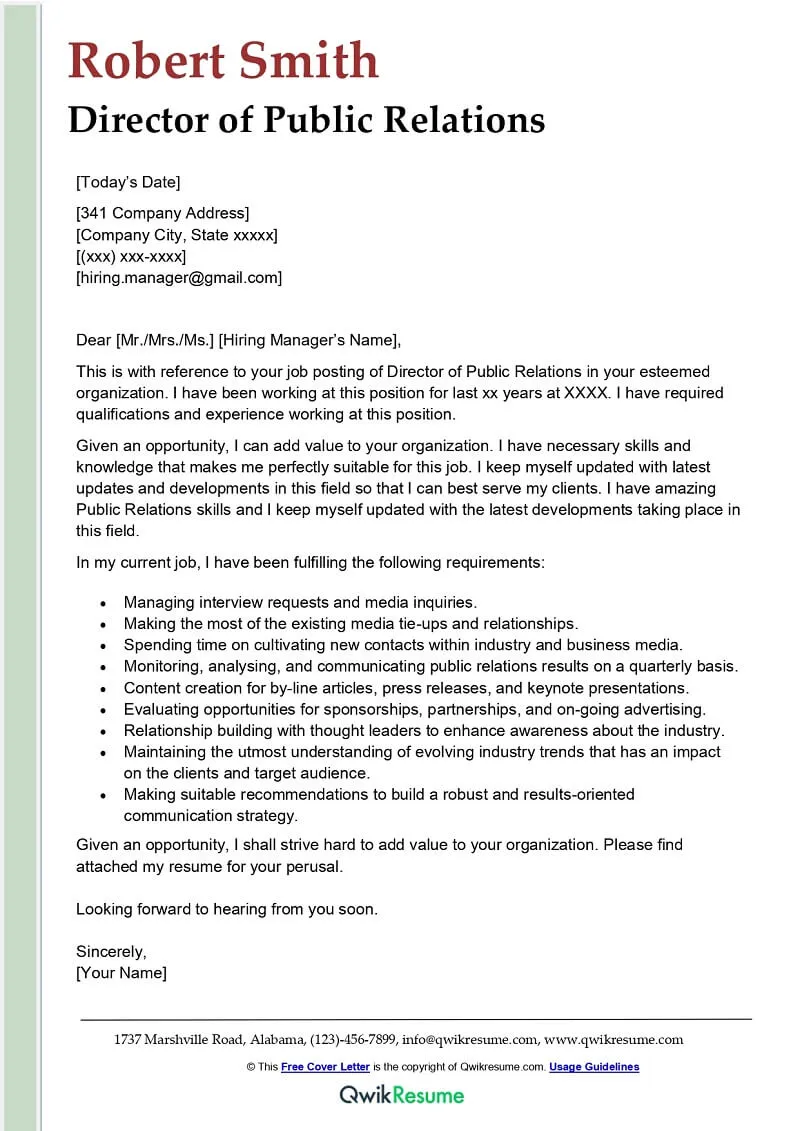
Understanding the Purpose of a PR Intern Cover Letter
A public relations intern cover letter serves a vital purpose It’s your first introduction to a potential employer and your chance to make a strong first impression. Unlike a resume, which lists your experiences, a cover letter allows you to tell your story, express your enthusiasm for the role and company, and showcase how your skills and experiences align with their specific needs. Think of it as a marketing document that sells your potential to contribute to the PR team. A well-crafted cover letter can significantly increase your chances of securing an interview, while a poorly written one can lead to immediate rejection. The goal is to persuade the hiring manager that you’re not just qualified, but also a great fit for the company culture.
Highlighting Your Skills and Qualifications
Your cover letter is the perfect place to shine a light on the skills and qualifications that make you an ideal candidate for a public relations internship. Instead of simply listing your skills, provide concrete examples of how you’ve used them. Consider the key skills most important for PR interns – communication, writing, research, and social media management. If you have experience in these areas, highlight your accomplishments using the STAR method Situation, Task, Action, Result. This method provides context and allows you to quantify your achievements whenever possible. For example, instead of saying “Managed social media,” you could say “Increased engagement on the XYZ company’s social media platform by 25% through targeted content creation and strategic scheduling.” This demonstrates impact and value.
Researching the Company and Tailoring Your Letter

One of the most critical aspects of a successful cover letter is demonstrating that you’ve done your homework. Research the company thoroughly Understand their mission, values, recent campaigns, and target audience. Visit their website, read their press releases, and follow their social media channels. The more you know about the company, the better you can tailor your letter to their specific needs and demonstrate your genuine interest. This research also allows you to identify specific projects or initiatives you can mention to show your understanding of their work and how you could potentially contribute. This also help you tailor the language and tone of your cover letter to match the company’s brand.
Demonstrating Relevant Skills and Experience
Focus on skills and experiences that align with the internship requirements. Even if you lack direct PR experience, you can still showcase transferable skills from other areas. For example, if you’ve volunteered for a non-profit, highlight any communication, event planning, or writing tasks you performed. If you’ve worked in customer service, emphasize your communication and problem-solving skills. Tailor each section to the job description, making sure your skills reflect the job’s requirements. Don’t be afraid to connect your past experiences to the PR internship. Use concrete examples, emphasizing what you have done to contribute to any organization you have worked for.
Showcasing Your Communication Abilities
Public relations is all about effective communication. Your cover letter is your first opportunity to demonstrate your communication skills. Pay close attention to your writing style. Make sure your letter is clear, concise, and engaging. Use correct grammar, spelling, and punctuation. Vary your sentence structure to maintain reader interest. Proofread carefully before submitting. It should be well-structured and easy to read. Demonstrate excellent written communication skills, showcasing your ability to convey information effectively. This also means using appropriate tone and style for a professional setting, and using correct grammar and punctuation is paramount.
Highlighting Your Writing Skills

Strong writing skills are crucial for any PR professional. Highlight any writing experience you have, whether it’s writing blog posts, articles, press releases, or social media content. Mention any writing courses or workshops you’ve taken. If possible, include a link to your online portfolio or writing samples. Use action verbs to describe your writing abilities. For example, instead of saying “I wrote press releases,” say “I crafted compelling press releases that resulted in media coverage in multiple publications.” This shows your ability to create engaging and effective content. Demonstrate the ability to tailor your writing style to suit different audiences and purposes, showing your versatility.
Mentioning Any Relevant Projects or Coursework
If you’ve completed any relevant projects or coursework, be sure to mention them in your cover letter. This is your chance to show your knowledge and interest in PR. For example, if you’ve taken a PR course, mention the key concepts you learned. If you’ve worked on a specific project, describe your role and what you accomplished. This information can provide further insight into your qualifications and show your willingness to learn and adapt. Mention any projects, case studies, or assignments that showcase your understanding of PR principles. This adds weight to your application and increases your chances of being noticed.
Structuring Your Cover Letter for Maximum Impact
A well-structured cover letter is easier to read and more likely to capture the reader’s attention. Use a clear and logical format, with distinct paragraphs for each section. Focus on clarity, conciseness, and readability. Break up large blocks of text with shorter paragraphs and bullet points. Use headings and subheadings to guide the reader through your letter. Ensure that the content flows seamlessly from one paragraph to the next. Follow the standard business letter format, including your contact information, the date, the recipient’s name and title, and a professional salutation and closing.
Crafting a Strong Opening Paragraph

The opening paragraph is your first opportunity to grab the reader’s attention. Start with a strong hook that captures their interest. State the position you’re applying for and how you found it. Briefly explain why you’re interested in the company and the role. Immediately express your enthusiasm and genuine interest in the public relations internship. This is your chance to make a positive first impression. Briefly mention any mutual connections or references, if applicable. This shows that you’ve put in the effort to build a relationship with the company and might indicate that you have some common grounds.
Developing Compelling Body Paragraphs
The body paragraphs are where you elaborate on your skills and qualifications. Provide specific examples to support your claims. Use the STAR method to describe your experiences. Quantify your achievements whenever possible. Tailor your letter to the specific requirements of the internship. Focus on the value you bring to the company. Use action verbs to describe your skills and achievements. This is the section where you convince the employer that you are a good fit and have the skills and experience that is required. The body paragraphs should show the value you will add to the team.
Writing a Powerful Closing Paragraph
The closing paragraph should reiterate your interest in the position and the company. Summarize your key qualifications and reiterate your enthusiasm. Express your desire for an interview and thank the reader for their time and consideration. Provide your contact information and be sure to include a professional closing, such as “Sincerely” or “Best regards.” Be proactive. Restate your enthusiasm and a clear call to action. State your availability and eagerness to discuss your qualifications further. Express gratitude for their time and consideration.
Formatting Your Cover Letter Professionally

The appearance of your cover letter is as important as the content. Poor formatting can distract the reader and reflect poorly on your attention to detail. Make sure your cover letter is easy to read, well-organized, and visually appealing. Pay close attention to the layout, font, and spacing. A clean and professional format makes a positive impression on the reader and shows your commitment to excellence.
Choosing a Professional Font and Font Size
Choose a professional font that is easy to read, such as Times New Roman, Arial, or Calibri. Use a font size between 10 and 12 points. Avoid using overly stylized or decorative fonts. A standard font enhances readability and reflects professionalism. Choose a font that’s easy on the eyes. This contributes to the overall clarity and presentation of your cover letter. Your font choice can impact readability and create a positive impression.
Using Proper Grammar and Spelling
Proofread your cover letter carefully for any grammatical errors or typos. Use a spell checker, but don’t rely on it entirely. Have someone else proofread your letter as well. Incorrect grammar and spelling can damage your credibility and undermine your chances of getting an interview. A clean and error-free cover letter demonstrates your attention to detail and your commitment to producing high-quality work. Pay attention to the details and ensure a polished final product. Proofreading is essential. Reviewing your cover letter for any errors is crucial.
Proofreading and Editing Your Cover Letter

Before submitting your cover letter, proofread it carefully. Check for any errors in grammar, spelling, and punctuation. Ensure that your formatting is consistent. Have someone else review your letter for clarity and effectiveness. The goal is to make sure your letter is easy to read and understand, and accurately reflects your qualifications. Errors can make a bad impression, so taking the time to revise and edit your cover letter will help you stand out. A polished cover letter shows that you pay attention to detail. Ask someone else to read the cover letter to catch mistakes.
Key Phrases to Include in Your Cover Letter
Certain phrases can strengthen your cover letter and make you stand out from other applicants. These phrases highlight your skills, enthusiasm, and suitability for the role. Using these phrases demonstrates your understanding of industry standards and will help you showcase your ability to be a good fit for the company. Try to include relevant keywords from the job description to show that you match the employer’s needs. These phrases are a quick and easy way to strengthen your cover letter and show the hiring manager you understand the key qualifications for the job.
Action Verbs to Use
Action verbs make your cover letter more dynamic and engaging. They add energy and impact to your writing. Use action verbs to describe your accomplishments and responsibilities. This helps to bring your achievements to life. Choose strong action verbs that are relevant to the PR industry. This highlights your key skills and experience and helps you to showcase your accomplishments. Some examples are, managed, created, developed, implemented, and executed.
Keywords to Incorporate

Include keywords from the job description in your cover letter. This helps to demonstrate that you have the skills and experience the employer is looking for. This will help your application be seen by the company. Review the job description carefully and identify the key skills and qualifications. Incorporate these keywords naturally into your cover letter. Highlighting relevant skills and experiences is key to demonstrating you’re the right person for the role. Tailoring your letter with relevant keywords is a key strategy for getting noticed.
Common Mistakes to Avoid
There are some common mistakes that applicants make. By avoiding these, you can significantly increase your chances of success. These errors can be detrimental to your application. Make sure you carefully review your cover letter before sending it. Knowing these mistakes is key to avoiding them. Paying attention to detail in your cover letter is important. To help you be more successful, let’s look at some common mistakes applicants make so you can avoid them.
Generic Cover Letters
Avoid sending a generic cover letter that could be sent to any company. Tailor your letter to each specific role and company. Generic cover letters often lack impact and fail to demonstrate your genuine interest. Research the company and personalize your letter to reflect your interest in the role. This shows you’ve invested time and effort, which will help your chances of getting an interview. Customize each cover letter to the specific job. This demonstrates your interest.
Typos and Grammatical Errors
Typos and grammatical errors can damage your credibility and undermine your professionalism. Proofread your cover letter carefully before submitting it. Use a spell checker, but don’t rely on it entirely. Have someone else proofread your letter as well. Make sure your cover letter reflects your ability to write professionally. Reviewing your cover letter for any errors is crucial. Proofread your cover letter to show your attention to detail.
Failing to Tailor the Letter
Failing to tailor your cover letter to the specific job and company is a major mistake. Show that you have researched the company and understand their needs. Highlight how your skills and experience align with their requirements. Demonstrate your genuine interest in the role and the company. Failing to tailor the letter shows a lack of attention to detail. Tailor your letter to each application to maximize your chances. Demonstrate your interest and match the job to your skills and experience.