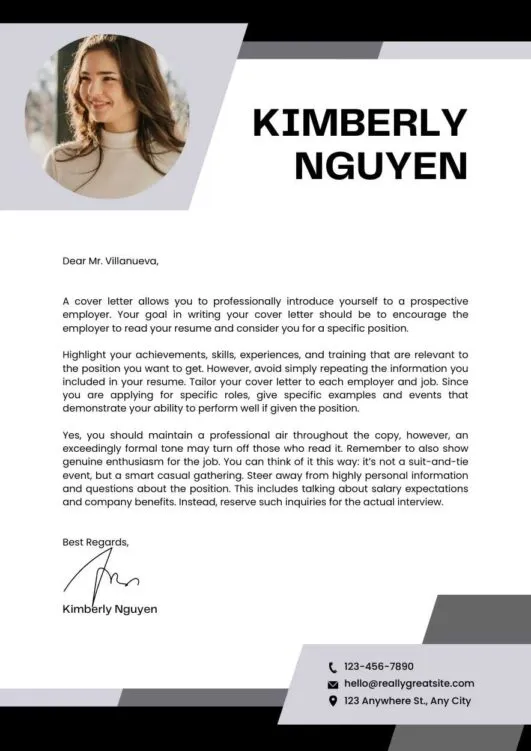
What is a Resume Cover Letter
A resume cover letter is a crucial document that accompanies your resume when applying for a job. It serves as an introduction, providing potential employers with a concise overview of your skills, experience, and qualifications. Unlike a resume, which is a factual account of your professional history, a cover letter allows you to showcase your personality, express your enthusiasm for the role, and explain why you are a good fit for the specific position and the company. Think of it as your first chance to make a strong impression and persuade the hiring manager to read your resume and consider you for an interview. A well-crafted cover letter can significantly increase your chances of getting noticed and landing your dream job.
The Purpose of a Cover Letter
The primary purpose of a cover letter is to complement your resume and provide context to your application. It allows you to elaborate on your skills and experiences in a narrative format, highlighting how they align with the job requirements and the company’s needs. A cover letter also demonstrates your communication skills, attention to detail, and your genuine interest in the specific opportunity. It provides an opportunity to demonstrate that you have researched the company and understand their values and goals. The purpose is to showcase your personality and enthusiasm, setting you apart from other candidates and making a compelling case for why you should be considered for an interview. Think of a cover letter as a marketing tool, selling your skills and qualifications to the hiring manager.
Highlight Your Skills and Experience

Your cover letter is the perfect place to highlight the most relevant skills and experiences that align with the job description. Don’t just list your qualifications; provide specific examples of how you have used these skills in the past to achieve positive outcomes. Quantify your accomplishments whenever possible, using numbers and data to demonstrate the impact of your work. For instance, instead of saying “Managed social media campaigns,” you might say “Managed social media campaigns, increasing follower engagement by 30% and website traffic by 20%.” This shows the employer the value you bring to the table. Focus on the skills and experiences that are most relevant to the job, and avoid rehashing your entire resume. This selective approach will make your letter more impactful and focused.
Tailoring Your Cover Letter
One of the most important aspects of a good cover letter is tailoring it to each specific job and company. Generic cover letters are easily recognizable and often end up in the rejection pile. Instead, customize your letter to match the specific requirements and needs of each role. This demonstrates that you have taken the time to understand the position and are genuinely interested in the opportunity. Show how your skills and experience align with the specific job requirements outlined in the job description. By demonstrating this, you are much more likely to impress the hiring manager and move on to the interview stage.
Researching the Company
Before you start writing your cover letter, research the company. Understand their mission, values, and recent news or initiatives. Show that you’ve done your homework by mentioning specific aspects of the company that resonate with you and how your skills and experience align with their goals. Visit their website, social media profiles, and any recent press releases. This level of detail shows that you are genuinely interested in the company and the role. The more information you gather, the better you can tailor your cover letter and make a positive impression.
Matching Skills to Job Requirements

Carefully review the job description and identify the key skills and qualifications the employer is seeking. Then, align your skills and experiences with these requirements. Use keywords from the job description in your cover letter, but don’t just copy and paste. Instead, weave those keywords naturally into your narrative, providing specific examples of how you have demonstrated those skills in your past roles. By directly addressing the job requirements, you make it easy for the hiring manager to see that you are a strong candidate. It will show that you pay attention to detail and understand what the company needs.
Formatting Your Cover Letter
The format of your cover letter is just as important as its content. A well-formatted cover letter is easy to read and visually appealing. Use a professional font, such as Times New Roman, Arial, or Calibri, and keep the font size between 10 and 12 points. Maintain consistent margins and spacing throughout the document. Avoid excessive use of bolding, italics, or underlining. Keep the tone professional and concise. Your cover letter should ideally be no more than one page in length. Divide your letter into clear sections: contact information, a professional salutation, an introduction, body paragraphs, a closing, and a professional closing. The goal is to make it easy for the reader to quickly grasp the key information. It is a form of showing respect to the person that will be reading it.
Contact Information
At the top of your cover letter, include your contact information. This should include your full name, address, phone number, and email address. It’s a good idea to include your LinkedIn profile URL as well. Make sure that all contact information is accurate and up to date. This information allows the hiring manager to easily contact you if they are interested in moving forward with your application. Ensure that your email address is professional and appropriate. Using a professional email address like ‘firstname.lastname@email.com’ is always preferable to a more casual or outdated one.
Professional Salutation

Always start your cover letter with a professional salutation. If you know the name of the hiring manager, use it. For example, “Dear Mr. Smith.” If you don’t know the name, use a general salutation, such as “Dear Hiring Manager” or “Dear [Company Name] Hiring Team.” Avoid outdated salutations such as “To Whom It May Concern.” Make sure you spell the name correctly. This shows that you have paid attention to detail and have a respectful attitude. Incorrect spelling can make a negative first impression, so double-check before submitting your application.
Body Paragraphs
The body of your cover letter is where you highlight your skills, experience, and your enthusiasm for the role. Start with a brief introduction that states the position you are applying for and how you learned about it. In the following paragraphs, provide specific examples of how your skills and experience align with the job requirements. Use the STAR method (Situation, Task, Action, Result) to describe your accomplishments. Quantify your achievements whenever possible. Demonstrate your understanding of the company and your interest in the opportunity. The body paragraphs are the meat of your letter, where you make your case for why you’re the best candidate.
Closing the Letter
In the closing paragraph, reiterate your interest in the position and thank the hiring manager for their time and consideration. Include a call to action, such as “I look forward to hearing from you” or “I am eager to discuss my qualifications further in an interview.” Reiterate your enthusiasm for the opportunity. End with a professional closing such as “Sincerely,” “Best regards,” or “Yours sincerely,” followed by your typed name. The closing is the final opportunity to leave a positive impression.
Proofreading and Editing

Before submitting your cover letter, proofread it carefully for any errors in grammar, spelling, and punctuation. A cover letter filled with errors can immediately disqualify you from consideration. Use a grammar checker and spell-checker, but don’t rely on them entirely. Read the letter aloud to catch any awkward phrasing or mistakes. Ask a friend or family member to review your cover letter for you. Fresh eyes can often catch errors that you may have missed. Ensure that the document is clear, concise, and easy to understand. A polished cover letter demonstrates your attention to detail and professionalism.
Showcasing Your Personality
While maintaining professionalism, a good cover letter should allow you to showcase your personality. Let your enthusiasm for the role and the company shine through. Use a confident and positive tone. Show your passion for the work. Injecting your personality can make you more memorable to the hiring manager. The goal is to distinguish yourself from other candidates. Don’t be afraid to be yourself, but always remain professional.
Using Action Verbs
Use strong action verbs to describe your accomplishments and skills. Instead of saying “Responsible for,” use action verbs like “Managed,” “Led,” “Developed,” “Implemented,” “Achieved,” or “Created.” Action verbs make your cover letter more dynamic and engaging. They show that you are a proactive and results-oriented individual. Vary your word choices to keep the letter interesting and avoid repetition. This will help your cover letter stand out and demonstrate your capabilities. It’s crucial to actively portray your skills and the results they yielded.
Demonstrating Enthusiasm

Demonstrate your enthusiasm for the role and the company. Explain why you are interested in the position. Show that you have researched the company and understand their mission and values. Indicate your genuine interest in the opportunity to learn and contribute. Expressing enthusiasm can make a memorable impression, as it indicates your motivation and willingness to take on new challenges. Demonstrate that you are excited about the possibility of working for the company. This helps convey that you are not just looking for a job but are genuinely interested in a specific career opportunity.
Adding a Call to Action
Include a call to action in your closing paragraph. This encourages the hiring manager to take the next step, such as contacting you for an interview. Use a statement like, “I am eager to discuss my qualifications further” or “I look forward to the opportunity to speak with you.” Make it easy for the hiring manager to move forward with your application. This shows your proactive approach and your eagerness to progress in the application process. Ensure the closing paragraph provides a clear and direct request to the hiring manager for the next step. It is an important tool for ensuring the hiring manager takes action.
Cover Letter Do’s and Don’ts
There are some key things to keep in mind when writing a cover letter, it is important to know what you should and should not include. By following these guidelines, you can make sure that your cover letter will not only get noticed but also help you get hired. Understanding these key areas is essential to writing a cover letter that can get you hired.
What to Include

Include a professional salutation with the hiring manager’s name (if known). Highlight relevant skills and experiences, providing specific examples and quantifiable results. Research the company and tailor your letter to the specific job requirements. Demonstrate your enthusiasm for the role and the company. Include a clear call to action, encouraging the hiring manager to contact you. Proofread carefully for any errors in grammar, spelling, and punctuation. Use a professional font and format your letter in a clear and concise manner. Use action verbs and showcase your personality while remaining professional.
What to Avoid
Avoid using generic cover letters. Don’t simply restate your resume; expand upon your experiences and provide context. Avoid typos, grammatical errors, and formatting inconsistencies. Do not include irrelevant information or personal details. Don’t be negative or make excuses. Refrain from using jargon or overly complex language. Do not submit a cover letter that is too long (ideally one page). Avoid overly casual or unprofessional language.
Cover Letter Examples
Seeing examples of effective cover letters can help you structure your own and gain inspiration. The following examples illustrate different scenarios and roles, showing how to tailor your cover letter for different situations. Remember to customize any example to fit your specific qualifications and the job requirements. Consider the format and the type of language used.
Example 1 Tech Industry
This example shows how to tailor your cover letter for a tech role, focusing on technical skills and quantifiable achievements. It emphasizes your ability to quickly understand and adapt to technological changes. It highlights projects and specific technologies related to the role. The tone should be professional and emphasize a results-oriented approach. Mentioning specific platforms, technologies, and the impact of your work are essential elements of this type of cover letter. Keep the language concise and focused on tech-related achievements and goals.
Example 2 Marketing Role
This example shows how to tailor your cover letter for a marketing position, highlighting your creative abilities, communication skills, and experience with marketing campaigns. It is essential to showcase your knowledge of marketing strategies and channels. Make sure to explain how you have helped to enhance the success of your previous employers through marketing. Provide examples of how you have led marketing campaigns. Use action verbs to showcase your ability to implement new strategies and initiatives. This demonstrates your practical skills and how you will bring value.
Example 3 Entry-Level Position
If you’re applying for an entry-level position, it is important to focus on your transferable skills, education, and any relevant internships or volunteer experiences. Explain your eagerness to learn and your enthusiasm for the company. Use this opportunity to demonstrate your soft skills, such as communication and teamwork. Even if you lack direct work experience, highlighting your willingness to learn, your work ethic, and any projects that demonstrate your skills will make your cover letter shine. Focus on how you can contribute to the company’s success. The tone should be enthusiastic and professional, emphasizing your potential and willingness to grow.
Final Thoughts on Cover Letters
A well-crafted cover letter can significantly increase your chances of landing an interview and ultimately securing your dream job. By following the guidelines in this guide, you can create a cover letter that effectively showcases your skills, experience, and personality. Remember to tailor your letter to each job, proofread carefully, and let your enthusiasm shine through. The cover letter serves as your initial introduction, so it’s important to ensure it accurately and effectively represents your capabilities. Your cover letter is your opportunity to make a great first impression and to pave the way for your success.