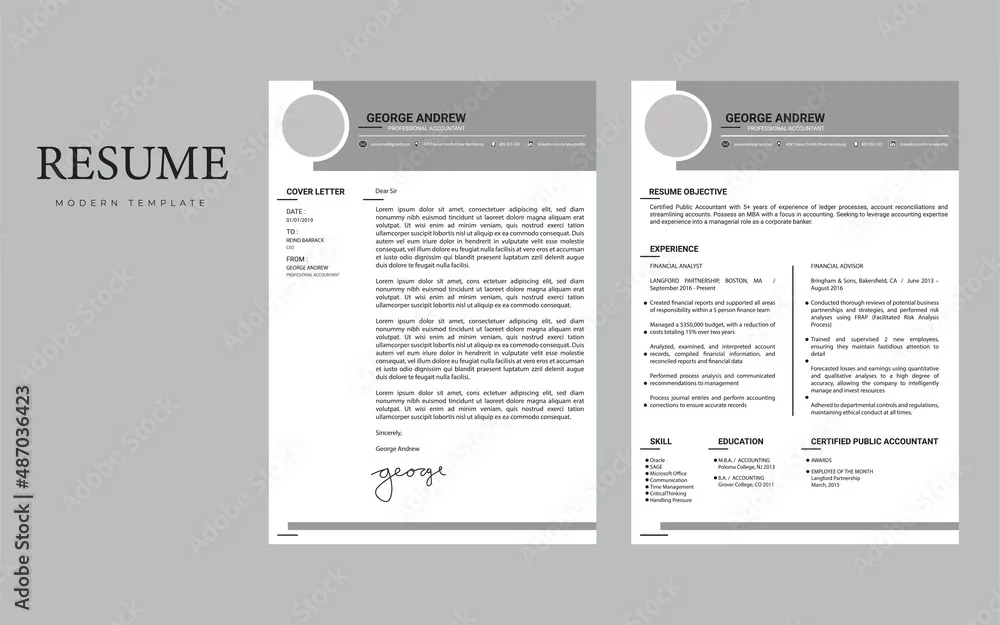
What is a Resume Cover Letter?
A resume cover letter is a crucial document that accompanies your resume when applying for a job. It serves as your introduction to the hiring manager, providing an opportunity to showcase your personality, skills, and enthusiasm for the position. Unlike a resume, which offers a concise summary of your qualifications, a cover letter allows you to elaborate on your experiences and explain why you’re the perfect fit for the role. The cover letter is your chance to make a strong first impression and persuade the employer to read your resume and consider you for an interview. Think of it as your personal sales pitch, highlighting your key strengths and demonstrating your genuine interest in the company and the specific job opportunity.
Why is a Cover Letter Important?
In today’s competitive job market, a cover letter is not just a formality; it’s a necessity. It provides context to your resume, allowing you to connect your skills and experiences to the specific requirements of the job. A well-written cover letter can significantly increase your chances of getting noticed by employers. It allows you to personalize your application and demonstrate a genuine interest in the company and the role. Furthermore, a cover letter showcases your writing skills, attention to detail, and ability to communicate effectively. In many cases, a compelling cover letter can make the difference between getting an interview and being passed over, especially when you are competing with many other candidates. Many hiring managers consider a cover letter as an essential tool for gauging a candidate’s professionalism and suitability for the position.
Key Components of a Winning Cover Letter

A winning cover letter is more than just a formality; it is a strategic tool. Several key components must be included to make it stand out. The following sections explain the elements to maximize your impact on the hiring manager. A well-structured cover letter can transform your job application from ordinary to outstanding, significantly increasing your chances of securing an interview. By carefully crafting each element, you not only present yourself as a qualified candidate but also demonstrate your attention to detail, professionalism, and genuine interest in the company and the role.
Contact Information
Start with your contact information at the top of the letter. Include your full name, phone number, email address, and optionally, your LinkedIn profile URL. This ensures that the hiring manager can easily reach you. Make sure your email address is professional and current, avoiding nicknames or outdated handles. Consider formatting your contact details in a clean and easy-to-read manner, usually left-aligned. This section’s clarity and accuracy are essential; they are the first things the reader will see, ensuring they know how to connect with you.
Professional Header
Include the date and the hiring manager’s or recruiter’s name and address, if available. If you cannot find a specific contact, address the letter to the hiring manager or the appropriate department. This shows that you have done your research and pay attention to details. Formatting should follow standard business letter style, with the date aligned either to the left or right, and the recipient’s details below it. Make sure the header is consistent with the overall professional tone of your application. This shows that you have done your research and are attentive to detail.
Personalized Greeting

Start your cover letter with a personalized greeting. Addressing the hiring manager by name (e.g., “Dear Mr. Smith”) is always preferable. If you cannot find the hiring manager’s name, use a professional greeting like “Dear Hiring Manager” or “Dear [Company Name] Team.” Avoid generic greetings like “To Whom It May Concern,” as they can make your letter appear less tailored. The opening line sets the tone for the rest of your letter; a personalized approach immediately grabs the reader’s attention and indicates that you have invested time and effort into your application. This is a critical component to begin making a positive impression.
Body Paragraphs Crafting Your Narrative
The body of your cover letter is where you make your case. Begin with a strong opening paragraph that grabs the reader’s attention and states your purpose for writing. Mention the specific position you are applying for and how you learned about it. In the subsequent paragraphs, highlight your relevant skills, experiences, and achievements. Use specific examples to demonstrate your qualifications and show how you have contributed to previous employers. Quantify your accomplishments whenever possible by using numbers and data. For example, instead of saying “Improved sales,” state “Increased sales by 15% in six months.” Tailor your narrative to the job description, emphasizing the skills and experiences most relevant to the role. Be clear, concise, and focus on what you can offer the company.
Highlighting Relevant Skills and Experience
Focus on the skills and experiences that align with the job requirements. Analyze the job description carefully and identify the key qualifications the employer is seeking. Then, in your cover letter, provide specific examples of how you have demonstrated these skills in previous roles. Use action verbs to describe your accomplishments and responsibilities. Show, don’t just tell; give concrete evidence of your capabilities. For example, if the job requires strong communication skills, describe a situation where you successfully communicated a complex idea to a team or resolved a conflict through effective communication. Use the STAR method (Situation, Task, Action, Result) to structure your examples and provide clear evidence of your abilities.
Showcasing Enthusiasm and Company Knowledge

Demonstrate your enthusiasm for the company and the specific role. Research the company beforehand and mention something that appeals to you, such as its mission, values, or recent achievements. Explain why you are interested in working for this particular organization and what you admire about it. Your letter should reflect a genuine interest, not just a generic application. This shows that you are motivated and dedicated to joining their team. Show that you’ve taken the time to learn about the company and that you envision yourself as part of their success.
Quantifying Achievements with Numbers
Whenever possible, quantify your achievements to make your impact more tangible and impressive. Instead of vague statements like “Managed projects,” provide specific data such as “Managed five projects simultaneously, resulting in a 10% reduction in project costs.” Using numbers demonstrates your ability to deliver measurable results and provides concrete evidence of your value. Include metrics that show your impact on previous employers. For instance, if you improved customer satisfaction, state the percentage increase. If you increased sales, specify the amount or percentage. If you’ve streamlined processes, mention the time or resource savings achieved. Numbers validate your claims and make your application stand out.
Call to Action
End your cover letter with a clear call to action. State that you are eager for an interview and available to discuss your qualifications further. Reiterate your interest in the role and the company. Make it easy for the hiring manager to take the next step. Provide your contact information again and express your gratitude for their time and consideration. A strong call to action leaves a lasting impression and encourages the employer to follow through with the interview process. Reiterate that you are enthusiastic about the opportunity and ready to start discussing your qualifications in greater detail. Make sure you let them know you’re looking forward to hearing from them soon.
Closing and Signature

Conclude your letter with a professional closing. Use a formal closing such as “Sincerely,” “Best regards,” or “Thank you.” Below your closing, leave space for your handwritten signature, followed by your typed name. If submitting your cover letter electronically, you may omit the handwritten signature. Ensure that your name is clearly visible. This demonstrates attention to detail and professionalism. Make sure the closing and signature are consistent with the overall tone of your letter. This provides a polished finish to your application and leaves a positive final impression on the hiring manager.
Format and Style
Maintain a professional and easy-to-read format. Use a standard font, such as Times New Roman or Arial, with a font size between 10 and 12 points. Use single-spacing within paragraphs and double-spacing between paragraphs. Keep your cover letter concise, ideally no more than one page. Break up long blocks of text with bullet points or short paragraphs to enhance readability. Use clear headings and subheadings to organize your content. Proofread the document thoroughly to ensure there are no grammatical errors or typos. The format and style will influence the reader’s first impression, so it’s important to ensure that it is impeccable.
Proofreading and Editing for Perfection
Before submitting your cover letter, proofread it carefully for any errors in grammar, spelling, punctuation, and sentence structure. Errors can undermine your credibility. Use spell-check and grammar-check tools, but don’t rely on them entirely. Have a friend or family member review your cover letter. Ask them to check for clarity, flow, and overall impact. Ensure that your writing style is clear, concise, and professional. Remember to tailor your cover letter to each job application and customize it accordingly. Correcting errors is a critical part of making the best possible impression. A polished and error-free cover letter shows attention to detail and professionalism.
In conclusion, a well-crafted cover letter is a powerful tool in your job search arsenal. It’s a chance to showcase your personality, skills, and enthusiasm, ultimately increasing your chances of landing an interview. By following these guidelines, you can create a compelling cover letter that highlights your qualifications and sets you apart from the competition. Good luck with your job search!