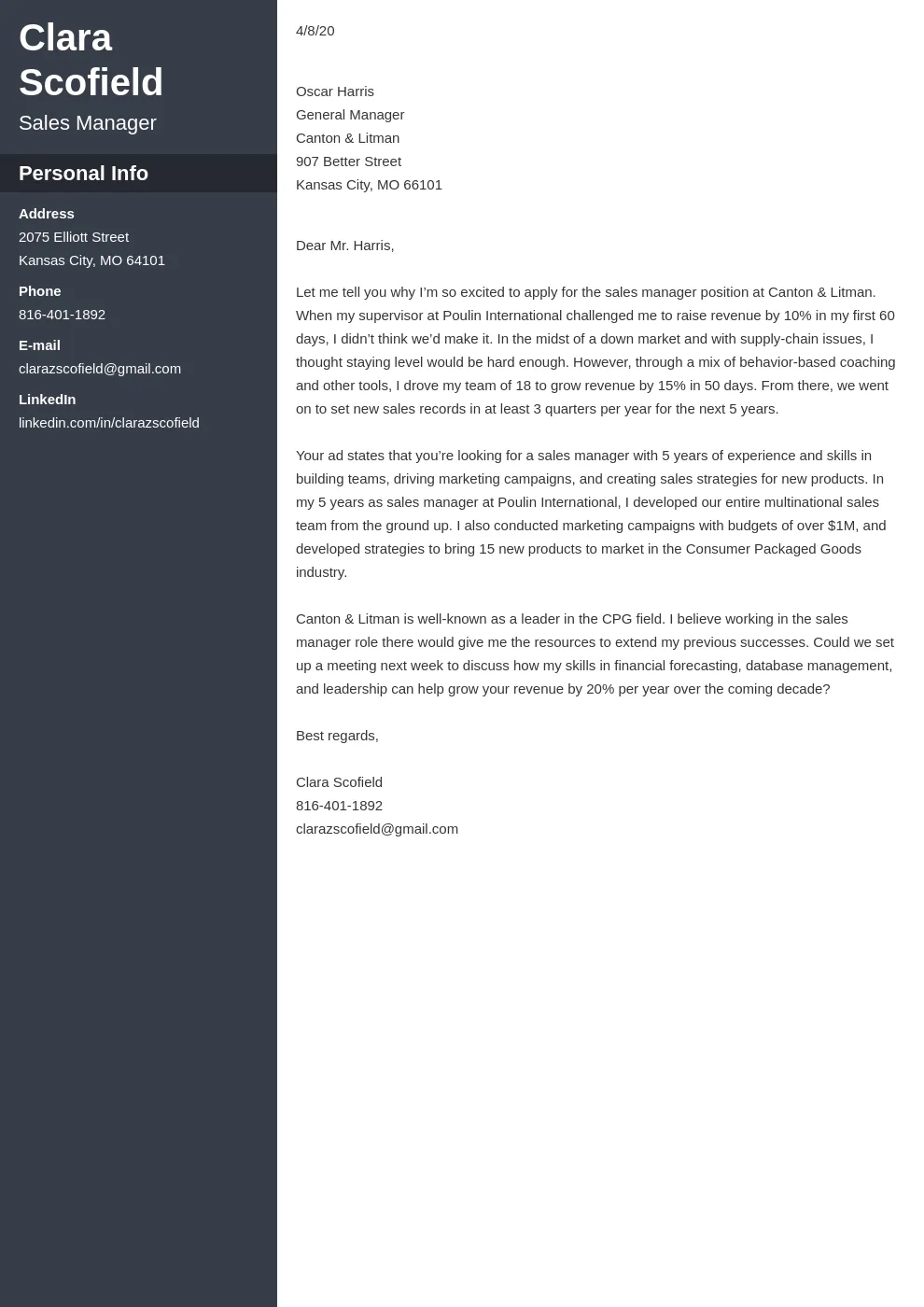
What is a Sales Manager Cover Letter
A Sales Manager cover letter is a crucial document that accompanies your resume when applying for sales manager positions. It serves as your first introduction to the hiring manager, providing a concise overview of your skills, experience, and why you’re the perfect fit for the role. Unlike your resume, which lists your professional history, the cover letter allows you to showcase your personality, express your enthusiasm, and demonstrate your understanding of the company and the specific job requirements. A well-crafted cover letter highlights your most relevant qualifications and persuades the employer to read your resume and consider you for an interview.
Why You Need a Great Sales Manager Cover Letter
In the competitive job market, a strong Sales Manager cover letter can significantly increase your chances of landing an interview. It’s your opportunity to stand out from other applicants by personalizing your application and demonstrating your value proposition. A well-written cover letter can also address any potential gaps in your resume, explain career transitions, and showcase your communication skills. It’s your chance to show, not just tell, the hiring manager why you’re the ideal candidate. It provides an opportunity to create a positive first impression, leaving a lasting impact on the employer. A cover letter allows you to highlight your understanding of the company’s needs and your ability to contribute to its success.
Key Components of a Winning Sales Manager Cover Letter

Crafting a compelling cover letter involves including several key components that work together to present a complete picture of your qualifications and suitability for the sales manager role. These elements are essential to capture the hiring manager’s attention and encourage them to delve deeper into your application. By incorporating these components effectively, you can significantly increase your chances of securing an interview and ultimately, the job offer.
Contact Information
Begin your cover letter with your contact information, including your name, phone number, email address, and LinkedIn profile URL (if applicable). This ensures the hiring manager can easily reach you. Place this information at the top of your cover letter, making it clearly visible. Make sure your email address is professional and your voicemail is set up to receive messages.
Personalized Salutation
Address the hiring manager by name if possible. Research the company to find the name of the hiring manager or recruiter. A personalized salutation, such as “Dear Mr. Smith,” shows you’ve taken the time to research the company and are genuinely interested in the position. Avoid generic greetings like “To Whom It May Concern,” as they make your letter feel impersonal and less engaging.
Introduction and Hook

Start with a strong opening that grabs the reader’s attention. Clearly state the position you are applying for and briefly mention why you are interested in the role and the company. Highlight a key achievement or skill that immediately demonstrates your value. The introduction should be concise and compelling, setting the tone for the rest of your cover letter.
Highlighting Relevant Skills and Experience
Focus on the skills and experiences most relevant to the sales manager position. Refer to the job description and identify the key requirements. Provide specific examples of how you have successfully used these skills in previous roles. Quantify your achievements whenever possible to demonstrate your impact and value.
Quantifying Achievements
Use numbers and data to showcase your accomplishments. Instead of saying “Increased sales,” say “Increased sales by 20% in one year.” Quantifying your achievements makes your claims more credible and demonstrates your ability to drive results. Use metrics such as revenue growth, market share increase, customer acquisition rate, and team performance to showcase your success.
Using Action Verbs

Start your sentences with strong action verbs to create a dynamic and engaging narrative. Examples include “Managed,” “Led,” “Developed,” “Implemented,” “Achieved,” and “Exceeded.” Action verbs make your cover letter more impactful and demonstrate your proactive approach to your work.
Demonstrating Company Knowledge
Show that you’ve researched the company and understand its mission, values, and recent achievements. Mention specific company initiatives, products, or services that resonate with you. Demonstrate how your skills and experience align with the company’s goals. This shows your genuine interest and commitment to the organization.
Expressing Enthusiasm and Fit
Express your enthusiasm for the role and the company. Explain why you believe you are a good fit for the company culture and the specific team you would be joining. Share your passion for sales and your commitment to achieving results. This helps the hiring manager see you as a valuable addition to the team.
Call to Action and Closing

Conclude your cover letter with a clear call to action. Express your interest in an interview and provide your contact information again. Thank the hiring manager for their time and consideration. Use a professional closing, such as “Sincerely” or “Best regards.”
Formatting and Design Best Practices
The formatting and design of your cover letter are just as important as the content. A well-formatted cover letter is easier to read and creates a professional impression. Pay attention to these best practices to ensure your cover letter is visually appealing and reader-friendly.
Choosing the Right Font and Size
Select a professional and readable font, such as Times New Roman, Arial, or Calibri. Use a font size between 10 and 12 points. Ensure consistency throughout the document. Avoid using overly decorative fonts or fonts that are difficult to read, as they can distract from your message.
Keeping it Concise and Readable

Keep your cover letter concise, ideally no more than one page. Use clear and concise language, avoiding jargon and overly complex sentences. Use bullet points and short paragraphs to break up text and make it easier to scan. Proper spacing and margins are crucial for visual appeal.
Proofreading and Editing
Proofread your cover letter carefully for any grammatical errors, typos, or spelling mistakes. Ask someone else to review your letter as well, as a fresh pair of eyes can often catch errors you might miss. Ensure your cover letter is free of errors before submitting it, as mistakes can create a negative impression.
Common Mistakes to Avoid
Avoiding common mistakes can significantly improve the effectiveness of your cover letter. Being aware of these pitfalls will help you create a polished and professional document that accurately represents your qualifications.
Generic Templates

Avoid using generic cover letter templates without personalizing them. Tailor each cover letter to the specific job and company you are applying for. Generic templates make it appear that you have not invested the time and effort required to understand the role and the organization.
Focusing Solely on Responsibilities
Instead of simply listing your responsibilities, focus on your accomplishments and the results you achieved. Quantify your achievements whenever possible to demonstrate your value. Highlighting your achievements and the impact you made in previous roles is much more compelling.
Typos and Grammatical Errors
Carelessly proofread and edit your cover letter. Typos and grammatical errors detract from your professionalism and credibility. Always double-check for mistakes before submitting your application. Having another person review your cover letter can also help to catch errors.
Tailoring Your Cover Letter
Tailoring your cover letter to each job application is essential for demonstrating your genuine interest and suitability for the role. This involves researching the company, matching your skills to the job requirements, and adapting your letter to the specific industry.
Researching the Company
Thoroughly research the company you are applying to. Understand their mission, values, products or services, and recent achievements. Use this information to tailor your cover letter and demonstrate your understanding of the company’s needs. This will show the hiring manager that you are genuinely interested in the position.
Matching Skills to Job Requirements
Carefully review the job description and identify the key skills and qualifications the employer is seeking. Highlight your relevant skills and experience and provide specific examples of how you have successfully demonstrated these skills in previous roles. Make sure to align your qualifications with the job requirements to maximize your chances of getting an interview.
Adapting for Different Industries
Adapt your cover letter to the specific industry you are applying for. Use industry-specific language and tailor your examples to the industry’s needs. Demonstrate your understanding of the industry’s challenges and opportunities. This will demonstrate to the hiring manager that you have the appropriate knowledge.