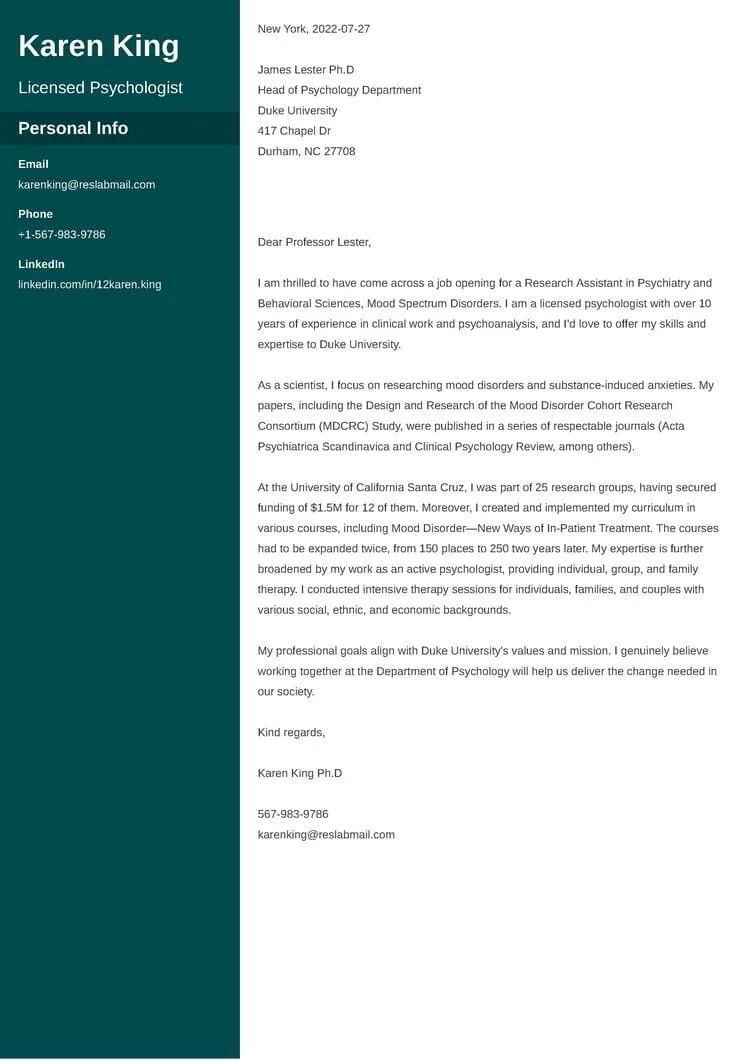
Scientist Cover Letters Understanding the Basics
A scientist cover letter is a crucial document that accompanies your resume when applying for scientific positions. It serves as your initial introduction to a potential employer and provides an opportunity to highlight your qualifications, skills, and experiences in a way that a resume alone cannot. The primary goal of a scientist cover letter is to convince the hiring manager that you are a strong candidate and to secure an interview. Understanding the purpose and importance of a cover letter is the first step toward crafting a compelling document. The best cover letters are tailored to each specific job and clearly articulate why you are the ideal fit for the role, demonstrating your interest in the specific research area and the company’s values. Your cover letter will be your personal introduction, and will likely be the first impression you make, so make it count.
Why a Strong Cover Letter Matters for Scientists
In the competitive field of science, a well-written cover letter can make a significant difference in your job application. It allows you to showcase your personality, explain your career goals, and provide context to your resume. A strong cover letter can help you stand out from other applicants by demonstrating your passion for science and your genuine interest in the specific position and the research involved. It allows you to tell a story beyond the list of your achievements, allowing you to connect with the reader on a personal level. Furthermore, a cover letter provides an opportunity to address any potential gaps or weaknesses in your application. For example, if you are changing career paths, or if you have a particular skill that is useful to the role, this is the space to put it. A compelling cover letter makes you more than just a list of qualifications.
Highlighting Your Skills and Experience

One of the most important aspects of a scientist cover letter is highlighting your relevant skills and experience. This is your chance to go into detail, beyond the resume’s bullet points. Start by identifying the key skills and experiences the employer is looking for in the job description. Then, provide specific examples of how you have demonstrated these skills in your previous roles or research projects. Use action verbs to describe your accomplishments and quantify your achievements whenever possible. For example, instead of saying ‘conducted experiments,’ you could say ‘conducted over 100 experiments, resulting in a 20% improvement in efficiency.’ Tailoring this information to align with the job description ensures that you are highlighting the most relevant aspects of your background and expertise. Use this section to create a good fit with the role, and show how your past will translate into success in the future.
Key Sections of a Scientist Cover Letter
A well-structured scientist cover letter typically includes several key sections. These include your contact information and introduction, a section showcasing your research and projects, a section quantifying your achievements, a section tailored to the specific job, a demonstration of your passion and fit, and a compelling closing statement. Each section plays a crucial role in conveying your qualifications and interest in the position. Following a clear structure helps to ensure that your letter is organized and easy to read. Remember that a disorganized cover letter can be a quick route to the rejection pile. Ensuring you follow a good template will give you a good basis for your work.
Contact Information and Introduction
Start your cover letter with your contact information, including your name, phone number, email address, and any relevant links to your professional profiles (e.g., LinkedIn). Then, address the hiring manager by name if possible. The introduction should immediately grab the reader’s attention by stating the position you are applying for and briefly mentioning why you are interested in the role and the company. Clearly state your purpose and express your enthusiasm for the opportunity. Use a professional tone and keep the introduction concise and to the point. This is your opening statement, the first impression that will set the tone for the rest of your cover letter. Make sure it is clear, easy to read and directly relevant.
Showcasing Your Research and Projects

In this section, delve into your research experience and highlight the projects you have worked on. Briefly describe your research areas and the techniques you are proficient in. Mention any publications, presentations, or awards you have received. Provide specific examples of your contributions to research projects and explain your role in these projects. Quantify your accomplishments and use data whenever possible to illustrate the impact of your work. Showcase your ability to conduct impactful research and communicate your findings effectively. This section is where your technical abilities will shine, so make sure that you give a good summary of your prior work, and frame it within the context of the role you are applying for. Any relevant work here will make your application stand out.
Quantifying Your Achievements
Use numbers, percentages, and specific data points to quantify your achievements and demonstrate the impact of your work. Instead of saying ‘Improved efficiency,’ state ‘Improved efficiency by 15% through optimization of the process.’ Instead of saying ‘Managed a team,’ say ‘Managed a team of 5 researchers, resulting in the successful completion of 3 major projects.’ This level of detail provides concrete evidence of your skills and accomplishments, making your cover letter more compelling. Whenever possible, back up your claims with verifiable results. This information will help you stand out from the crowd, and will demonstrate your capabilities clearly. Be clear, specific, and honest to convey the best possible impression.
Tailoring Your Letter to the Specific Job
Customize your cover letter for each specific job application. Review the job description carefully and identify the key requirements and qualifications. Tailor your letter to address these specific needs, highlighting the skills and experiences that align with the role. Demonstrate your understanding of the company’s mission and values. Research the company and the hiring manager to gain insights into their priorities. Show that you have taken the time to understand the role and the organization, indicating your genuine interest. Generic cover letters are easily identifiable, and demonstrate a lack of care for the role. Always make sure that the letter feels as if it was written for a particular job, and use this to your advantage.
Demonstrating Your Passion and Fit

Express your passion for science and demonstrate your fit for the role and the company. Explain why you are interested in the specific position and how it aligns with your career goals. Highlight your enthusiasm for the research area and the company’s mission. Describe how your skills and experiences make you a good match for the position. Show that you understand the company’s culture and values and that you would be a valuable addition to their team. This is where your personality can really shine through, so let your passion speak for itself. Let your interest in the work shine, and make sure that you convey a strong desire for the role.
Addressing Common Scientist Cover Letter Mistakes
Avoid common mistakes that can undermine your cover letter. These include grammatical errors, typos, and formatting issues. Ensure your cover letter is free of jargon and technical terms that the hiring manager may not understand. Avoid clichés and generic statements. Do not simply restate your resume; provide additional context and insights. Tailor the cover letter to each job application, rather than using a generic template. Proofread carefully and ask a colleague or mentor to review your letter before submitting it. Correcting any errors will greatly improve your application. Reviewing examples of successful scientist cover letters can help avoid making these common mistakes.
Proofreading and Formatting Your Letter
Thoroughly proofread your cover letter for any grammatical errors, typos, or inconsistencies. Use a spell checker and grammar checker to catch any mistakes. Ensure your formatting is clean and professional. Use a standard font and size (e.g., Times New Roman, 12-point font). Use clear headings and subheadings to organize your content. Keep your paragraphs concise and easy to read. Use proper spacing and alignment to enhance readability. A well-formatted and error-free cover letter demonstrates attention to detail and professionalism, which are crucial qualities for a scientist. Make sure that you have a clean copy, with no obvious errors. A poorly formatted cover letter is a quick way to get rejected.
Creating a Compelling Closing Statement

End your cover letter with a strong closing statement that reiterates your interest in the position and thanks the hiring manager for their time and consideration. Express your eagerness to discuss your qualifications further and provide your contact information. Make sure to reiterate your interest in the role, and re-emphasize that your skills will align well. Include a call to action, such as ‘I look forward to hearing from you’ or ‘I am available for an interview at your earliest convenience.’ Close with a professional closing, such as ‘Sincerely’ or ‘Best regards,’ followed by your name. This is your final chance to make a positive impression, so make sure to keep it concise, and clear.
Reviewing Scientist Cover Letter Examples
Reviewing examples of scientist cover letters can provide valuable insights into how to structure your own. Look for examples that align with your field of expertise and the type of position you are applying for. Analyze the language used, the tone, and the overall structure of the letters. Pay attention to how the applicants highlight their skills, experience, and achievements. Adapt the best practices from these examples to create a cover letter that effectively showcases your qualifications. Use these examples as a guide, but avoid simply copying and pasting content. The best cover letters are original and tailored to your unique background and the specific job application. Remember that this is only a guide, and a lot of the work will still depend on your work.