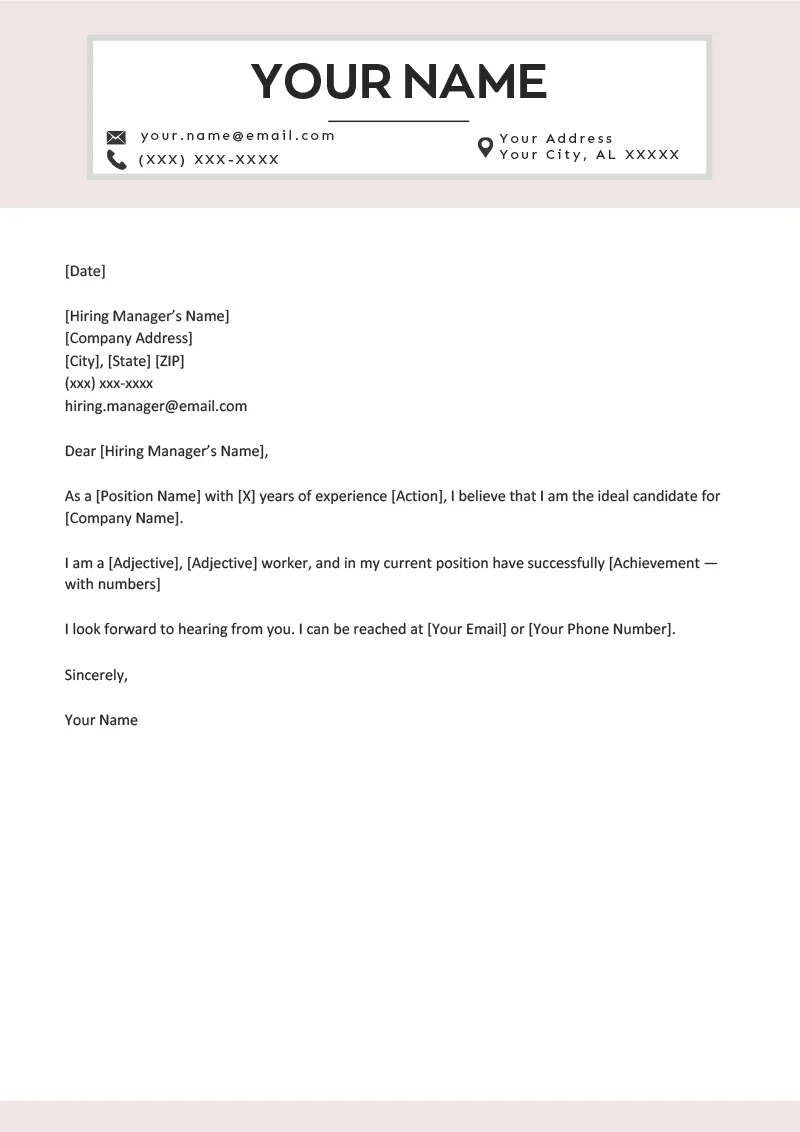
Why Short Cover Letters Matter
In today’s fast-paced job market, hiring managers are inundated with applications. They often spend only a few seconds initially reviewing each one. A short, effective cover letter is crucial because it immediately communicates your value proposition and grabs their attention. Unlike lengthy narratives, a concise cover letter respects the reader’s time while providing a snapshot of your key qualifications. It demonstrates that you understand the importance of clear, impactful communication. A well-crafted short cover letter can significantly increase your chances of getting your resume noticed and securing an interview. The goal is to make a strong impression quickly and efficiently. A brief cover letter showcases that you are focused, organized, and respectful of their time. By delivering your message in a compelling, easy-to-digest format, you position yourself as a candidate who understands professional communication. This first impression is essential and can set the tone for the entire hiring process, emphasizing your ability to be direct and results-oriented.
Grab Attention Fast
Your opening sentence is your first and perhaps only chance to hook the reader. Start strong by stating your interest in the position and highlighting something that immediately grabs their attention. Instead of a generic opening, try mentioning a specific accomplishment or a skill that directly aligns with the job requirements. For example, if you are applying for a marketing role, you could begin by mentioning a successful campaign you spearheaded that significantly increased customer engagement. This approach shows that you have already researched the company and the role and have something valuable to offer. It immediately differentiates you from other applicants. You need to go beyond a simple statement of interest and show that you have something unique to offer. This can be done by referencing a specific project, skill, or achievement relevant to the job. The quicker you can establish your relevance, the better. Using action verbs and quantifiable results also helps capture attention, providing concrete evidence of your abilities. Tailoring your opening to the specific company or role further demonstrates your genuine interest.
Highlight Key Skills and Experiences

The body of your short cover letter should focus on the most relevant skills and experiences that align with the job description. Select 2–3 key qualifications and provide brief, impactful examples. Use action verbs to describe your accomplishments and quantify your results whenever possible. Instead of simply stating that you have excellent communication skills, you could provide an example of how you used those skills to resolve a conflict or successfully present a project to a team. This shows, rather than tells, the hiring manager about your abilities. It’s essential to align your skills with the specific requirements of the job. By highlighting the skills and experiences most relevant to the position, you make it easier for the hiring manager to see how you will contribute to their team. Make sure to provide brief context and quantify your achievements to show the impact of your contributions. This targeted approach makes your cover letter more effective and memorable.
Tailor to the Job Description
Generic cover letters are easy to spot and often end up in the reject pile. Customization is key. Read the job description carefully and identify the most important requirements. Then, tailor your cover letter to highlight the skills and experiences that align with those needs. Show the hiring manager that you have researched the company and understand the role by referencing specific projects, initiatives, or goals. This demonstrates a genuine interest and a proactive approach. Customizing your letter shows that you are serious about the position and have taken the time to understand what the company is looking for. When tailoring your cover letter, address the specific needs of the company and show how your skills and experience make you the ideal candidate. Include keywords from the job description to increase your chances of passing through applicant tracking systems (ATS). This level of personalization greatly increases your chances of being noticed.
How to Format Your Short Cover Letter
Use a Professional Tone

Maintaining a professional tone is essential for any cover letter. Use formal language and avoid slang, clichés, and overly casual expressions. Proofread your letter carefully to eliminate any grammatical errors or typos that could undermine your credibility. Be direct and concise in your writing style. The tone should be confident yet respectful, reflecting your understanding of workplace communication. Demonstrate your professionalism by using a clear, straightforward style. Ensure that your language is appropriate for the specific industry and the company culture you’re applying to. Your cover letter should convey maturity, respect, and a genuine interest in the position. A well-written cover letter also demonstrates your attention to detail, which is a key skill in professional environments. Maintain a professional demeanor by keeping the focus on your qualifications and how they match the job requirements.
Keep it Concise
The goal is to be brief but impactful. Aim for a cover letter that is no more than one page in length. The most effective short cover letters are typically between 200 and 300 words. By keeping it short, you ensure that your message is easy to read and immediately accessible to the hiring manager. Use concise sentences and paragraphs. Avoid unnecessary words or phrases. Every sentence should add value and contribute to the overall impact of your letter. The shorter you keep your letter, the more likely it is to be read thoroughly. Prioritize clarity and directness. The use of bullet points or numbered lists for key achievements or skills can also help break up text and make your letter more readable. Consider using a clean and easy-to-read font, such as Arial or Times New Roman, to enhance readability.
Proofread Carefully
Errors can undermine your credibility. Thoroughly proofread your cover letter before submitting it. Check for any grammatical errors, spelling mistakes, or typos. It’s also a good idea to have a friend or colleague review your letter for any areas that could be improved. Ensure your cover letter is free of errors, reflecting your attention to detail. Proofreading isn’t just about finding mistakes; it’s also about ensuring that your message is clear, concise, and compelling. Errors can make you look careless or unprofessional. A flawless cover letter shows that you take the application process seriously and that you are committed to excellence. Careful proofreading should also include verifying the company name, the name of the hiring manager, and the job title. Use a spell checker and grammar checker, but don’t rely on them entirely. Always read through the document carefully yourself. This ensures that the content and formatting are perfect.
Top 5 Secrets to a Killer Short Cover Letter

Secret 1 Highlight Key Achievements
Instead of listing your responsibilities, focus on your most significant achievements. Highlight accomplishments that demonstrate your skills and abilities. Use action verbs to describe your contributions and quantify your results whenever possible. This approach grabs the reader’s attention and shows how you have made a positive impact in previous roles. Focus on what you have achieved, rather than simply what you have done. Quantifiable achievements can make your accomplishments more compelling and show the tangible value you bring. Choose 2–3 key achievements that are most relevant to the job you are applying for, ensuring that your accomplishments align with the job description’s requirements. By focusing on achievements, you provide concrete evidence of your skills and increase your chances of getting an interview. Tailor these achievements to match the company’s needs and values.
Secret 2 Quantify Your Accomplishments
Quantifying your achievements provides tangible evidence of your impact. Use numbers, percentages, and data to show the results you achieved. Instead of saying you improved customer satisfaction, state that you increased satisfaction scores by 15%. Quantifying your accomplishments makes them more credible and memorable. It also helps the hiring manager understand the value you bring to the table. By using numbers, you transform your achievements from general statements into specific, measurable results. Always back up your claims with evidence to demonstrate the impact of your contributions. Using numbers allows the hiring manager to see at a glance the results of your work and how it benefited previous employers. This concrete evidence sets you apart from other candidates. These numbers also show that you are results-oriented and focused on achieving specific goals.
Secret 3 Show Your Enthusiasm

Expressing your enthusiasm for the position and the company can make your cover letter stand out. Show that you are genuinely interested in the role and that you have researched the company. Use phrases that convey your excitement, such as “I am excited about the opportunity” or “I am particularly drawn to.” Showing enthusiasm demonstrates your interest and energy. However, avoid being overly effusive. It is essential to balance your enthusiasm with professionalism and a clear focus on your qualifications. Your cover letter should reflect your genuine interest in the position and the company. Do your research. Show that you have a strong understanding of the company’s values, goals, and culture. The key is to show a passion for the work and a clear understanding of how you can contribute to the company’s success.
Secret 4 Include a Strong Call to Action
A call to action prompts the hiring manager to take the next step. At the end of your cover letter, clearly state what you want them to do, such as requesting an interview. This might include a statement like “I am eager to discuss my qualifications further and would welcome the opportunity to meet with you.” Make it easy for the hiring manager to contact you by providing your phone number and email address. Encourage them to reach out and schedule an interview. The call to action is a crucial part of a cover letter, giving the hiring manager clear instructions on how to proceed. Including a call to action increases your chances of getting an interview by making the process easier. It is important to keep it professional, direct, and focused on the next step. A well-crafted call to action shows initiative and ensures that your application isn’t lost in a pile of resumes.
Secret 5 Customize for Each Application
Customization is one of the most critical aspects of a successful cover letter. Never send a generic letter. Always tailor your cover letter to the specific job and company. Customize your cover letter by highlighting the skills and experiences most relevant to the job requirements. Address the specific needs of the company, showing that you have done your research and understand the role. Customization shows that you are serious about the position and willing to invest time and effort. This demonstrates your attention to detail and genuine interest. This extra effort greatly increases your chances of getting noticed. Personalize your cover letter to the hiring manager and the company. Use the company’s name and tailor the content to reflect the job’s specific requirements. This attention to detail sets you apart.
Final Thoughts Keep it Short and Sweet

A short cover letter can be highly effective. By focusing on key achievements, quantifying your results, and tailoring your letter to each job, you can make a strong impression in a concise format. Remember to keep it professional, concise, and error-free. A well-crafted, short cover letter showcases your value and increases your chances of landing an interview. By following these secrets, you can create a cover letter that grabs attention, highlights your skills, and helps you get noticed by potential employers. A short, focused cover letter is a powerful tool for your job search, so embrace the opportunity to make a quick and impactful impression. Don’t be afraid to show off your accomplishments. Create a compelling narrative that demonstrates how you can contribute to the company’s success. Remember that a well-crafted cover letter helps you stand out from other applicants and gives you the chance to show your unique value and skills.