Understanding the Student Internship Cover Letter
A student internship cover letter is a crucial document that accompanies your resume when applying for internships. It serves as your introduction to a potential employer and allows you to highlight your skills, experiences, and enthusiasm for the opportunity. Unlike a resume, which is a factual overview of your qualifications, a cover letter provides a platform to express your personality, articulate your career goals, and explain why you are a suitable candidate for the specific internship position. This guide will break down the key components of a successful student internship cover letter, providing you with the knowledge and tools to create a compelling document that stands out from the competition.
Why is a Cover Letter Important
In today’s competitive job market, a well-crafted cover letter is essential for several reasons. Firstly, it allows you to personalize your application and demonstrate your genuine interest in the internship and the company. Secondly, it provides an opportunity to expand on the information presented in your resume, providing more context and detail about your skills and experiences. Thirdly, a cover letter showcases your communication skills, which are highly valued by employers. It demonstrates your ability to write clearly, concisely, and persuasively. Finally, a strong cover letter can help you stand out from other applicants, especially if you are a student with limited professional experience. By effectively communicating your unique value proposition, you increase your chances of securing an interview and ultimately, landing the internship.
Key Elements of a Student Internship Cover Letter

A well-structured cover letter consists of several key elements that work together to present you as a strong candidate. Each section plays a vital role in conveying your qualifications and enthusiasm to the employer. From the header to the closing, every detail should be carefully considered and tailored to the specific internship you are applying for. Understanding these elements and how they fit together is the first step in crafting an effective student internship cover letter.
Header Section
The header sets the tone for your cover letter and includes your contact information and the date. It’s important to present a clean and professional appearance. Make sure all the information is accurate and up-to-date.
Contact Information
Include your full name, address, phone number, and professional email address. Ensure your email address is appropriate and reflects a professional image. It is important to ensure that your contact information is easily accessible to the hiring manager.
Date

Place the date of your application below your contact information. This helps the employer understand when you submitted your application.
Recipient’s Information
Include the name of the hiring manager (if known), their title, the company name, and the company address. If you can’t find the hiring manager’s name, use a general salutation like ‘Dear Hiring Manager.’
Salutation
Use a professional salutation. ‘Dear Mr./Ms. [Last Name]’ is standard if you know the hiring manager’s name. If you don’t know the name, use ‘Dear Hiring Manager’ or ‘Dear [Company Name] Team’. Avoid overly casual greetings.
Body Paragraphs

The body paragraphs are the core of your cover letter. They should be concise, well-organized, and persuasive. This section is where you present your case and highlight your suitability for the internship. Ensure you have three to four paragraphs that effectively communicate the value you bring.
First Paragraph Introduction
In the first paragraph, state the purpose of your letter—that is, the specific internship you are applying for—and where you found the opportunity. Briefly mention why you are interested in the position and the company. It’s vital to grab the reader’s attention from the start. Show that you’ve researched the company and understand the role.
Second Paragraph Highlight Your Skills and Experience
The second paragraph should highlight your most relevant skills and experiences. Connect your skills to the internship’s requirements. This is where you provide details to support your claims. For example, if the internship requires strong communication skills, provide an example of how you’ve demonstrated those skills in a previous role or academic project. Quantify your achievements whenever possible. For example, ‘Managed a team of five volunteers, increasing event attendance by 20%’.
Third Paragraph Express Enthusiasm and Fit

In the third paragraph, express your enthusiasm for the internship and explain why you are a good fit for the company’s culture. Share your understanding of the company’s mission or values and how you can contribute to their success. Explain your long-term career goals and how this internship aligns with them. This paragraph shows that you’ve thought about your career aspirations and how the internship fits into those plans.
Closing Paragraph Call to Action
The closing paragraph should reiterate your interest in the internship, thank the reader for their time and consideration, and include a call to action. State your availability for an interview and provide your contact information again. Make it easy for the employer to contact you by clearly stating your availability and contact preferences.
Complimentary Close
Use a professional closing, such as ‘Sincerely,’ ‘Best regards,’ or ‘Thank you.’ Ensure the closing matches the tone of your letter and is appropriate for the company culture.
Signature

Leave space for your handwritten signature if you are submitting a hard copy. Otherwise, type your full name below the closing.
Formatting and Design
The formatting and design of your cover letter are critical for making a positive first impression. A well-formatted letter is easy to read and demonstrates your attention to detail. Pay close attention to the font, margins, and spacing to ensure a polished and professional appearance. Keep the design clean and simple; avoid any unnecessary flourishes.
Font and Font Size
Choose a professional and easy-to-read font, such as Times New Roman, Arial, or Calibri. Use a font size between 10 and 12 points. Ensure the font is consistent throughout the letter to maintain a professional look.
Margins and Spacing

Use standard 1-inch margins on all sides of the page. Use single spacing within paragraphs and double spacing between paragraphs. This creates a clean, uncluttered layout that is easy for the reader to scan.
Proofreading and Editing
Proofreading is an essential step. Carefully review your cover letter for any typos, grammatical errors, or inconsistencies. Read your cover letter aloud to check for awkward phrasing. Consider having a friend, career advisor, or family member review your cover letter as well. They can provide a fresh perspective and catch any errors you might have missed. A polished cover letter with no errors demonstrates your attention to detail and professionalism.
Examples of Effective Student Internship Cover Letters
Reviewing examples of effective cover letters can provide valuable insights into how to structure and write your own. Several resources offer templates and examples tailored to different industries and internship types. Use these examples as a guide, but remember to personalize your cover letter to reflect your unique skills, experiences, and enthusiasm.
Cover Letter Example 1
This example demonstrates a well-structured cover letter for a marketing internship. The applicant highlights their relevant coursework and experience, expressing enthusiasm and a clear understanding of the company’s branding strategies.
Cover Letter Example 2
This example showcases a cover letter for a software engineering internship. The applicant emphasizes their coding skills and projects. The letter highlights how their skills and projects align with the internship requirements.
Cover Letter Example 3
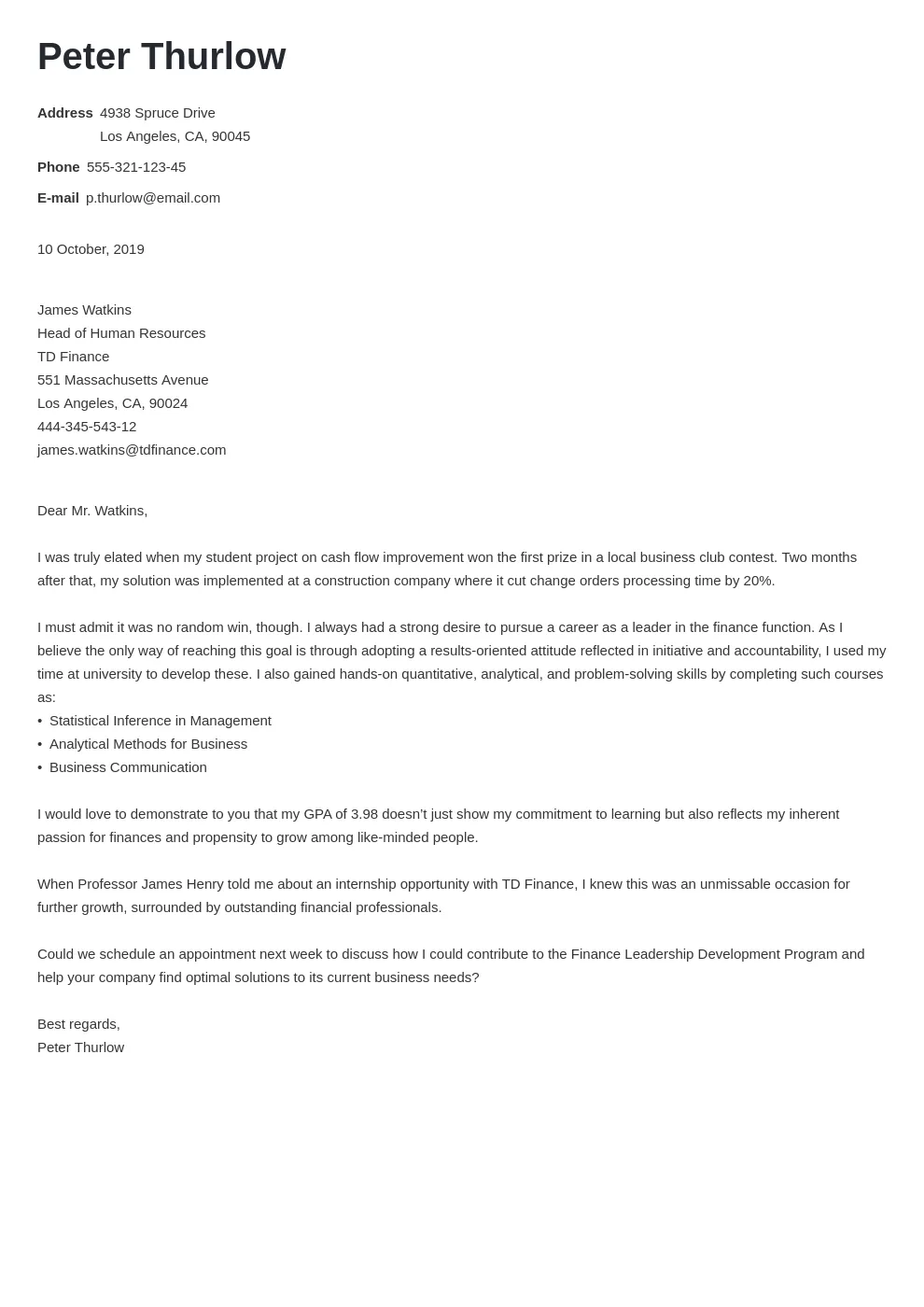
This example is for a finance internship. The cover letter highlights relevant coursework, and volunteer experiences, demonstrating a passion for the field. It’s important to be specific about why you’re interested in finance.
Common Mistakes to Avoid
Avoiding common mistakes can significantly improve the effectiveness of your cover letter. Knowing what to avoid will help you create a strong, professional document. Paying attention to these pitfalls will set you apart from other applicants.
Generic Cover Letters
Avoid sending generic cover letters that are not tailored to the specific internship or company. Customize each cover letter to demonstrate your genuine interest and understanding of the role. Generic letters show a lack of effort and attention to detail.
Typos and Grammatical Errors
Typos and grammatical errors can damage your credibility and professionalism. Always proofread your cover letter carefully. A polished letter shows you’re serious about the opportunity. Use spell-check tools and have others review your letter.
Lack of Research
Failing to research the company and the internship position is a major mistake. Your cover letter should demonstrate your knowledge of the company’s mission, values, and the role’s specific requirements. Without research, your letter won’t stand out.
Tailoring Your Cover Letter to Specific Internships
Tailoring your cover letter to each specific internship is critical for demonstrating your interest and qualifications. Generic cover letters often fail to impress potential employers because they don’t address the unique needs of the role or the company’s values. The more you customize your cover letter, the better your chances of making a positive impression. A one-size-fits-all approach simply won’t work.
Researching the Company and Internship
Before writing your cover letter, research the company and the specific internship position. Visit the company’s website, read articles, and review their social media presence. Understand the company’s mission, values, and recent news. Identify the key responsibilities and required skills for the internship. Use this information to customize your cover letter and highlight how your skills and experiences align with their needs.
Highlighting Relevant Skills
Carefully review the internship description and identify the skills and qualifications the employer is seeking. In your cover letter, highlight the skills and experiences that are most relevant to the role. Provide specific examples to demonstrate how you have used these skills in the past. Use keywords from the job description to ensure your cover letter is aligned with the requirements.
Showcasing Your Personality
While it is essential to be professional, your cover letter should also allow your personality to shine through. Let your enthusiasm and passion for the internship and the company come across in your writing. Show your individuality and differentiate yourself from other candidates. Avoid being overly formal and strive to create a genuine connection with the reader.
Tips for Writing a Compelling Student Internship Cover Letter
In addition to the essential elements and formatting guidelines, several tips can help you write a compelling cover letter that impresses potential employers. Implementing these strategies will increase your chances of making a positive impression and securing an interview.
Focus on Achievements
Focus on your achievements rather than simply listing your responsibilities. Use action verbs to describe your accomplishments and quantify them whenever possible. This helps employers understand the value you brought to previous roles or projects.
Quantify Your Accomplishments
Whenever possible, quantify your accomplishments to provide concrete evidence of your skills and abilities. Use numbers and data to demonstrate the impact of your work. For example, instead of saying ‘Improved customer service,’ say ‘Increased customer satisfaction scores by 15% through implementing a new training program.’
Use Action Verbs
Start your sentences with strong action verbs to make your cover letter more dynamic and engaging. Action verbs bring your accomplishments to life and demonstrate your initiative and capabilities. Examples of effective action verbs include ‘managed,’ ‘developed,’ ‘implemented,’ ‘led,’ ‘created,’ and ‘achieved.’
Proofread Thoroughly
Always proofread your cover letter carefully before submitting it. Look for any typos, grammatical errors, or inconsistencies. Reading your cover letter aloud can help you catch awkward phrasing or sentences. Having a fresh pair of eyes review your cover letter can also be helpful.
Final Thoughts and Resources
Writing a compelling student internship cover letter is an investment of time and effort that can significantly improve your chances of securing an internship. By understanding the key elements, avoiding common mistakes, and following the tips provided, you can create a document that effectively showcases your qualifications and enthusiasm. Remember to tailor your cover letter to each specific internship, and always proofread carefully before submitting it. With practice and attention to detail, you’ll be well on your way to landing your dream internship. Good luck!