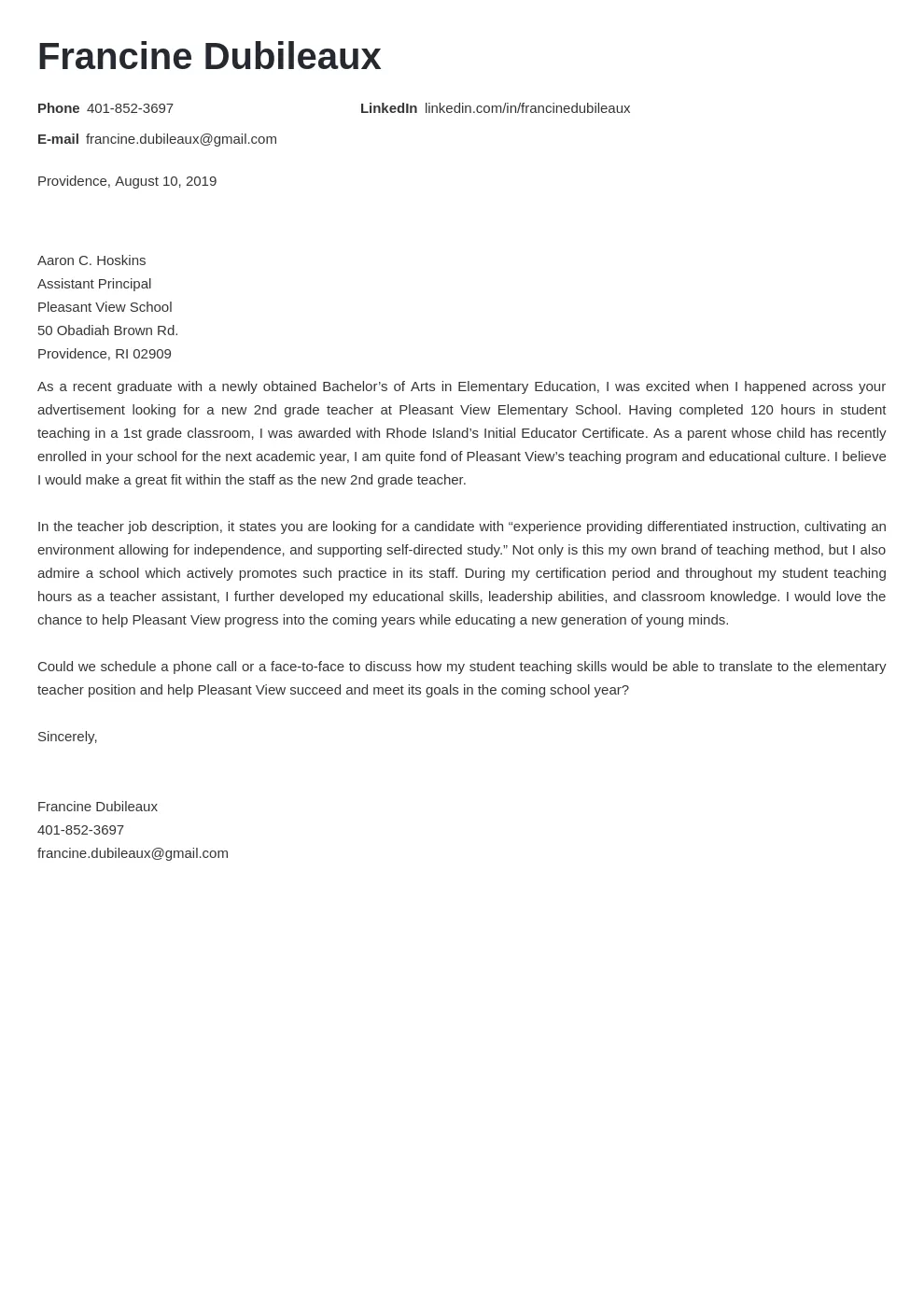
What is a Cover Letter?
A cover letter is a crucial document that accompanies your resume when applying for a teaching position. It serves as your introduction to the hiring committee, allowing you to showcase your personality, passion for teaching, and relevant skills. Unlike a resume, which provides a factual overview of your experience, a cover letter allows you to tell a story, explaining why you are the ideal candidate for the specific role. It’s your opportunity to make a strong first impression and persuade the employer to read your resume and consider you for an interview. Crafting a compelling cover letter is especially important when you have limited or no prior teaching experience, as it provides a space to highlight transferable skills and your enthusiasm for education.
Cover Letter: The First Impression
The cover letter is often the first document a potential employer sees, making it the first impression you make. It’s your opportunity to capture their attention and make them want to learn more about you. A well-written cover letter demonstrates your communication skills, attention to detail, and understanding of the teaching profession. It should reflect your personality and passion, setting you apart from other applicants. When you have no teaching experience, the cover letter becomes even more critical as it needs to convince the hiring manager that you are a worthy candidate despite the lack of direct classroom experience. You must showcase your potential and eagerness to learn and contribute to the school’s environment.
Key Elements of a Teacher Cover Letter

A strong teacher cover letter includes several key elements designed to highlight your qualifications and enthusiasm. These components work together to create a persuasive narrative that captures the reader’s interest and convinces them of your potential. By carefully constructing each section, you can demonstrate why you are the ideal candidate, even without direct teaching experience. Each part plays a significant role in presenting you as a well-rounded and capable professional ready to take on the challenges of teaching.
Header and Contact Information
Begin your cover letter with a professional header containing your name, address, phone number, and email address. Ensure this information is up-to-date and easily accessible. Directly below your contact information, include the date and the hiring manager’s name (if known), title, and the school’s address. Using the correct name and title shows you’ve done your research and are genuinely interested in the position. This section establishes your professionalism and makes it easy for the recipient to contact you if they wish to move forward with your application. It is often overlooked, but crucial to setting the right tone from the very start.
The Greeting
A professional greeting is crucial for starting your cover letter. If possible, address the hiring manager by name, such as “Dear Mr./Ms. [Last Name].” This personalized approach immediately demonstrates your attention to detail and genuine interest in the position. If you don’t know the hiring manager’s name, a general greeting like “Dear Hiring Committee” or “Dear [Department Name] Hiring Team” is acceptable. Avoid generic greetings such as “To Whom It May Concern,” as they can make your letter feel impersonal. The greeting sets the tone for the rest of the letter, so choosing the appropriate greeting helps you create a positive first impression.
Body Paragraph 1 Expressing Your Passion

In the first body paragraph, clearly state the position you are applying for and express your genuine passion for teaching. Explain what excites you about the role and the school. Describe your personal connection to education and why you are drawn to the teaching profession. This is where you communicate your enthusiasm and commitment to student success. Focus on your motivation and your understanding of the impact a good teacher can have. For those with no experience, this section is especially important as it showcases your enthusiasm and dedication, compensating for the lack of direct classroom experience. Showing your passion helps you connect with the reader and demonstrate your potential.
Highlighting Transferable Skills
When you lack direct teaching experience, it’s vital to emphasize transferable skills you’ve gained from other experiences, such as leadership, communication, organization, and problem-solving. Provide specific examples of how you’ve used these skills effectively in previous roles or volunteer activities. For example, if you led a team in a project, highlight how you motivated others, resolved conflicts, and achieved goals. If you have experience in tutoring or mentoring, emphasize the skills you used to connect with others and help them learn. The goal is to show that even without direct experience, you possess the capabilities necessary to be an effective teacher. Providing concrete examples strengthens your claims and makes your application more compelling.
Showcasing Relevant Experiences
Even without classroom experience, you likely have experiences that are relevant to teaching. These can include tutoring, mentoring, coaching, volunteering, or any role where you’ve worked with young people. Describe these experiences in detail, highlighting the responsibilities you held, the skills you developed, and the outcomes you achieved. For example, if you volunteered at a youth center, explain how you planned activities, managed a group, or assisted with educational programs. If you tutored, describe the methods you used to help students understand the material and improve their grades. These experiences demonstrate your ability to interact with students, manage a classroom-like environment, and support learning. Always focus on the skills you used and what you learned from each experience.
Body Paragraph 2 Demonstrating Your Value

In your second body paragraph, demonstrate the value you will bring to the school and the students. Explain what sets you apart from other candidates and how your skills and experience align with the school’s values and needs. Research the school’s mission, vision, and programs and tailor your cover letter to reflect how you can contribute to their goals. This might involve highlighting specific skills, such as your ability to create engaging lessons, differentiate instruction, or use technology effectively. Focus on what you offer and how you can make a positive impact on the students and the school community. This is your opportunity to show how you can contribute and become a valued member of the team.
Quantifiable Achievements
Whenever possible, quantify your achievements to provide concrete evidence of your skills and abilities. Instead of simply stating that you improved student performance, provide specific data, such as “Increased student test scores by 15%” or “Improved student engagement by implementing interactive activities.” Quantifiable achievements are more compelling than vague statements and demonstrate your ability to achieve results. Similarly, if you volunteered, mention the number of hours, the size of the group you worked with, or any specific accomplishments you achieved. By presenting your achievements in a quantifiable manner, you make a stronger case for your qualifications and show that you can make a measurable impact.
Highlighting Your Teaching Philosophy
Briefly articulate your teaching philosophy, which is the way you approach teaching and learning. This should include your beliefs about how students learn best, your methods for creating a positive classroom environment, and your approach to managing behavior. Even without teaching experience, you can describe your ideas about education. Explain what inspires you as an educator and how you plan to create an environment where students feel supported, challenged, and motivated to learn. For example, you might mention your belief in creating a student-centered classroom, fostering collaboration, or promoting critical thinking. Your teaching philosophy allows you to communicate your values and vision as an educator, demonstrating your commitment to student success.
Body Paragraph 3 Expressing Enthusiasm and Call to Action

In your final body paragraph, express your enthusiasm for the position and reiterate your interest in the school. Indicate that you have attached your resume for their review and are available for an interview at their earliest convenience. Make it clear that you are eager to discuss your qualifications and how you can contribute to the school’s success. A strong call to action leaves the hiring manager with a clear understanding of your interest and next steps. Ensure you include your contact information once more, making it easy for them to get in touch with you. End the letter with a professional closing such as “Sincerely” or “Best regards” and your typed name.
Closing the Letter
End your cover letter with a professional closing and your signature. Use a standard closing such as “Sincerely,” “Best regards,” or “Thank you for your consideration.” Below the closing, type your full name. If you are submitting a digital application, you don’t need to sign it manually, but a digital signature is a great touch. This formal closing adds a professional touch to your cover letter, showing respect for the hiring manager. Make sure you have proofread the entire letter before finalizing and sending.
Cover Letter Examples for Teachers (No Experience)
Here are examples of how to structure your cover letter, emphasizing different aspects based on your prior experiences, to illustrate the concepts. These examples offer insights into how to showcase your skills effectively and make your application more impactful. Remember to tailor your cover letter to each specific job application.
Example 1 Focus on Academic Achievements

In this example, the applicant highlights their academic background, skills, and achievements from their university studies, emphasizing how these align with the role and the school’s requirements. They can showcase their understanding of educational theories, methodologies, and their ability to create effective lesson plans. If you have a strong academic record, highlight your GPA or any awards or recognitions you have received. Discuss any projects you completed, such as research papers or presentations, that showcase your ability to conduct research, analyze data, and communicate your findings. It is important to clearly connect the academic background to the specific needs of the teaching position, like their experience working in academic setting.
Example 2 Highlight Volunteer Experience
For this example, the applicant will focus on volunteer experience to show their compassion. If you have volunteered at a school, community center, or youth organization, discuss these experiences to show your ability to interact with and mentor children. In your cover letter, detail how you assisted with activities, managed groups, and supported educational programs. Provide specific examples of your responsibilities and the positive outcomes you achieved, such as helping students improve their grades or making a positive impact on their emotional well-being. Highlight any skills you developed through volunteering, like communication, teamwork, and problem-solving, and show the school that you possess skills directly relevant to teaching. This helps to convince the hiring committee, even in the absence of direct teaching experience.
Example 3 Emphasizing Soft Skills
When the applicant’s experience leans towards soft skills, they must focus on the transferable abilities and personal qualities that can contribute to successful teaching. Communication, empathy, and organization are just a few examples. Mention instances where these skills proved helpful. Show how you were able to lead a project or coordinate events. Discuss any situations where you needed to mediate conflicts or offer emotional support. Emphasize your ability to remain calm in stressful situations and show compassion to others. Highlight your dedication to lifelong learning and professional development. These types of skills can compensate for the lack of teaching experience.
Additional Tips and Advice

In addition to the core elements, there are additional tips to help you create a standout cover letter, especially when you are lacking direct teaching experience. These tips will make your application more compelling. Tailoring your cover letter to the specific role, carefully proofreading and editing, and paying attention to formatting can significantly increase your chances of success.
Tailoring to the Specific Role
Always tailor your cover letter to the specific teaching position and school. Carefully review the job description and identify the skills, qualifications, and experiences the school values. Use the language and keywords from the job description to demonstrate that you meet the requirements. Highlight the aspects of your experience that align with the school’s needs and mission. Mention any specific programs or initiatives the school is involved in and explain how your skills and experiences relate. This level of personalization shows that you have taken the time to research the role and that you are genuinely interested in the school and position. Tailoring your cover letter makes it more relevant and increases your chances of standing out.
Proofreading and Editing
Thoroughly proofread and edit your cover letter before submitting it. Check for any grammatical errors, spelling mistakes, and typos. A polished cover letter shows attention to detail and professionalism. Have someone else review your letter to catch any errors you might have missed. Pay attention to the overall flow and clarity of your writing. Ensure that your ideas are well-organized and easy to follow. Incorrect grammar or spelling errors can undermine your credibility and make a negative impression. Proofreading helps you to guarantee that your message is clear and that you present yourself in the best light.
Cover Letter Formatting
Use a professional and easy-to-read format for your cover letter. Choose a standard font like Times New Roman, Arial, or Calibri, and use a font size between 10 and 12 points. Use single-spaced lines and double-space between paragraphs to ensure readability. Use clear headings and subheadings to organize your content and make it easy for the reader to scan. Keep your cover letter to one page long, as hiring managers are often busy. Proper formatting increases readability and makes it easier for the hiring manager to quickly find the information they need. Good formatting makes your cover letter more professional and showcases your attention to detail.
Common Mistakes to Avoid
Avoid these common mistakes. Writing a generic cover letter that isn’t tailored to the specific role is a big one. It shows a lack of effort and can be perceived as a sign of a lack of interest. Do not include irrelevant information or unrelated experiences, as they can distract the reader from the skills and experience that are relevant to the teaching position. Avoid writing an overly long cover letter, as hiring managers don’t have much time. Focus on concise and impactful statements. Don’t use the same cover letter for multiple positions without making any revisions. Always personalize your cover letter to the specific job to demonstrate your interest and ensure its relevance.
Final Thoughts and Next Steps
Writing a compelling cover letter without prior teaching experience requires thoughtful planning and strategic presentation. By focusing on your passion, transferable skills, and relevant experiences, you can create a cover letter that showcases your potential and impresses hiring managers. Remember to tailor your cover letter to the specific job, proofread carefully, and follow proper formatting guidelines. This approach increases your chances of making a positive first impression, securing an interview, and beginning your journey in the teaching profession. Your cover letter can also demonstrate your enthusiasm and dedication to student success.