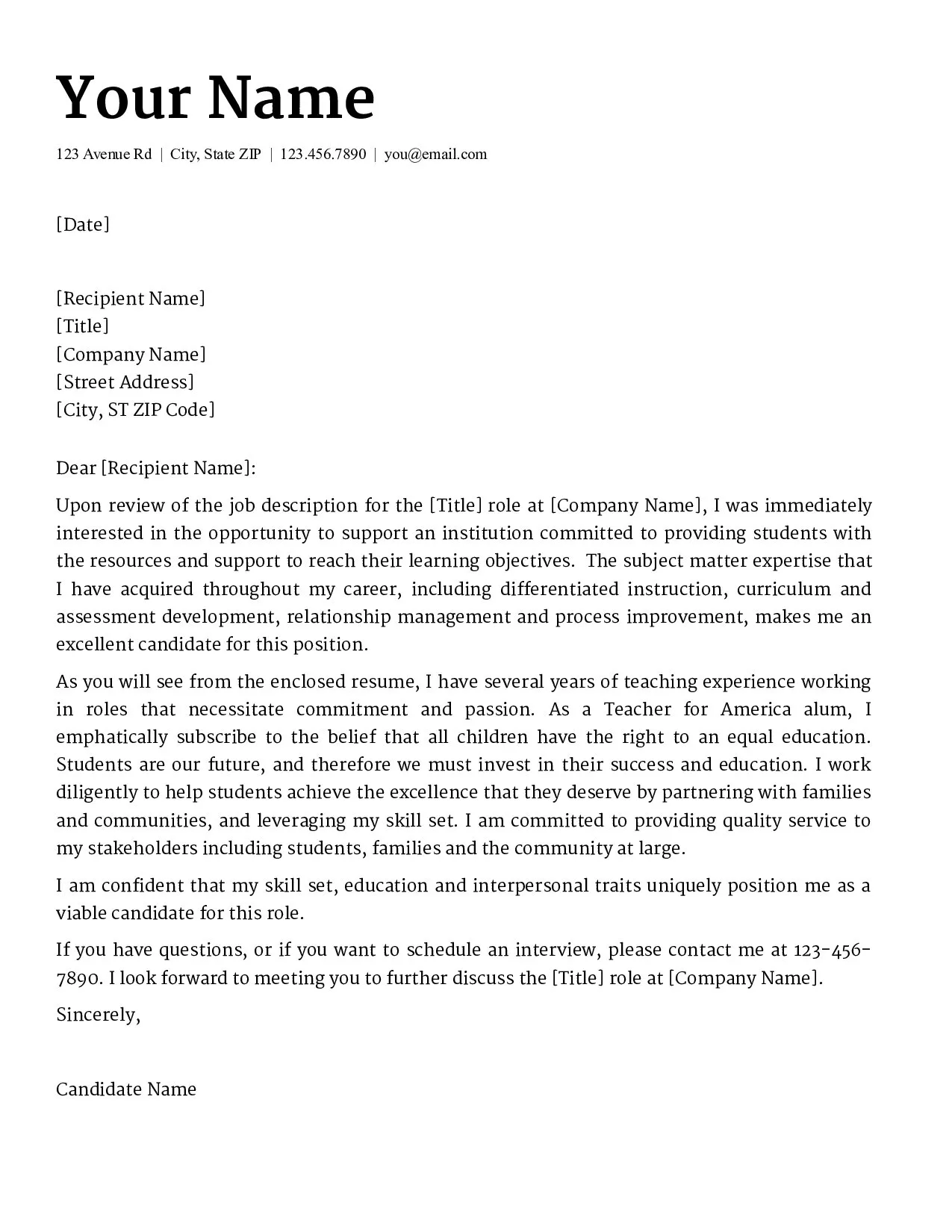
What Is a Teacher Cover Letter?
A teacher cover letter is a crucial document accompanying your resume when applying for teaching positions. It serves as your introduction to the hiring committee, offering a glimpse into your personality, teaching philosophy, and qualifications beyond what’s listed on your resume. For beginner teachers, this letter is especially important. It’s your chance to showcase your enthusiasm, dedication, and potential, even if you lack extensive experience. It is a sample of your written communication skills, which are paramount in the teaching profession. A well-crafted cover letter can significantly increase your chances of securing an interview and ultimately, landing your dream teaching job. Remember that your cover letter is a marketing tool for yourself.
Key Components of a Cover Letter
A strong teacher cover letter is comprised of several essential components, each playing a vital role in presenting you as a qualified and enthusiastic candidate. These elements work together to create a compelling narrative that highlights your strengths and aligns your aspirations with the school’s needs. Knowing these key components will help you build a great teacher cover letter.
Header

The header should include your contact information, such as your name, phone number, email address, and optionally, your LinkedIn profile or professional website. This information should be clearly visible and easy to find. It’s important to use a professional-looking email address. Double-check that all information is correct to ensure potential employers can easily reach you. The header sets the professional tone for your letter. A clean and organized header reflects your attention to detail and professionalism, which are crucial qualities for a teacher.
Greeting
Start your cover letter with a professional greeting. Whenever possible, address the letter to a specific person, such as the hiring manager or the principal. If you can’t find a name, use a general greeting like “Dear Hiring Committee” or “Dear Principal.” Avoid generic greetings like “To Whom It May Concern.” Personalizing your greeting demonstrates that you’ve researched the school and are genuinely interested in the position. Addressing the letter to a specific person shows initiative and attentiveness, qualities that are highly valued in educators.
Opening Paragraph
The opening paragraph is your first chance to make a strong impression. State the position you are applying for and where you saw the job posting. Briefly mention why you’re excited about the opportunity and what initially drew you to the school. Highlight your enthusiasm and passion for teaching. If you have a connection to the school or its community, mention it here. Begin with a strong hook that grabs the reader’s attention and makes them want to learn more about you. Your opening paragraph should create a positive first impression and encourage the reader to continue reading.
Body Paragraphs

The body paragraphs are where you elaborate on your qualifications and experiences, aligning them with the specific requirements of the job description. This is your opportunity to show how your skills and experiences match the school’s needs. Use specific examples to illustrate your teaching methods, classroom management skills, and any unique strengths you bring to the table. Quantify your accomplishments whenever possible, for example, mentioning any awards or recognitions you’ve received. Focus on what you can offer the school and how you can contribute to student success. Here’s what you need to focus on to make your cover letter stand out from other beginner teacher cover letters.
Highlight Your Qualifications
Even as a beginner, you likely have relevant qualifications to highlight. Mention your educational background, including your degree and any certifications or licenses you hold. If you have student teaching experience, describe your role and responsibilities, focusing on your ability to engage students and create a positive learning environment. If you have any specialized training or skills, such as experience with a particular curriculum or technology, be sure to include it. If you have any experience with a particular age group or subject matter, make that clear, too. Emphasize your potential and willingness to learn and grow as an educator.
Showcase Your Passion
Let your enthusiasm for teaching shine through. Explain why you are passionate about education and what motivates you to work with students. Share your teaching philosophy and your approach to creating a positive and inclusive classroom environment. Describe your ability to inspire students, foster a love of learning, and meet their individual needs. Highlight your dedication to student success. Show your genuine interest in the school’s mission and values. Your passion will set you apart. Passion is contagious, and hiring committees look for teachers who are enthusiastic and committed to their profession.
Address the School’s Needs

Carefully review the job description and tailor your cover letter to address the specific needs of the school. Highlight the skills and experiences that align with the requirements. Demonstrate your understanding of the school’s values, mission, and any specific programs or initiatives. Show how you can contribute to the school community and support its goals. If the job description mentions a specific curriculum or teaching method, be sure to address your experience with it. Mention any unique skills or experiences that would be valuable to the school. Showing that you understand the school’s needs demonstrates that you’ve done your research and are committed to the school’s success.
Closing Paragraph
In your closing paragraph, reiterate your interest in the position and thank the hiring committee for their time and consideration. Express your eagerness to learn more about the opportunity and discuss how your skills and experiences align with the school’s needs. Reiterate your enthusiasm for the role. Restate your appreciation for their consideration. Keep your tone positive and professional.
Call to Action
End your cover letter with a clear call to action. Express your interest in an interview and provide your contact information again. Make it easy for the hiring committee to reach you. Thank them for their time and consideration. State that you are looking forward to hearing from them soon. Offering to provide any additional materials they might need, such as a teaching portfolio, is always a good idea.
Formatting Your Cover Letter

The formatting of your cover letter is just as important as its content. A well-formatted cover letter is easy to read and reflects your professionalism. Poor formatting can make your letter appear disorganized and unprofessional, which can negatively impact your chances of getting an interview. Follow these formatting tips for a polished and professional look.
Choose a Professional Font
Select a professional and easy-to-read font, such as Times New Roman, Arial, or Calibri. The font size should be between 10 and 12 points. Use consistent formatting throughout your letter, including font size, spacing, and margins. Avoid using overly decorative or distracting fonts. Make sure the font is easy on the eyes and doesn’t strain the reader. Consistency shows attention to detail.
Keep it Concise
Aim for a cover letter that’s one page long. Keep your paragraphs concise and to the point. Use bullet points to highlight your key skills and experiences. Avoid unnecessary jargon or overly complex language. Get straight to the point and make every word count. Hiring managers are busy, so respect their time by keeping your letter brief and impactful. A concise cover letter shows that you can communicate efficiently and effectively.
Proofread Carefully

Proofread your cover letter multiple times to catch any grammatical errors, typos, or spelling mistakes. Read it aloud to ensure it flows smoothly and makes sense. Ask a friend, family member, or career advisor to review your letter and provide feedback. Errors can undermine your credibility and make you appear unprofessional. Paying attention to details is a crucial skill for teachers. Proofreading shows that you are detail-oriented and committed to producing high-quality work. Ensure there are no errors before sending your letter.
Tailoring Your Cover Letter
A generic cover letter won’t impress hiring managers. It’s important to tailor each cover letter to the specific school and position you are applying for. Customizing your letter demonstrates your genuine interest in the opportunity and your understanding of the school’s needs and values. It shows that you’ve done your research and are not simply sending out a mass application. Your letter must showcase your understanding of the school’s needs.
Research the School
Before you start writing, research the school. Visit the school’s website, read its mission statement, and learn about its programs and values. Look for any recent news or initiatives that are relevant to the position. Understanding the school’s culture and priorities will allow you to tailor your cover letter to address their specific needs. Tailoring your letter shows that you are serious about the opportunity. Research shows that you’re genuinely interested in the school. Your research will help you create a cover letter that will stand out.
Match the Job Description

Carefully review the job description and identify the key skills, experiences, and qualifications the school is looking for. Use the job description as a guide to structure your cover letter and highlight the most relevant information. Use keywords from the job description to demonstrate that you meet the requirements. The goal is to show how your skills and experiences align with the school’s needs. Matching the job description is crucial for making a positive impression and demonstrating that you are a good fit for the role. It shows that you have the skills and experience required.
Review and Revise
Before you submit your cover letter, take the time to review and revise it. Make sure it is free of errors and that it effectively communicates your qualifications and passion for teaching. Read your letter aloud to ensure it flows smoothly and makes sense. Check for any grammatical errors, typos, or spelling mistakes. Ask a friend or career advisor to review your letter and provide feedback. Proofread it one last time before sending. Remember, the cover letter is a reflection of you. A well-crafted cover letter will increase your chances of getting an interview.