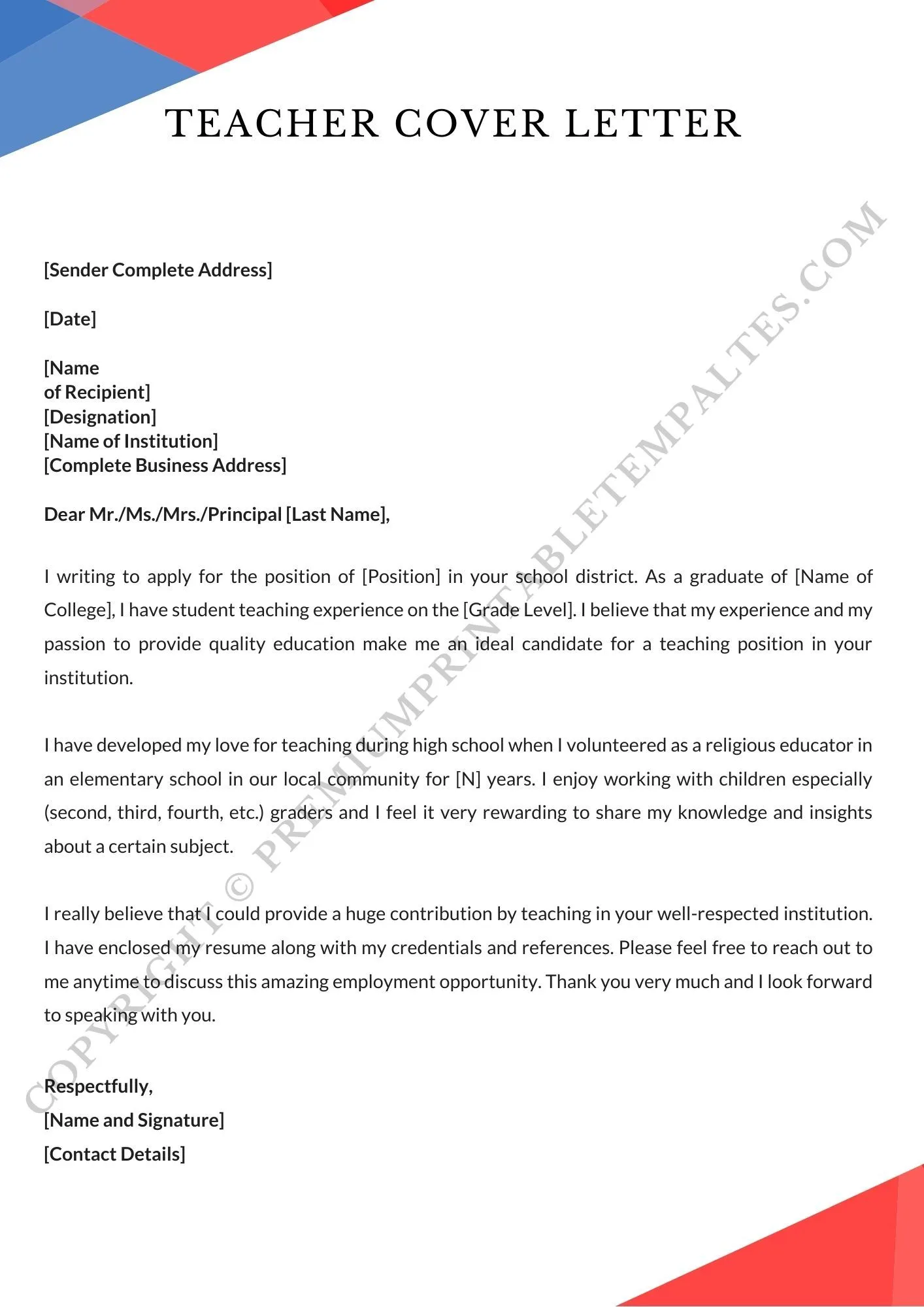
Crafting a Compelling Teacher Cover Letter
A well-crafted teacher cover letter is your first opportunity to make a strong impression on a potential employer. It serves as a crucial introduction, allowing you to showcase your qualifications, teaching philosophy, and enthusiasm for the position. Think of it as a personal narrative that complements your resume, providing context and demonstrating your suitability for the role. A compelling cover letter goes beyond simply restating your resume; it highlights your unique strengths, passion for education, and understanding of the school’s specific needs. This guide will help you unlock the secrets to creating a cover letter that captures attention and increases your chances of landing an interview. It’s not just about listing your experience; it’s about telling a story and making a connection.
Understanding the Purpose of a Teacher Cover Letter
The primary purpose of a teacher cover letter is to introduce yourself to the hiring committee and express your interest in the position. It allows you to elaborate on your qualifications in a way that your resume may not fully capture. A strong cover letter demonstrates your understanding of the school’s values, your teaching philosophy, and your ability to contribute to the school community. It’s a chance to personalize your application and show why you are the best fit for the job. Consider it as your chance to demonstrate your personality, your understanding of the role, and your alignment with the school’s mission. A generic cover letter will not stand out, so personalization is key.
Highlighting Your Teaching Philosophy

Your teaching philosophy is a core element of your cover letter. It provides insight into your educational beliefs and how you approach teaching. Briefly describe your teaching style, your classroom management techniques, and your commitment to student success. Explain how you create a positive and engaging learning environment. Do you believe in collaborative learning, project-based assessments, or differentiated instruction? Share your core values and how they align with the school’s mission. A well-articulated teaching philosophy helps the hiring committee understand your approach and ensures you are a good fit for their educational philosophy. Mentioning specific strategies or approaches that resonate with the school’s values can significantly enhance your application.
Emphasizing Relevant Skills and Experience
Focus on the skills and experiences most relevant to the specific teaching position. Review the job description carefully and highlight the qualifications the school is seeking. Instead of just listing your previous roles, provide examples of how you applied your skills and achieved positive outcomes. For instance, if the job description emphasizes classroom management, describe your strategies for creating a structured and supportive learning environment. If the school prioritizes technology integration, share examples of how you effectively used technology in your lessons. Use action verbs to describe your accomplishments and quantify your achievements whenever possible. This will showcase your capabilities in a clear and concise manner.
Showcasing Your Achievements and Accomplishments
Go beyond simply stating your responsibilities and highlight your accomplishments. This is your opportunity to demonstrate your impact on students and the school community. Provide specific examples of successful projects, programs, or initiatives you led. Did you implement a new curriculum that improved student test scores? Did you mentor students who achieved academic success? Did you contribute to school-wide initiatives? Quantify your achievements whenever possible to provide tangible evidence of your impact. For example, state the percentage increase in student engagement, the number of students you mentored, or any awards or recognitions you received. Concrete examples will make your application stand out.
Quantifying Your Impact with Data

Data and numbers add credibility to your achievements. Whenever possible, use quantifiable data to illustrate your impact. Instead of saying you improved student performance, state the percentage increase in test scores or the number of students who met or exceeded their learning goals. Did you implement a new teaching strategy that improved student engagement? Provide specific metrics to support your claims. Did your efforts lead to any awards or recognitions? Include these details to demonstrate your effectiveness. Data-driven examples show that you can assess your effectiveness and make informed decisions to improve your teaching practices. This ability to measure and show improvement is highly valued by schools.
Tailoring Your Cover Letter to the Specific School
One of the most critical elements of a successful cover letter is tailoring it to the specific school and position. A generic cover letter will likely be overlooked. Show that you have taken the time to understand the school’s values, mission, and culture. Demonstrate your understanding of the specific needs of the position. Reference specific programs, initiatives, or values that resonate with the school’s mission. By personalizing your letter, you show that you are genuinely interested in the position and aligned with the school’s goals. Researching the school and incorporating specific details related to their values makes a compelling case for why you are the right fit.
Researching the School’s Mission and Values
Before writing your cover letter, thoroughly research the school. Visit their website, read their mission statement, and review any publications or reports to gain a clear understanding of their values and priorities. Consider how your teaching philosophy and experience align with the school’s mission. Do they emphasize a particular teaching methodology, such as project-based learning or differentiated instruction? Do they have a strong focus on community involvement or student well-being? Mentioning specific aspects of the school’s mission and values in your cover letter will demonstrate that you have done your homework and are a good fit for their culture. Use their language to align your letter with their goals.
Addressing the Hiring Manager Directly

Whenever possible, address the hiring manager by name. This shows that you have taken the time to identify the person reviewing applications and adds a personal touch to your letter. You can usually find the hiring manager’s name on the school’s website or on the job posting. If you are unable to find a specific name, use a professional greeting, such as “Dear Hiring Committee.” Avoid generic greetings like “To Whom It May Concern,” which can make your application feel impersonal. This personalized approach immediately captures attention and shows you care enough to do a little extra research. It makes your application more memorable.
Proofreading and Formatting Your Cover Letter
Before submitting your cover letter, it is essential to proofread it carefully. Errors in grammar and spelling can create a negative impression and undermine your credibility. Use a spell checker and grammar checker, but also read the letter aloud to catch any awkward phrasing or typos. Have a friend or colleague review your letter for any mistakes you may have missed. Ensure your formatting is professional and easy to read. Use a clear font, such as Times New Roman or Arial, and maintain consistent spacing throughout the letter. Ensure your contact information is correct and up-to-date.
Ensuring Clarity and Conciseness
Keep your cover letter clear, concise, and easy to read. Avoid using overly complex language or jargon. Use short, impactful sentences and paragraphs. Get to the point and avoid rambling. Your goal is to showcase your qualifications and enthusiasm in a compelling and easy-to-understand manner. Make sure your key selling points are highlighted clearly and that the letter flows logically. A well-structured and concise cover letter demonstrates respect for the hiring manager’s time and ensures that your key qualifications are easily understood. Use headings and bullet points to organize your content and make it visually appealing.
Using a Professional Tone and Format

Maintain a professional tone and format throughout your cover letter. Use formal language and avoid slang or colloquialisms. Use a professional font, such as Times New Roman or Arial, and maintain consistent formatting. Ensure your contact information is clearly displayed and includes your name, phone number, email address, and any relevant professional website or portfolio links. Your cover letter is a reflection of your professionalism, so make sure it presents you in the best possible light. Proofread carefully to ensure there are no grammatical errors or typos. Your attention to detail will show that you’re serious about the position.
By following these 5 tips, you can create a teacher cover letter that stands out from the competition and helps you land your dream teaching job. Remember to highlight your teaching philosophy, emphasize relevant skills and experience, showcase your achievements, tailor your letter to the specific school, and always proofread carefully. Good luck!