Understanding the Importance of a Teaching Cover Letter
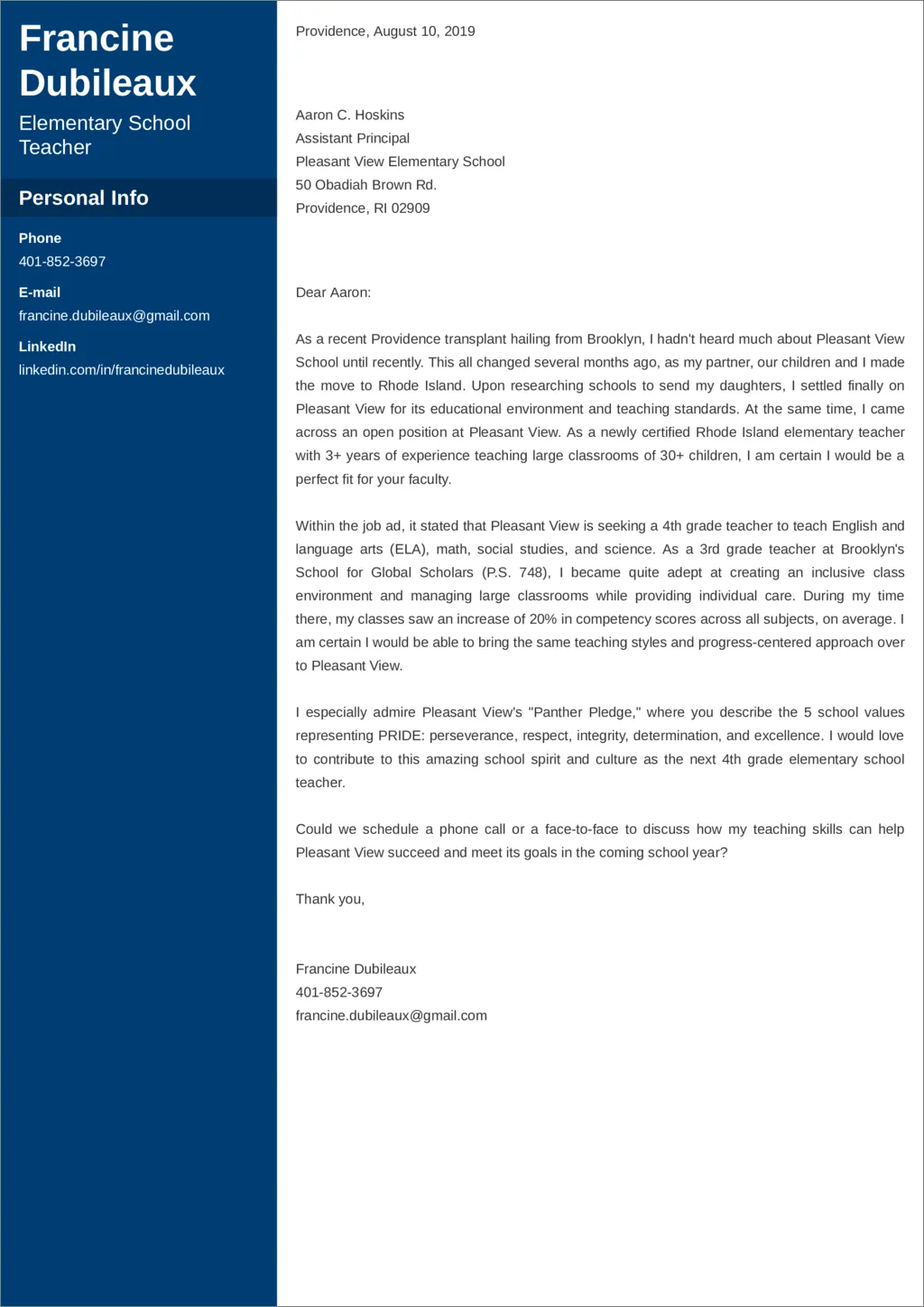
A teaching cover letter is more than just a formality; it’s your first opportunity to make a strong impression on potential employers. It’s your chance to go beyond the confines of your resume and showcase your personality, passion, and the unique value you bring to the classroom. In a competitive job market, a well-crafted cover letter can significantly increase your chances of landing an interview and ultimately securing your dream teaching position. It allows you to tell your story, connect with the hiring manager, and demonstrate why you are the ideal candidate for the specific role.
Why is a Cover Letter Essential for Teaching Jobs?
The cover letter serves as your personal introduction. It complements your resume by providing context and depth. It highlights the skills, experiences, and qualities that make you a successful teacher. A well-written cover letter immediately signals to a hiring manager that you’ve taken the time to tailor your application and that you are genuinely interested in the position. It can also bridge any gaps in your resume, such as career changes or periods of unemployment, by providing a clear and compelling explanation.
Highlighting Your Unique Value

Every teacher brings a unique blend of skills, experiences, and personality traits to the table. Your cover letter is the perfect place to emphasize what sets you apart from other candidates. This could include your approach to classroom management, your ability to differentiate instruction, your experience with specific teaching methodologies (like project-based learning or inquiry-based learning), or your ability to build strong relationships with students and parents. Think about what you can offer that others might not, and make sure that value is clear in your letter. Furthermore, consider highlighting any specific achievements, such as student performance improvements or successful curriculum implementations.
Key Components of a Successful Teaching Cover Letter
Header and Contact Information
Start with a professional header that includes your full name, address, phone number, and email address. Ensure that your email address is professional and appropriate. The header should be at the top of the page, often left-aligned. Following this, add the date and the hiring manager’s name and title (if you know it), along with the school’s name and address. This provides the reader with all the necessary information to contact you and signals your attention to detail.
Greeting and Addressing the Hiring Manager

Always address the hiring manager by name. If you can’t find the name, try to find it on the school’s website or LinkedIn. Addressing the letter to a specific person shows that you’ve done your research and are genuinely interested in the position. If a specific name is impossible to find, a general greeting such as ‘Dear Hiring Committee’ or ‘Dear Principal’ is acceptable, but always strive for a personal touch.
Opening Paragraph Hook
The opening paragraph is your chance to grab the hiring manager’s attention. Start with a strong statement that expresses your enthusiasm for the position and the school. Briefly mention what attracted you to the role and what you hope to achieve. Consider mentioning a specific aspect of the school’s mission or values that resonates with you, demonstrating that you’ve done your research and genuinely align with the school’s goals. For example, you might say you are excited to apply for the position because of your dedication and commitment to students.
Body Paragraphs Highlighting Qualifications and Experience
The body of your cover letter is where you demonstrate your qualifications and experience. Structure your paragraphs logically, highlighting your key skills and accomplishments. Instead of simply repeating what’s on your resume, provide more detail and context. Explain how your experience has prepared you for this specific role. Use the job description as your guide, addressing the requirements listed and showcasing how your skills and experiences align with the school’s needs.
Showcasing Relevant Skills and Accomplishments
Focus on the skills and experiences most relevant to the teaching position. Highlight your classroom management skills, your ability to create engaging lesson plans, and your proficiency in using technology in the classroom. Provide specific examples of your accomplishments, such as how you improved student test scores, implemented a successful new curriculum, or fostered a positive classroom environment. Use action verbs and quantify your achievements whenever possible to provide concrete evidence of your abilities.
Quantifying Achievements with Data
Whenever possible, support your claims with data. Instead of saying, ‘I improved student performance,’ say, ‘I increased student test scores by 15% through the implementation of differentiated instruction.’ Quantifiable results add credibility to your claims and demonstrate the impact of your work. Use numbers to illustrate the success of your programs or the effectiveness of your teaching methods. This could include data on student attendance, parent engagement, or classroom project outcomes.
Tailoring Your Letter to the Specific School/Position
One of the most critical aspects of a successful cover letter is tailoring it to the specific school and position. Before writing your letter, thoroughly research the school’s mission, values, and educational approach. Address the specific requirements mentioned in the job description, using the same keywords where appropriate. Demonstrate that you understand the school’s needs and explain how your skills and experience align with their specific goals. This shows the hiring manager that you are genuinely interested in the role and have taken the time to understand what the school is looking for.
Closing Paragraph Call to Action

Expressing Enthusiasm and Gratitude
Reiterate your enthusiasm for the position and express your gratitude for the hiring manager’s time and consideration. Reiterate your interest in the position and the school. Show your excitement by reiterating your interest in the position and the school’s goals. Thank them for taking the time to read your application and express your appreciation for their consideration.
Requesting an Interview
End your letter with a clear call to action. Express your interest in an interview and state your availability. Provide your contact information again to make it easy for the hiring manager to reach you. It is common practice to end by saying, “I am eager to discuss my qualifications in an interview and can be reached at [phone number] or [email address].” A confident closing statement can leave a lasting impression and increase your chances of getting an interview.
Formatting and Proofreading Best Practices

Font, Layout, and Overall Presentation
The appearance of your cover letter is just as important as its content. Use a clean and professional font like Times New Roman, Arial, or Calibri in a standard size (11 or 12 points). Ensure your letter is well-formatted with clear margins, consistent spacing, and appropriate paragraph breaks. Avoid using excessive colors, graphics, or unusual fonts that could distract the reader. Use a simple, easy-to-read layout that makes your letter visually appealing.
Proofreading for Errors and Clarity
Proofreading is essential. Carefully proofread your cover letter for any grammatical errors, spelling mistakes, or typos. Read your letter aloud to catch any awkward phrasing or unclear sentences. Ask a friend, family member, or career counselor to review your letter for feedback. Ensure your writing is clear, concise, and professional. Errors can undermine your credibility, so taking the time to proofread thoroughly is crucial.
Additional Tips for a Strong Teaching Cover Letter

Using Keywords from the Job Description
Carefully review the job description and identify the key skills, experiences, and qualifications the school is seeking. Incorporate these keywords naturally into your cover letter. This not only demonstrates that you meet the requirements but also helps your application get noticed by applicant tracking systems. Do not simply stuff keywords into your letter, but weave them into your narrative organically.
Showcasing Your Passion for Education
Let your passion for education shine through in your cover letter. Express your enthusiasm for teaching, your commitment to student success, and your dedication to creating a positive learning environment. Share any personal experiences or anecdotes that illustrate your passion for teaching. This will help you connect with the hiring manager on a more personal level and demonstrate that you genuinely care about the profession.
Demonstrating Knowledge of Educational Trends
Show that you are aware of current educational trends and best practices. Mention any professional development experiences or training you’ve had in areas such as differentiated instruction, technology integration, or social-emotional learning. This demonstrates your commitment to staying current in the field of education and your willingness to adapt to new challenges and opportunities. Consider mentioning any experience you have with any school initiatives that focus on these trends.
In conclusion, writing a successful cover letter for a teaching position requires careful planning, attention to detail, and a genuine passion for education. By following these guidelines, you can create a cover letter that effectively showcases your skills, experiences, and unique value, ultimately increasing your chances of landing your dream job. Remember to tailor your letter to each specific position and school, proofread carefully, and let your personality shine through. A well-crafted cover letter is a powerful tool that can help you make a great first impression and stand out from the competition. Good luck!