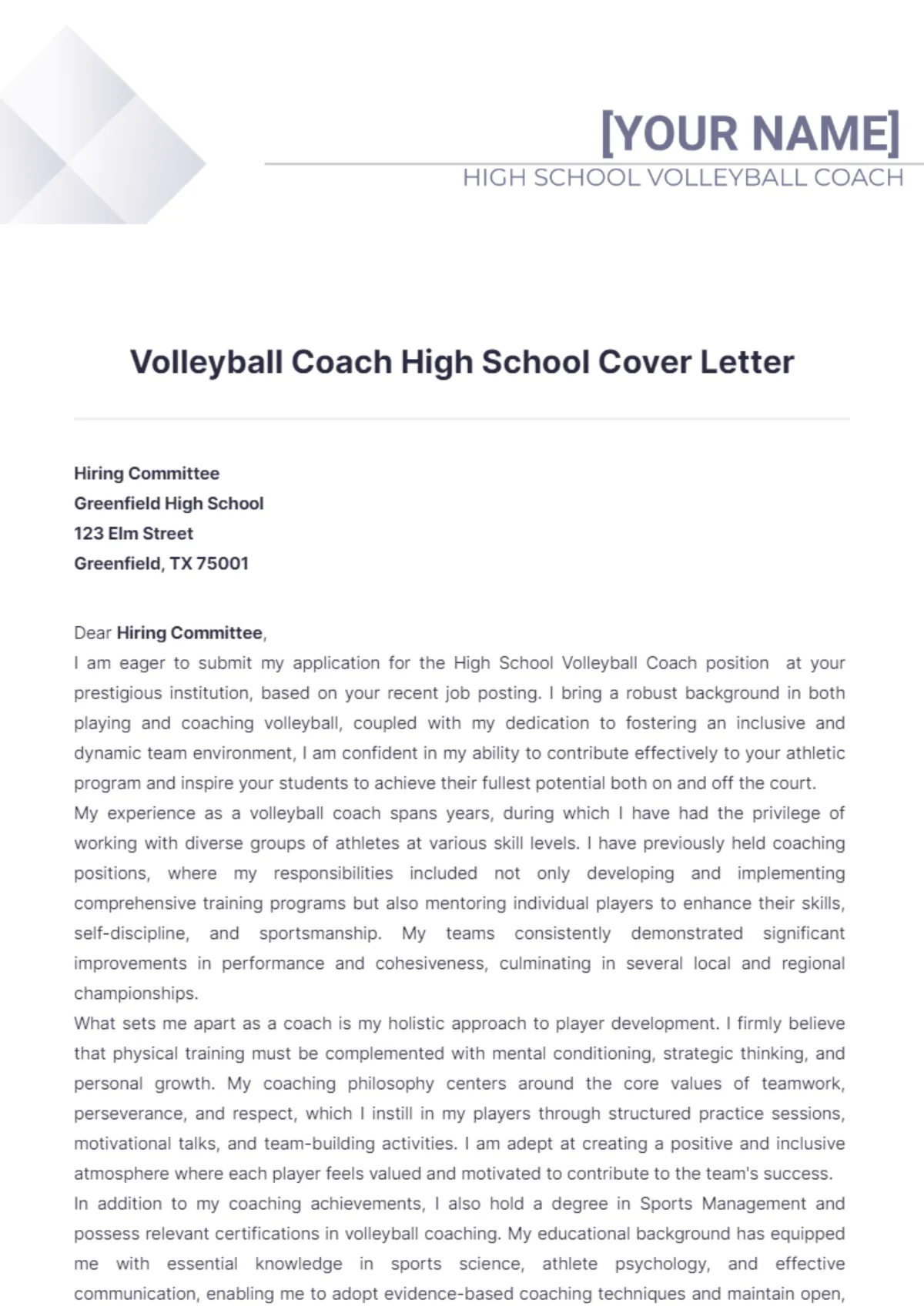
Crafting a Winning Volleyball Coach Cover Letter
A well-crafted volleyball coach cover letter is your first opportunity to impress potential employers and secure an interview. It’s more than just a formality; it’s a crucial marketing tool that showcases your skills, experience, and passion for the sport. In a competitive job market, a standout cover letter can be the difference between landing your dream coaching position and being overlooked. This guide will provide you with the essential elements to create a cover letter that gets noticed and helps you achieve your career goals. Remember, every detail matters, from the opening sentence to the closing call to action. Let’s delve into the key components and strategies to help you craft a winning cover letter.
Understanding the Purpose of a Cover Letter
The primary goal of a volleyball coach cover letter is to introduce yourself and highlight your suitability for the position. It provides context to your resume, allowing you to expand on your qualifications and demonstrate your personality and enthusiasm. Unlike a resume, a cover letter allows you to explain why you are the perfect fit for the specific coaching role and organization. It’s an opportunity to express your coaching philosophy, leadership style, and how you plan to contribute to the team’s success. Furthermore, a well-written cover letter showcases your communication skills, attention to detail, and professionalism. Use this opportunity to make a memorable first impression.
Highlighting Your Coaching Experience

Your coaching experience is the cornerstone of your cover letter. Start by clearly stating the number of years you’ve coached and the level of teams you’ve worked with (e.g., high school, college, club). Briefly describe your previous roles, focusing on key responsibilities and achievements. For example, did you improve a team’s win-loss record? Did you develop any players who went on to achieve significant success? Quantify your experience whenever possible using data to show the impact you made. Mention any specific volleyball systems or strategies you’re proficient in, such as offensive formations, defensive strategies, or player development techniques. Tailor this section to match the requirements of the job description, emphasizing experience that directly aligns with their needs.
Showcasing Relevant Skills and Qualifications
Beyond experience, emphasize your skills and qualifications relevant to the volleyball coaching role. This includes technical skills like game strategy, scouting, and training methodologies. Also, highlight your leadership abilities, communication skills, and ability to motivate players. Mention any certifications you hold, such as coaching certifications from national or international volleyball federations, first aid, or CPR certifications. Showcase your knowledge of player development, including your ability to assess player talent, design training programs, and foster a positive team environment. Include your ability to handle administrative tasks, manage budgets, and recruit players if those are part of the job responsibilities.
Tailoring Your Cover Letter to the Specific Job
Generic cover letters are easily spotted and often discarded. To stand out, tailor each cover letter to the specific job you’re applying for. Carefully review the job description and identify the key requirements and desired qualifications. Then, adjust your cover letter to address these points directly. Use keywords from the job description throughout your letter, especially in your skills and experience sections. Research the organization and learn about their volleyball program, coaching philosophy, and values. Show that you understand their goals and explain how your skills align with their needs and culture. By tailoring your cover letter, you demonstrate that you are genuinely interested in the position and have taken the time to understand their requirements. Consider this a chance to demonstrate your commitment to the specific opportunity.
Key Sections of Your Volleyball Coach Cover Letter

Header and Contact Information
Start your cover letter with a professional header that includes your full name, address, phone number, and email address. This information should be clearly visible and easy to read. If known, include the hiring manager’s name and title, addressing the letter directly to them (e.g., “Dear Mr. Smith”). This personal touch shows that you have done your research and are paying attention to detail. Ensure your contact information is up-to-date, so potential employers can easily reach you. Always maintain a professional email address; avoid informal or unprofessional usernames. This section sets the tone for the rest of your cover letter, making a strong first impression.
The Opening Paragraph: Grab Their Attention
The opening paragraph is your opportunity to grab the reader’s attention and make a strong first impression. Start with a concise, engaging statement that highlights your passion for volleyball and your interest in the specific coaching position. Mention where you saw the job posting and briefly state why you are excited about the opportunity. Instead of a generic introduction, consider starting with an impactful statement about your coaching philosophy or a notable achievement. Make it clear from the beginning why you are a good fit for the role and what you bring to the table. Keep it brief, enthusiastic, and directly relevant to the job requirements.
Body Paragraphs Showcasing Achievements and Skills

The body paragraphs are the heart of your cover letter, where you showcase your experience, skills, and accomplishments. Use these paragraphs to elaborate on your coaching experience, highlighting your key achievements and demonstrating how your skills align with the job requirements. Provide specific examples of your successes, such as improving a team’s win-loss record, developing players, or implementing effective training programs. Explain your coaching philosophy, leadership style, and how you motivate players. Use action verbs to describe your accomplishments, such as “led,” “managed,” “developed,” or “implemented.” Ensure that your examples are relevant to the specific job and the organization’s goals.
Quantifying Your Accomplishments
Quantifying your accomplishments adds credibility to your claims and demonstrates the impact you have made in previous coaching roles. Instead of simply stating that you “improved team performance,” provide specific data. For example, “Increased team win percentage by 25% in one season.” Use numbers to showcase the results of your efforts. Include metrics like the number of players you’ve developed who received scholarships, the improvement in a team’s rankings, or the increase in player participation. Providing data makes your achievements more tangible and helps the hiring manager understand the value you bring. Remember, concrete examples speak louder than general statements.
Demonstrating Leadership and Teamwork
Coaching is all about leadership and teamwork. In your cover letter, demonstrate your ability to lead and inspire athletes, work collaboratively with staff, and foster a positive team environment. Provide examples of how you have built strong relationships with players, parents, and other coaches. Describe your leadership style, emphasizing how you motivate players, encourage teamwork, and promote sportsmanship. Showcase your ability to resolve conflicts, handle difficult situations, and create a cohesive team dynamic. Mention any experience you have in mentoring or guiding players both on and off the court. Highlight how you can contribute to the overall success of the volleyball program.
The Closing Paragraph: Call to Action

The closing paragraph should reiterate your interest in the position and provide a clear call to action. Thank the hiring manager for their time and consideration. Express your enthusiasm for the opportunity and reiterate your suitability for the role. State your availability for an interview and provide your contact information once again. End with a professional closing, such as “Sincerely” or “Respectfully,” followed by your full name. Make it easy for the hiring manager to take the next step by clearly stating your availability and willingness to discuss your qualifications further. Ensure your call to action is confident and leaves a lasting positive impression.
Formatting and Presentation Tips
Choosing the Right Font and Layout
The formatting and layout of your cover letter are crucial for readability and professionalism. Choose a clean, easy-to-read font, such as Times New Roman, Arial, or Calibri, with a font size between 11 and 12 points. Use standard margins (1 inch on all sides) and single-space the text within paragraphs, with a blank line between paragraphs. Keep your letter concise, ideally no more than one page. Use headings and bullet points to break up the text and make it easy to scan. Ensure that the layout is consistent and well-organized, creating a visually appealing document. A well-formatted cover letter shows that you pay attention to detail and respect the reader’s time.
Proofreading and Editing for Errors

Proofreading and editing are essential steps to ensure your cover letter is free of errors. Typos, grammatical errors, and incorrect information can damage your credibility and make a negative impression. Carefully review your cover letter multiple times, checking for spelling mistakes, grammatical errors, and punctuation errors. Read it aloud to catch any awkward phrasing or sentence structure issues. Ask a friend or colleague to review your letter for a fresh perspective. Use grammar and spell-check tools, but don’t rely on them entirely; they may not catch all errors. Ensuring a polished and error-free cover letter demonstrates professionalism and attention to detail.
Keywords and SEO for Your Cover Letter
In today’s job market, incorporating keywords and SEO principles into your cover letter can help your application get noticed. Identify the key skills and qualifications listed in the job description and incorporate them into your cover letter naturally. Use relevant keywords throughout your letter, especially in the skills and experience sections. This helps applicant tracking systems (ATS) identify your cover letter as a good match for the position. However, avoid keyword stuffing; your cover letter should read naturally and focus on showcasing your qualifications. The goal is to make your cover letter both human-readable and ATS-friendly, ensuring that it gets seen by the hiring manager.
Common Mistakes to Avoid
Generic Cover Letters

One of the most common mistakes is sending out generic cover letters that are not tailored to the specific job. These letters often lack specific details about the candidate’s experience and qualifications, making it difficult for the hiring manager to see why they are a good fit. Always customize your cover letter for each position, highlighting how your skills and experience align with the job requirements. Research the organization, understand their needs, and demonstrate genuine interest. A tailored cover letter shows that you have taken the time to understand the position and are genuinely interested in the opportunity.
Focusing on Yourself Instead of the Employer
While it is important to highlight your skills and achievements, avoid making your cover letter all about yourself. Focus on how you can benefit the employer and contribute to their team’s success. Show that you understand the organization’s goals and how your skills and experience can help them achieve those goals. Frame your accomplishments in terms of the value you can bring to the team. This demonstrates that you are not just looking for a job but are also considering how you can make a positive impact on the program. Emphasize what you can offer the employer rather than what you hope to gain.
Ignoring the Job Description
Failing to thoroughly review and address the job description is a significant mistake. The job description provides a roadmap of what the employer is looking for in a candidate. Use the job description as a guide to tailor your cover letter, ensuring that you highlight the skills, experience, and qualifications that align with the requirements. Ignoring the job description can lead to missing important details, underemphasizing crucial skills, or simply failing to demonstrate that you understand the position. Always refer to the job description and use the same keywords and phrases when possible, ensuring that your cover letter directly addresses the employer’s needs.
The Power of a Strong Volleyball Coach Cover Letter
A strong volleyball coach cover letter is a powerful tool that can significantly increase your chances of landing your dream coaching job. By following these guidelines, you can create a cover letter that captures the attention of hiring managers, highlights your qualifications, and sets you apart from the competition. Remember to focus on tailoring your cover letter to each specific job, showcasing your accomplishments with data, and demonstrating your passion for the sport. A well-written cover letter is more than just an introduction; it is a compelling marketing document that presents your expertise and enthusiasm. Invest the time and effort to create a cover letter that showcases your value and helps you take the next step in your coaching career.