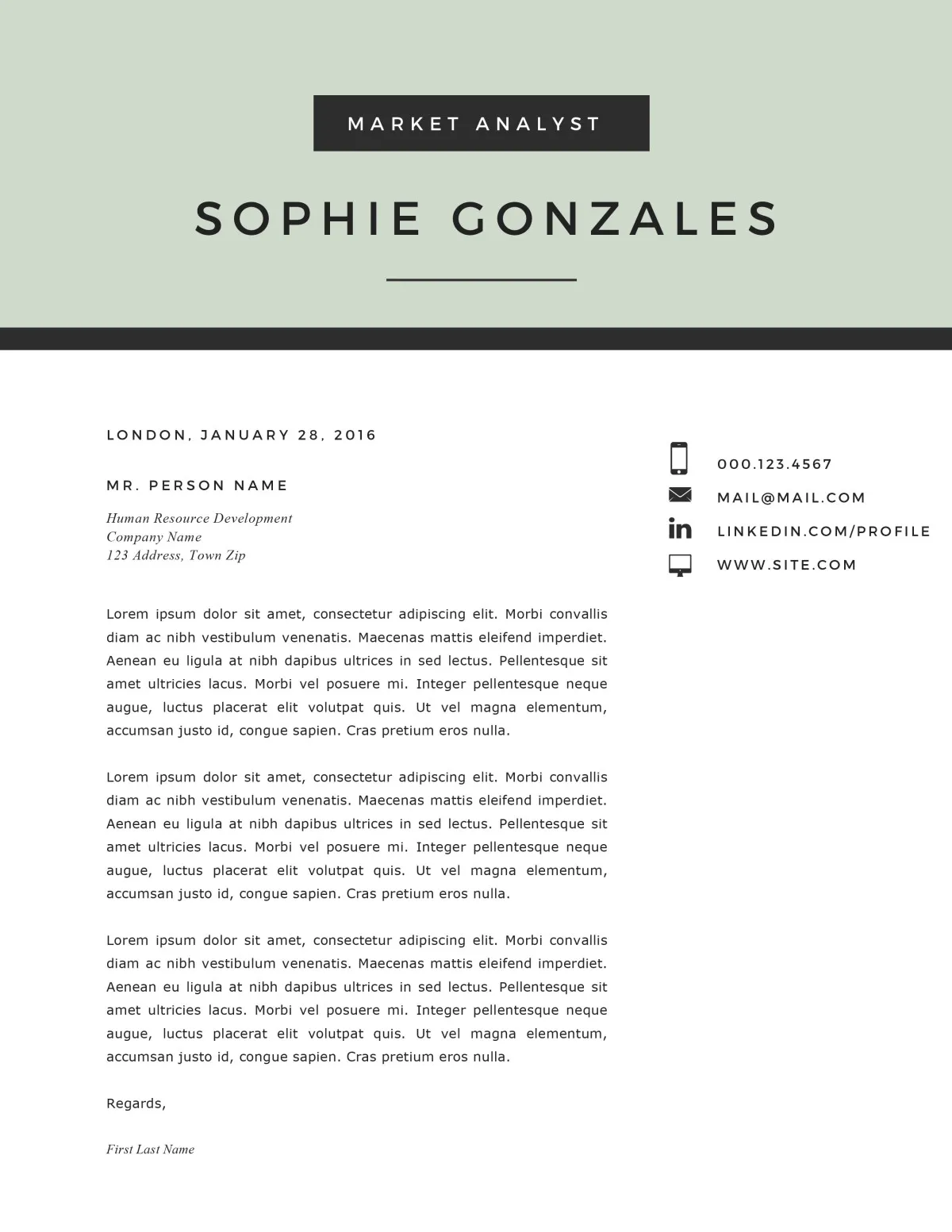
What is a Cover Letter?
A cover letter is a crucial document that accompanies your resume when applying for a job. It serves as an introduction to your skills, experience, and qualifications, allowing you to highlight how you match the specific requirements of the position you are seeking. Unlike a resume, which is a concise summary of your professional history, a cover letter provides an opportunity to elaborate on your accomplishments, express your enthusiasm for the role, and demonstrate your understanding of the company and its needs. A well-written cover letter is not merely a repetition of your resume; instead, it is a personalized narrative that sells you as the ideal candidate.
Why You Need a Cover Letter
In today’s competitive job market, a cover letter is often essential. It’s your chance to make a positive first impression and distinguish yourself from other applicants. A cover letter enables you to explain any gaps in your employment history, elaborate on your skills, and express your genuine interest in the company. Moreover, it gives you the opportunity to demonstrate your communication skills, which are highly valued by employers. By tailoring your cover letter to each specific job, you can show that you have taken the time to understand the company’s needs and that you are genuinely enthusiastic about the opportunity. Many recruiters and hiring managers consider a cover letter a mandatory part of the application process, and neglecting to submit one can immediately disqualify your application.
When to Write a Cover Letter

You should write a cover letter for almost every job application. While some online applications may not explicitly require a cover letter, it is still beneficial to include one if the platform allows you to upload additional documents or provides a space to paste your letter. In situations where a cover letter is not specifically requested, it can still provide a compelling introduction to your application. Always tailor your cover letter to the specific job and company, showcasing your qualifications and enthusiasm. Even if the job description does not mandate a cover letter, submitting a well-crafted one demonstrates your initiative and attention to detail, which can significantly enhance your application. Always review the job posting instructions, as some employers might specify whether or not they want a cover letter.
Before You Start Writing
Before you begin crafting your cover letter, take some time to prepare and research the company and the job requirements. This preparation will enable you to write a cover letter that is tailored to the specific opportunity, increasing your chances of making a positive impression. Understanding the employer’s needs and the job requirements is critical to writing a compelling cover letter that showcases your relevant skills and experience. Research, planning, and attention to detail are essential before you even begin drafting your letter, helping ensure your cover letter aligns with the job requirements.
Research the Company
Thoroughly research the company, its mission, values, and recent activities. Visit the company’s website, read news articles, and check their social media presence. This information will help you understand the company culture and tailor your cover letter to demonstrate your genuine interest. Identify the company’s goals and how you can contribute to them. Understanding the company’s values can inform your writing, helping you align your skills and experience with the company’s needs and culture. Researching the company also enables you to personalize your cover letter, which will make it stand out from generic applications.
Understand the Job Requirements

Carefully read the job description and identify the key skills, qualifications, and experiences the employer is seeking. Make a list of these requirements and consider how your skills and experiences align with them. This analysis will help you structure your cover letter, ensuring you address the employer’s needs. Highlight specific examples from your work history that demonstrate your ability to meet these requirements. By addressing the job requirements directly, you can show that you understand the role and are qualified to perform it. This targeted approach increases your chances of getting your application noticed by the hiring manager.
Key Components of a Cover Letter
A well-structured cover letter typically consists of several key components that work together to create a compelling narrative. These include your contact information, a professional salutation, a strong opening paragraph, body paragraphs that highlight your skills and achievements, and a concise closing paragraph with a call to action. Each part serves a unique purpose in showcasing your suitability for the role and capturing the reader’s interest. By carefully structuring and crafting each element of your cover letter, you can effectively present your qualifications and increase your chances of landing an interview. Remember that the goal is to make a strong impression and convince the employer that you are the perfect fit for the job.
Contact Information
At the top of your cover letter, include your contact information, such as your name, phone number, email address, and LinkedIn profile URL. Make sure this information is accurate and up-to-date. This section allows the hiring manager to easily reach you if they are interested in scheduling an interview. Formatting this section professionally and clearly ensures that your contact information is easy to find and read. Ensuring your information is correct is crucial to avoid missed opportunities.
The Salutation

Address the hiring manager by name if possible. Research their name on LinkedIn or the company website. If you can’t find a specific name, use a general salutation such as “Dear Hiring Manager.” Avoid generic salutations like “To Whom It May Concern.” A personalized salutation demonstrates that you have taken the time to research the company and increases the chances of making a good first impression. If you are unsure of the name, a general salutation is acceptable, but always avoid sounding impersonal.
Opening Paragraph
Start with a compelling opening paragraph that grabs the reader’s attention. State the position you are applying for and briefly mention where you saw the job posting. Briefly highlight your key skills or experiences that align with the job requirements, creating immediate interest. Clearly state your enthusiasm for the role and the company, which sets the tone for the rest of the cover letter. The opening paragraph is your first chance to make a positive impression. Make it count.
Body Paragraphs
Use the body paragraphs to elaborate on your skills, experience, and achievements. Provide specific examples to support your claims and show how you have made a positive impact in previous roles. Focus on the skills and experiences that are most relevant to the job. This is where you truly connect your past accomplishments to the requirements of the position. Use a conversational tone, ensuring your writing is clear, concise, and easy to understand. Your goal is to demonstrate to the hiring manager how your skills and past accomplishments would benefit the company.
Highlight Relevant Skills

Focus on the skills that are most relevant to the job description. Make a connection between your skills and the requirements of the position, which illustrates how you can contribute to the company. Use action verbs to describe your skills and provide specific examples of how you have used those skills in the past. This makes your claims more credible and helps the hiring manager envision you performing the job successfully.
Showcase Achievements
Provide specific examples of your achievements in previous roles. Quantify your accomplishments whenever possible, using numbers and data to illustrate the impact you have made. Use the STAR method (Situation, Task, Action, Result) to describe your achievements and provide context. This method helps the hiring manager understand the challenges you faced, the actions you took, and the positive outcomes you achieved. Highlighting your achievements demonstrates your value to potential employers.
Closing Paragraph
In your closing paragraph, summarize your key qualifications and reiterate your interest in the position. Express your appreciation for the hiring manager’s time and consideration. Then, include a call to action, such as inviting the hiring manager to contact you for an interview. Keep your tone professional and enthusiastic, leaving a lasting positive impression. This is your last opportunity to make your case. Always thank the hiring manager for their time and express your enthusiasm for the opportunity.
Call to Action

Include a clear call to action in your closing paragraph. State your availability for an interview, or thank them for their time. This prompts the hiring manager to take the next step in the hiring process, which can increase your chances of getting an interview. Always express your interest in the position and reiterate your enthusiasm for the role. This is a key element of concluding your cover letter effectively.
Formatting Your Cover Letter
The formatting of your cover letter is just as important as its content. Proper formatting ensures that your letter is easy to read and professional. Choose a readable font, use appropriate margins and spacing, and maintain consistency throughout the document. A well-formatted cover letter reflects your attention to detail and professionalism, making it more likely that your application will be viewed positively. By paying attention to these details, you make a strong first impression.
Font and Font Size
Choose a professional and easy-to-read font, such as Times New Roman, Arial, or Calibri. Maintain a font size of 11 or 12 points for the body text. Avoid using overly ornate or unusual fonts, which can be distracting. Consistency in font choice and size across your cover letter is crucial for readability. Select fonts that project professionalism and make sure that your content is easily readable by the hiring manager.
Margins and Spacing

Use standard one-inch margins on all sides of the page. Use single-spacing for the body of your letter, with a blank line between paragraphs. Ensure your cover letter looks neat and organized. Proper spacing improves readability and makes your letter look polished. Poor formatting can make a negative impression. A well-structured letter allows the hiring manager to focus on the content.
Proofreading Your Cover Letter
Thoroughly proofread your cover letter for any grammatical errors, spelling mistakes, or typos. Even minor errors can undermine your professionalism and credibility. Read your cover letter multiple times, and consider having a friend or family member review it as well. Proofreading is a critical step in the writing process. Make sure all of your sentences are well-formed, and that your ideas flow together logically. A polished cover letter makes a positive impression.
Common Cover Letter Mistakes
Avoid common mistakes that can hurt your chances of getting hired. Ensure your tone is professional and your language is clear. Avoid sending a generic cover letter and make sure to customize it for each job. Proofread your cover letter multiple times to catch any errors. By avoiding common pitfalls, you can increase the effectiveness of your cover letter. Be sure to double-check your work to make sure it reflects well on you.
Tone and Language
Maintain a professional and enthusiastic tone throughout your cover letter. Avoid using slang, jargon, or overly casual language. Be clear, concise, and direct in your writing. Show your personality and enthusiasm, but always keep your tone professional and suitable for the workplace. Your language should reflect your communication skills. A polished and professional tone enhances the overall impact of your letter and highlights your professionalism.
Generic Cover Letter
Avoid sending a generic cover letter that is not tailored to the specific job or company. A generic letter suggests a lack of effort and interest. Instead, customize your cover letter for each application, highlighting the skills and experiences that are most relevant to the job. Demonstrate your genuine interest in the position and the company. This level of personalization will increase the effectiveness of your letter.
Cover Letter Examples
Use cover letter examples as a guide to help you craft your own. Review examples for different industries and job levels to understand the variations in content and format. Adapt the examples to fit your unique background and the specific job requirements. Reviewing a range of examples is helpful. Consider these examples for inspiration, but avoid directly copying content. Tailor the examples to fit your individual circumstances and the particular requirements of the job.
Cover Letter for Entry-Level Positions
When writing a cover letter for an entry-level position, focus on your education, relevant coursework, internships, and any volunteer work. Highlight your transferable skills, such as communication, teamwork, and problem-solving. Showcase your eagerness to learn and your enthusiasm for the role. Even if you lack extensive professional experience, a well-written cover letter can help you make a strong first impression. Demonstrate your potential to succeed in the role. Showcase your relevant skills, and express your eagerness to learn and contribute to the company.
Cover Letter for Experienced Professionals
For experienced professionals, focus on your achievements and results. Provide specific examples of how you have contributed to previous companies. Quantify your accomplishments whenever possible. Focus on skills and experiences that are most relevant to the job description. Show how your expertise aligns with the company’s needs. Tailor your cover letter to demonstrate that you are an excellent fit for the position. Highlight your most significant achievements, showing a clear connection between your previous roles and the current opportunity.